Opening a Business Near an Industrial Estate: How to Read Shift Times, Paydays and the Risks
Thousands of workers pass through factory gates every day, but their spending follows shift times and paydays. Learn how to read an industrial area's rhythm, pick the right position, and weigh the risk of depending on a single factory.
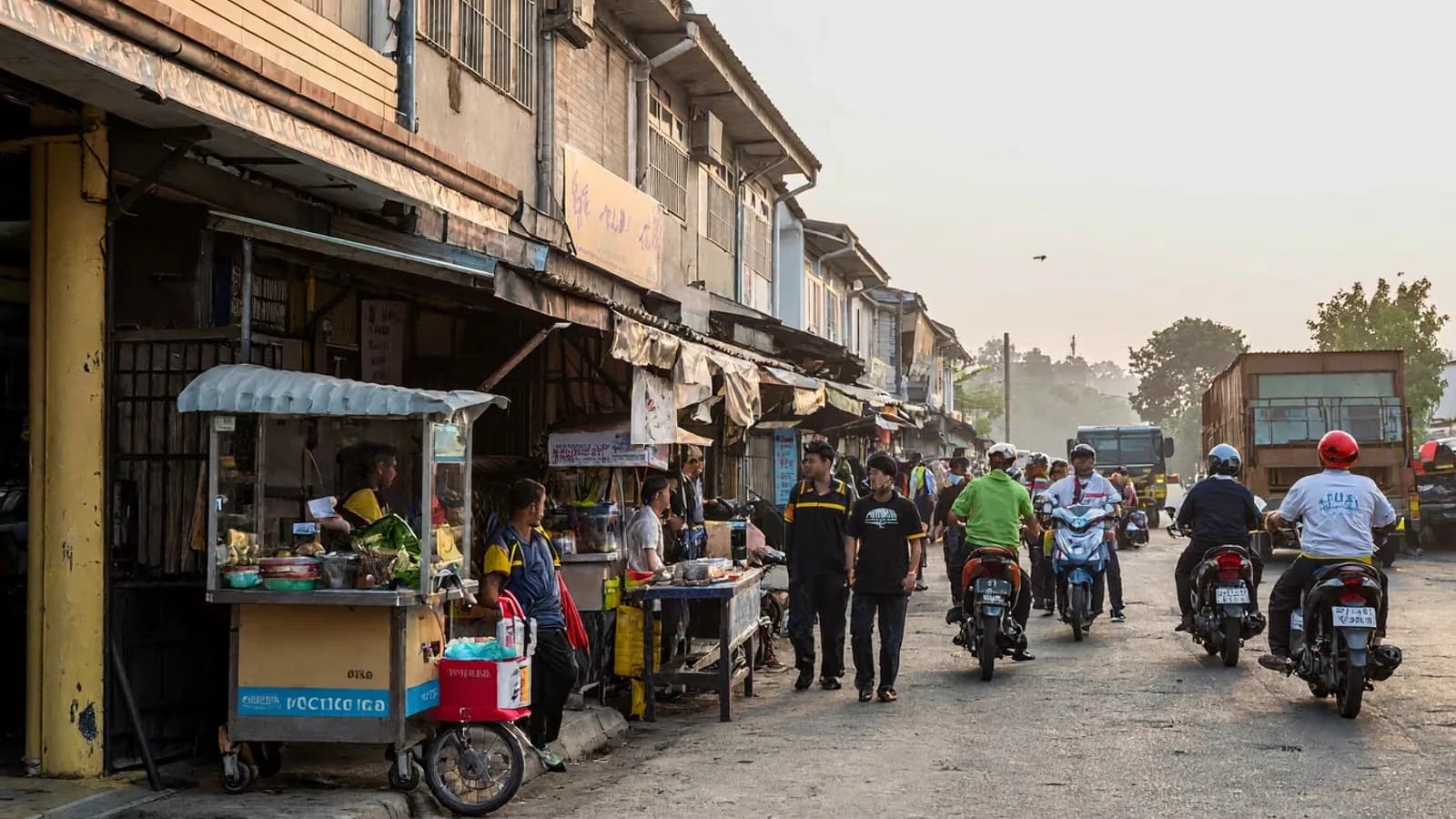
An industrial estate can look like a gold mine to anyone running a food stall, coffee kiosk, laundry or phone credit counter: thousands of workers pass by every day, on a fixed schedule, with clear needs. The catch is that the crowds come in waves. At certain hours the road is packed with motorbikes, then it empties completely. Some weeks workers have money to spend, and by the end of the month it is running thin. During long holidays the whole area can go almost silent. This guide helps you read that rhythm before you sign a lease.
Who Are the Real Customers Around a Factory?
Do not treat everyone in an industrial area as one group. Each group has different hours, needs and spending power.
Production shift workers: the largest group, with little free time; they look for things that are quick, cheap and on their way home.
Factory office staff: more regular hours and sometimes slightly higher spending power, but they often eat in the canteen or order delivery.
Residents of boarding houses (kos) and rentals: workers who live in the villages around the factory; these are the daily customers for laundries, grocery stalls and evening meals.
Truck drivers, couriers and factory visitors: they need places to rest, eat and drink coffee, and sometimes a mechanic or tyre repair.
Kos owners and local residents: steady customers who are less affected by shift times.
Decide which group is your main target first. A food stall at the gate depends on shift workers, while a laundry fits better in the middle of a kos neighbourhood than in front of the factory.
Reading the Rhythm of an Industrial Area
1. Shift change times
Many factories run two or three shifts, but the times vary from one factory to the next. Peak crowds usually come about 30 minutes before and after a shift change. Outside those windows the road at the gate can be very quiet. Note the shift times of every factory near your site: an area with several factories on different schedules gives you more even trade.
2. The payday cycle
Workers' spending is strongly tied to payday. Some factories pay monthly, others every two weeks or weekly, especially for daily or piece-rate workers. Ask directly: talk to stall owners, kos owners and workers you meet. Areas where factories pay on different dates tend to be steadier than areas where everyone is paid on the same day.
3. Long holidays, Lebaran and collective leave
In many industrial areas most workers have migrated from other regions. During Lebaran and collective leave the boarding houses empty out and the area can stay quiet for days or even weeks. On the other hand, there is usually a spending spike just before the exodus, when holiday bonuses (THR) are paid. Build this quiet period into your cash-flow plan.
Businesses That Fit and Those That Struggle
The table below is a general picture, not a fixed rule. Always check it against what you see on the ground.
Type of business | Fit | Notes |
|---|---|---|
Cheap food stall, packed rice meals | High | Have fast menu items ready for shift times; watch for competition from the factory canteen |
Laundry by the kilo | High in kos areas | Weak right at the gate; move closer to where workers live |
Grocery stall, small minimarket | High in kos areas | Busy in the evenings and at weekends |
Phone credit and accessories counter | Medium–high | Busy after payday; thin margins |
Cheap coffee kiosk, angkringan | Medium–high | Suits night shifts and truck drivers |
Motorbike repair, tyre patching | High | Nearly every worker rides; pick the route used to and from work |
Premium café, upmarket salon | Low–medium | Shift workers have limited money and time; check the share of office staff first |
Choosing a Position: The Gate Is Not Always Best
The front gate is the busiest spot, but also the most expensive and the most congested. Workers leaving a shift often want to get home fast, especially when the road is full of motorbikes and trucks. Consider these positions instead:
The route home to the kos area: workers stop more readily once they are close to home, for example to buy dinner or drop off laundry.
The homeward side of the road: watch which way most workers head after a shift; crossing a busy road is something people avoid.
Shuttle bus stops: if the factory runs staff buses, the crowd gathers where people get on and off, not at the gate.
Truck rest areas: near heavy-vehicle entrances or truck parking, good for coffee and food stalls.
Also check whether the factory offers a subsidised canteen or free meals. If it does, a lunch stall at the gate has far less potential, and you should focus on evening meals, snacks or other needs.
Illustration: Revenue Rises and Falls With Payday
A common mistake is to watch a site during payday week and multiply the result by 30 days. The example below is an illustration for a food stall in an area with monthly pay at the start of the month. The figures are not benchmarks; replace them with your own observations and interviews.
Period (illustration) | Days | Revenue per day | Period total |
|---|---|---|---|
Payday week (1st–7th) | 7 | Rp2,500,000 | Rp17,500,000 |
Mid-month (8th–20th) | 13 | Rp1,600,000 | Rp20,800,000 |
Before next payday (21st–30th) | 10 | Rp1,100,000 | Rp11,000,000 |
Monthly total | 30 | Average ±Rp1,640,000 | Rp49,300,000 |
If you used only the payday-week figure, your monthly estimate would be Rp75,000,000, far above the illustrated real average. A gap like that can lead you to accept rent you cannot afford. Calculate the Lebaran month separately too, as there may be several days with almost no customers.
The Biggest Risk: Depending on One Factory
A site that lives off a single factory is very exposed. Job cuts, the factory moving to another region, changed shift times or a new free-meal policy can wipe out your customers quickly. Here is how to check:
Count how many factories are active within walking distance or a short motorbike ride. The more there are, and the more varied their sectors, the safer you are.
Search for recent news about those factories: expansion plans, job cuts or relocation.
Ask kos owners how room occupancy has changed over the past year. Boarding houses with more and more empty rooms are a warning sign.
Look for physical signs: quiet factory buildings, posted job vacancies, or new factories being built nearby.
Check the district or regency statistics publications from BPS for a picture of the area's population and economic activity, then compare it with what you see on the ground.
Field Checklist for Sites Near an Industrial Estate
Noted the shift times of every nearby factory
Confirmed the pay cycle (monthly, fortnightly, weekly) from first-hand sources
Observed the site after payday, mid-month and before the next payday
Checked whether there is a factory canteen or free meals
Mapped workers' routes home and where the kos areas are
Located the shuttle bus pick-up and drop-off points
Counted the number and sectors of active factories nearby
Asked kos owners about room occupancy and how many go home for Lebaran
Checked dust, noise and truck traffic in front of the site
Worked out average monthly revenue, not payday-week revenue
Built the Lebaran quiet period into your cash flow
Conclusion
An industrial estate can be a very profitable location as long as you follow its rhythm: shift times, paydays and the holiday exodus. As a next step, pick two or three candidate spots and schedule observations across the three phases of the pay month, talking to kos and stall owners as you go. Work out a realistic average revenue, judge how much you would depend on a single factory, and only then decide how much rent and how long a lease make sense.