Opening a Business Near a Mosque, Church or Other Place of Worship: Reading Peak Times, Gate Position and Local Etiquette
Places of worship bring regular crowds, but those crowds arrive at set times and come with unwritten rules. Learn how to read worship and event schedules, choose your position relative to the gates, estimate revenue and keep good relations with the caretakers.
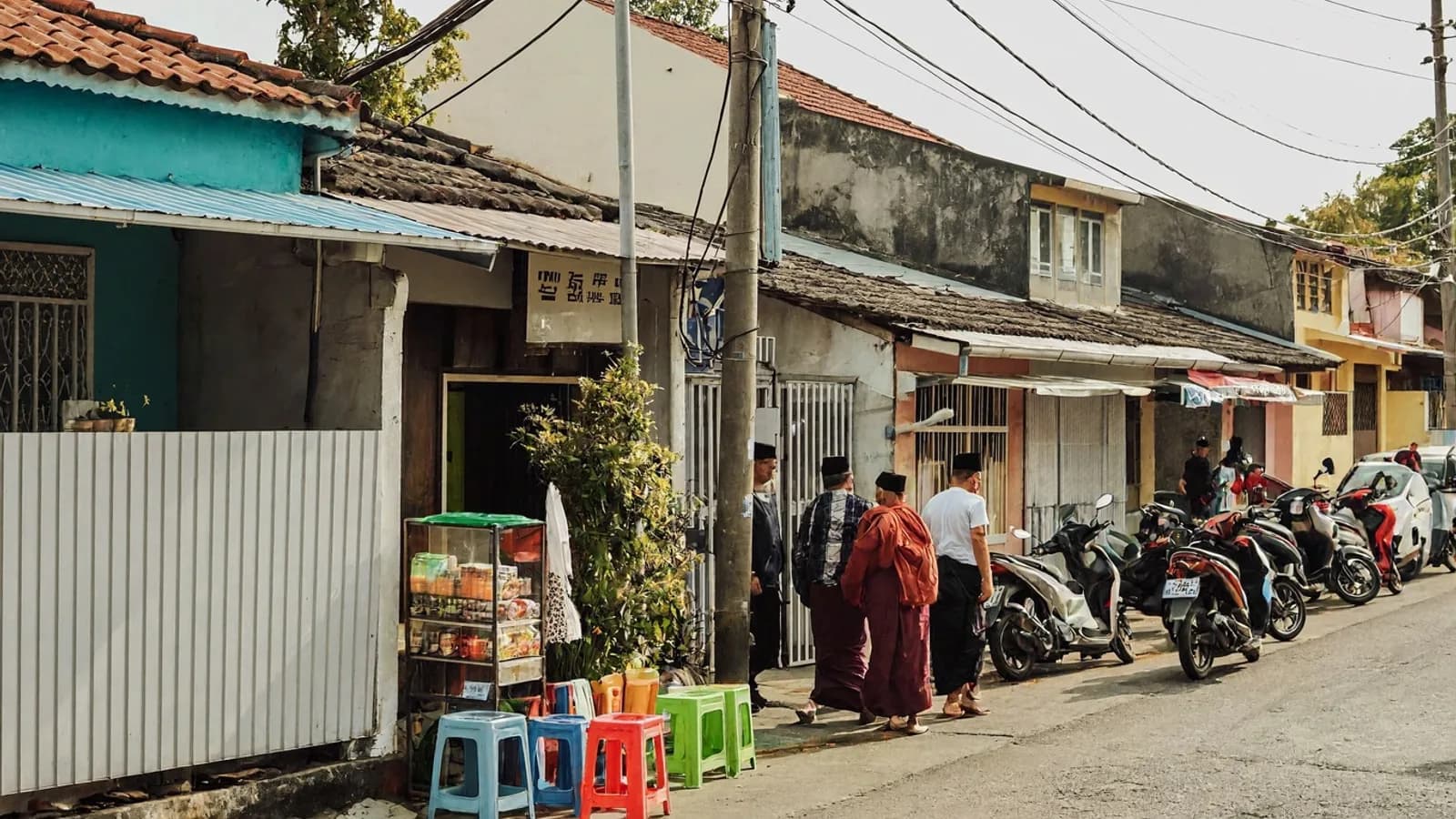
You have found an empty shophouse opposite a large mosque, or a church that fills up every Sunday. It looks ideal: hundreds of people arrive every week without any marketing from you. Yet many owners are disappointed after opening, because the crowd lasts only an hour or two, worshippers head straight home, or worshippers' parking blocks the shopfront. This guide helps you read the crowds around a place of worship as they really are before you sign a lease.
Why Places of Worship Are Different From Other Crowd Generators
Campuses, offices and markets bring people in almost every day in a similar pattern. Places of worship are different: the crowds are highly scheduled, arrive in short waves and often peak on particular days or seasons. People also come to worship, not to shop. They will only stop if your business meets a need that arises before or after the service.
There is a social side too. The area around a place of worship usually has caretakers, community figures and habits that people care about. A business seen as disruptive, for example noisy during prayers or selling goods considered inappropriate, can lose local goodwill quickly.
Three Layers of Crowds to Separate
Do not judge a place of worship from a single visit when it is full. Break its crowds into three layers:
Daily crowds. For example, people attending the five daily prayers at a neighbourhood mosque, or daily worship at a temple. Numbers are small but regular, and usually local residents.
Weekly crowds. Friday prayers, Sunday services or mass, regular study groups, prayer meetings. Numbers can be much larger, but only on one day a week.
Seasonal and event crowds. Ramadan, Eid al-Fitr, Eid al-Adha, Christmas, Easter, Chinese New Year, Vesak, Galungan, temple anniversaries, weddings, funerals or large lectures. These can be very busy, but only for a few days or weeks a year.
The revenue that covers your monthly rent must come mainly from the first and second layers. Treat the third layer as a bonus, not the basis of your calculation.
General Patterns by Place of Worship
The table below is a general picture to help you plan survey visits. Every place of worship has its own schedule, so always ask the caretakers directly or check the notice board.
Place of worship | Regular crowds to check | Seasonal moments to check | Notes for business |
|---|---|---|---|
Neighbourhood mosque | Dawn, sunset and evening prayers; regular study groups | Ramadan (breaking the fast, tarawih), Eid al-Fitr, Eid al-Adha | Mostly local residents, good for everyday businesses |
Large or main mosque | Friday prayers, weekend lectures | Ramadan, Eid, major events | Big but short waves; parking often overflows |
Church | Sunday services or mass (often several sessions), midweek services | Christmas, Easter, weddings | Crowds concentrated on Sundays |
Hindu temple (pura) | Regular worship | Galungan, Kuningan, temple anniversaries, Nyepi (activity very limited) | Pattern depends heavily on the local customary calendar |
Buddhist or Chinese temple | Regular worship, community activities | Chinese New Year, Vesak, Cap Go Meh | Visitors may come from other cities on major days |
Which Businesses Fit, and Which to Avoid
Usually a good fit
Drinks and quick snacks that can be bought within a minute or two after the service.
Breakfast or lunch near a mosque as dawn or Friday prayers end, or near a church after the morning service.
Worship supplies: sarongs, prayer garments, caps, holy books, candles, incense, flowers or offerings, or modest fashion, depending on the place of worship.
Everyday neighbourhood services such as photocopying, a small grocery or water refills, which still work on ordinary days.
Catering and cakes for study groups, thanksgiving gatherings or fellowship events, ordered by organisers and members.
Think twice
Businesses selling products that may be seen as inappropriate near a place of worship. Some regions have distance rules for certain products, so ask the local licensing office or district office.
Noisy businesses, such as a workshop with a loud compressor or a café with loud music, especially if their busy hours clash with worship times.
Businesses that need long stays and large parking, since parking is often taken by worshippers during services.
Position Matters More Than Simply Being Close
Two shophouses both 50 metres from a mosque can perform very differently. What decides it is the path people take in and out.
Find the busiest gate. Large places of worship often have several entrances. Watch which gate pedestrians use and which one cars use.
Follow the way home. After the service, where do most people walk? To a bus stop, the car park or the housing area? A shop on the route home is more likely to get visitors.
Look at where people park. If worshippers park across the road from your shop, they have to cross twice. If parking spills right in front of your shop, other customers may not be able to stop.
Watch for pop-up traders. On Fridays, Sundays or holidays, temporary stalls often appear in the grounds or on the pavement. They can be direct competitors with far lower costs than yours.
Check road closures. In some places, the road in front of a place of worship is partly closed during Friday prayers, large masses or holidays. That can help pedestrians but cut off vehicle access to your shop.
Sample Calculation: Do Not Let Busy Days Fool You
Below is an illustration for a drinks kiosk near a main mosque. These figures are not market data, only an example of how to calculate. Replace them with your own field counts.
Component | Illustrative assumption | Weekly result |
|---|---|---|
Ordinary days (6 days) | 60 transactions a day × Rp12,000 | Rp4,320,000 |
Friday (1 day) | 150 transactions × Rp12,000 | Rp1,800,000 |
Weekly total | 510 transactions | Rp6,120,000 |
Monthly estimate | About 4.3 weeks | About Rp26,300,000 |
Notice that in this example, Friday, the day that looks busiest, contributes less than a third of weekly revenue. If you only surveyed on a Friday and multiplied by seven, your estimate could be more than twice too high. Do the same calculation separately for Ramadan or the holiday season, then compare it with the rent you can afford.
Keeping Good Relations With Caretakers and Residents
Around a place of worship, social approval matters as much as formal permits. A few simple steps:
Introduce yourself to the mosque committee, church council or temple caretakers before opening. Ask whether there are customs to respect, such as no music during worship times.
Ask the head of the neighbourhood unit (RT or RW) about past businesses nearby, including complaints about parking or noise.
Do not use the place of worship's parking for your customers without permission.
Consider modest, sensible support, such as providing drinking water at big events, without turning it into heavy-handed promotion.
Field Survey Checklist
Take this list when you visit a potential site. Try to come on at least one ordinary day, one weekly worship day and one evening.
Regular worship times and the year's activities noted from the caretakers or notice board.
Passers-by in front of the shop counted on an ordinary day, not just a busy one.
Main gates for pedestrians and vehicles mapped.
The direction most worshippers take home observed.
Worshippers' parking and its effect on the shopfront checked.
Road closures during major services asked about.
Number of pop-up traders on busy days noted.
Local rules or customs on product types, music and opening hours asked about with the caretakers, RT or district office.
Nearby businesses asked how ordinary-day and busy-day sales compare.
District population data checked on BPS to see whether local residents can sustain ordinary days.
Conclusion
A place of worship can be a source of loyal, regular customers, as long as you assess its crowds honestly. Separate daily, weekly and seasonal crowds; judge viability on ordinary days; choose a position on worshippers' route home; and build good relations with caretakers and residents from the start. Your next step: ask for the activity schedule of the place of worship near your potential site, then plan three survey visits before you discuss rent with the owner.