Opening a Business in an Apartment Block or Rusun: How to Gauge Real Residents, Unit Position and Building Rules
Thousands of units in one building look like a guaranteed market, but sold units are not always occupied and building management rules can limit your business. Learn how to estimate real residents, choose the right unit position and read the building rules before you lease.
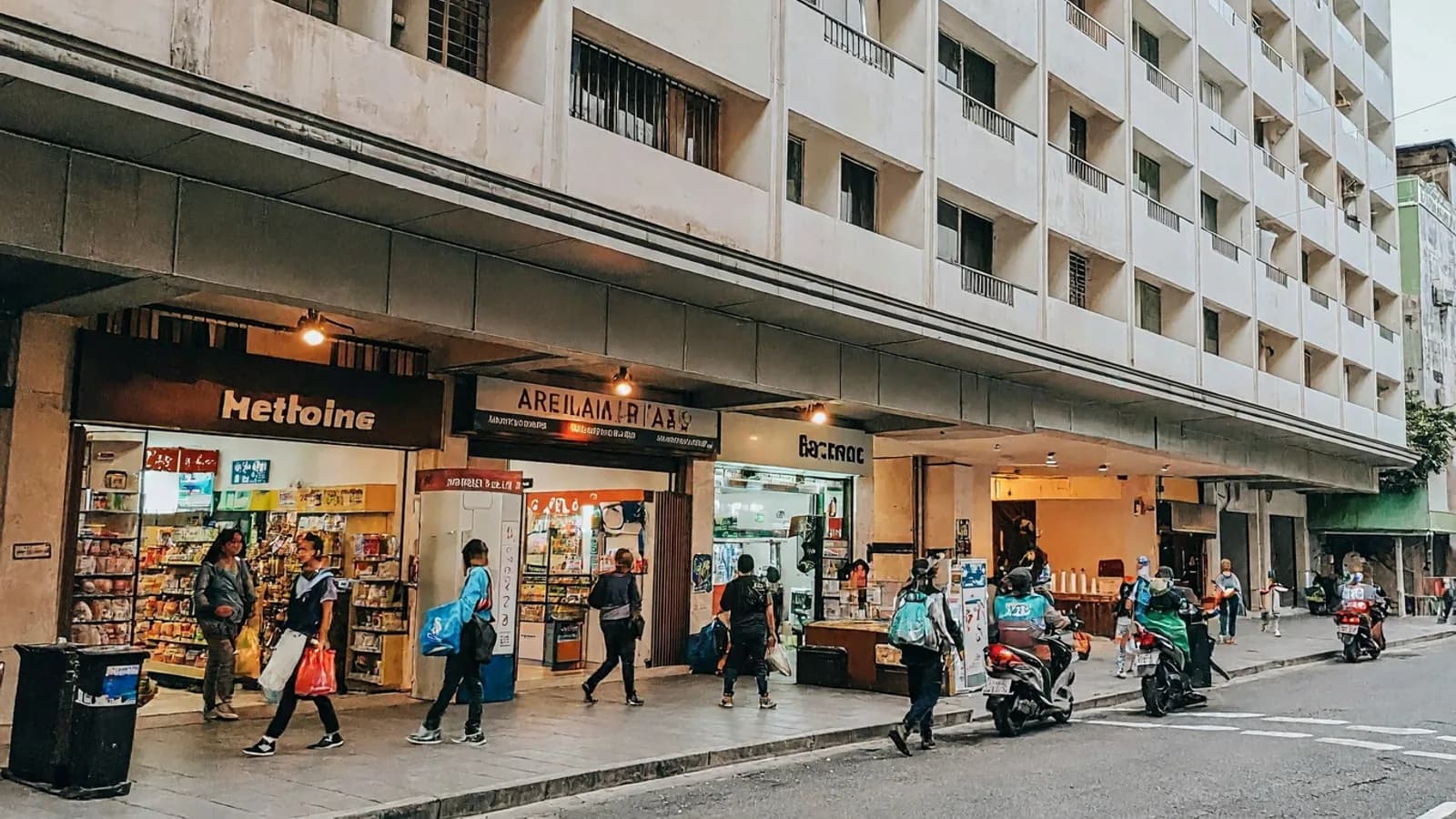
A single apartment tower can hold hundreds or even thousands of units. For a laundry, minimarket, food stall or coffee kiosk owner, that number sounds like customers already waiting at the door. The catch is that sold units are not always lived in, residents do not always shop inside the building, and building management has rules that can restrict your opening hours, how you cook and even your signage.
This guide helps you assess a commercial unit in an apartment building or rumah susun (rusun, Indonesian low-cost flats) more realistically: who lives there, how many people actually stay, which units residents really walk past, and which rules you need to read before you pay any rent.
Why Apartments Are Attractive, and Why They Can Be a Trap
The main appeal of an apartment building is a market concentrated in one place. Residents do not need to cross a road or find parking to buy drinking water, get their laundry done or grab dinner. For practical everyday needs, that kind of proximity is powerful.
But several traps are easy to miss:
Sold units are not occupied units. Many units are bought as investments and left empty or rented out only occasionally.
Residents are often out all day. In buildings dominated by office workers, the place can be very quiet from morning to late afternoon.
Outsider access is limited. If the commercial area can only be entered with a resident access card, your market stops at the number of people living there.
Competitors are invisible. Residents can order food and groceries through apps, so you also compete with businesses outside the building.
Management rules are binding. Opening hours, bans on gas stoves, service charges and building electricity rates can all change your cost calculations.
Know What Kind of Building It Is
Not all vertical housing is the same. The type of building strongly shapes who lives there and how they shop. The table below is a general picture to check against what you see on the ground, not a fixed rule.
Building type | Typical residents | Busy times | Businesses that often fit |
|---|---|---|---|
Studio or short-stay rental apartments near campuses or offices | Students, young workers, frequent turnover | Early morning and evening after work | Laundry by the kilo, small minimarket, ready meals, water refills |
Middle-income family apartments | Young families with small children | Afternoon, evening and weekends | Kitchen supplies, small pharmacy, salon, children's tutoring, vegetables and side dishes |
Upper-middle and premium apartments | Professionals, expatriates, established families | Evenings and weekends, lots of delivery | Coffee, bakery, premium laundry, speciality groceries |
Owned or rented low-cost flats (rusunami/rusunawa) | Low- to middle-income residents, often long-term | Most of the day, many residents at home | Basic groceries, cheap food stalls, phone credit, tailoring, household needs |
Mixed-use buildings with offices or a mall | Residents plus office staff and visitors | Weekday lunch, evenings for residents | Food and drink, quick services, daily necessities |
Steps to Estimate Real Residents
Figures in marketing brochures are usually unit counts, not the number of people who actually live there. Use the methods below to get closer to the real figure.
Ask management and security staff. Ask for an estimated occupancy rate, the number of active access cards, or how many units pay their service charges regularly. Not everyone will answer, but even a rough reply helps.
Count lit windows. Visit between 8 and 9 pm, pick one side of the building and count lit windows against the total. Repeat on two different days.
Check night-time parking. A nearly empty residents' car park on a weekday night suggests low occupancy or residents without vehicles; compare it with your other observations.
Watch the lobby at commuting time. Count the people entering through the lobby for an hour, for example from 6 to 7 pm.
Talk to rental agents. Agents know how many units sit empty and how quickly units are let. Lots of vacancy listings for the same building is also a clue.
Ask existing businesses. The owner of a laundry or minimarket in the building usually knows the busy days and hours, and whether the building is getting busier or quieter.
A Rough Calculation Example
Here is an illustration for a laundry-by-the-kilo business. All figures are examples only; replace them with your own survey results.
Component | Example figure | How to check |
|---|---|---|
Units in the building | 800 units | Brochure, developer website, management |
Estimated occupied units | 60%, or about 480 units | Count lit windows, ask management and agents |
Units likely to use a laundry service | 30% of occupied units, about 144 units | Ask residents, look at competitors inside and outside |
Frequency of use | Once a week | Short interviews with a few residents |
Estimated orders per day | About 20 orders | 144 orders a week divided by 7 days |
Minimum needed to cover costs | For example, 25 orders a day | Work it out from rent, service charge, electricity, wages and supplies |
In this example, the market inside the building is not enough on its own. You would need extra customers from outside, a pick-up and drop-off service for neighbouring buildings, or lower rent. A simple calculation like this stops you being dazzled by the figure of 800 units.
Where the Unit Sits Inside the Building
In an apartment building, the position of your unit matters as much as a shophouse's position on a street. Pay attention to the routes residents really use every day.
Near the main lobby and residents' lifts: passed most often, but usually the most expensive and the first to be taken.
Ground floor with a street-facing door: can serve residents and outsiders alike. Check whether outsiders are allowed in and can enter easily.
Lower ground or basement: often close to parking. Good for residents with cars or motorbikes, but can be quiet for pedestrians and prone to damp or flooding.
Podium or upper commercial floors: without a strong reason for people to go up, units here can be very quiet even if the rent is cheap.
End of a corridor or behind a pillar: poor visibility. Residents can live there for years without noticing your shop exists.
If the complex has several towers, find out which tower is the busiest and which routes residents take to the gate, bus stop or car park. Units along those routes are usually livelier.
Building Rules You Must Read
Besides your lease with the unit owner, you are also bound by the building rules set by management. Ask for them in writing and check the following.
Service charge: how much per square metre per month, who pays it (you or the owner), and how often it rises.
Electricity and water rates: some buildings bill through management at their own rates. Ask what they are and whether capacity can be increased.
Opening hours: whether the commercial area must close at a certain time and whether 24-hour trading is allowed.
Cooking rules: many buildings ban gas cylinders in some units. Confirm this before opening a food business, including rules on exhaust and extraction.
Signage and decoration: size, placement and approval for signs or promotional banners.
Deliveries and waste: when you can receive stock, which service lift to use and how to dispose of rubbish.
Courier and ride-hailing driver access: whether they can come to your door or must wait at a set point. This matters for any business relying on delivery.
Renovation: permits, renovation deposit, contractor working hours and installation limits.
If management and the residents' association (P3SRS) are in a dispute, for example over service charges, note it as a risk. Conflicts like this can affect cleanliness, security and future cost increases.
Residents Only, or Outsiders Too?
This question decides how big your market is. If your unit can only be reached through a gate with an access card, assume your market is the building's residents alone. If the unit faces the street or has open access, you can also draw local residents, office workers or passers-by.
To gauge the potential outside the building, you can compare population density in the surrounding districts and sub-districts using the Kecamatan Dalam Angka publications on the BPS website, then confirm on the ground whether local people are actually willing to come into the apartment area.
Field Survey Checklist
Take this list when you visit a potential unit. Make at least two visits: one on a weekday evening and one at the weekend.
Number of units and towers, and estimated occupancy from management or agents
Lit-window count between 8 and 9 pm
Number of people passing the lobby or unit in one hour at commuting time
Visible resident profile: students, workers, families, older people
Similar businesses inside the building and within walking distance
Outsider access: open, limited or residents only
Resident routes to lifts, parking, gates and bus stops
Visibility of the unit from main routes and from the street
Building rules: opening hours, gas rules, signage, renovation
Service charge, electricity and water rates, and deposits
Waiting point for couriers and ride-hailing drivers
Unit condition: damp, basement flood risk, ventilation
Short interviews with two or three business owners in the building
In an apartment building, the unit count is a promise. The lights on at night are the real market.
Common Mistakes
Estimating revenue from the number of units rather than real residents.
Choosing a cheap unit on a podium floor that hardly anyone passes.
Not reading the building rules, then discovering after renovation that gas stoves are banned.
Forgetting that residents can order from outside the building through apps.
Surveying only at weekends, when weekdays can be very quiet, or the other way round.
Conclusion: Your Next Step
Apartment blocks and rusun can be excellent locations for everyday-needs businesses, as long as you calculate from real residents, choose a position on routes people actually use, and understand the management rules from the start. Begin by asking for the building rules and a breakdown of monthly costs, then do an evening survey to estimate occupancy. After that, plug your survey figures into a simple calculation like the example above before you sign a lease.