Opening a Business in a Tourist Area: How to Plan for Peak Season, Low Season and the Right Spot
Tourist areas can be packed during long holidays and then quiet for weeks afterwards. Learn how to read the tourism calendar, estimate a full year of revenue, choose a spot on the visitor route and negotiate rent that fits the seasons.
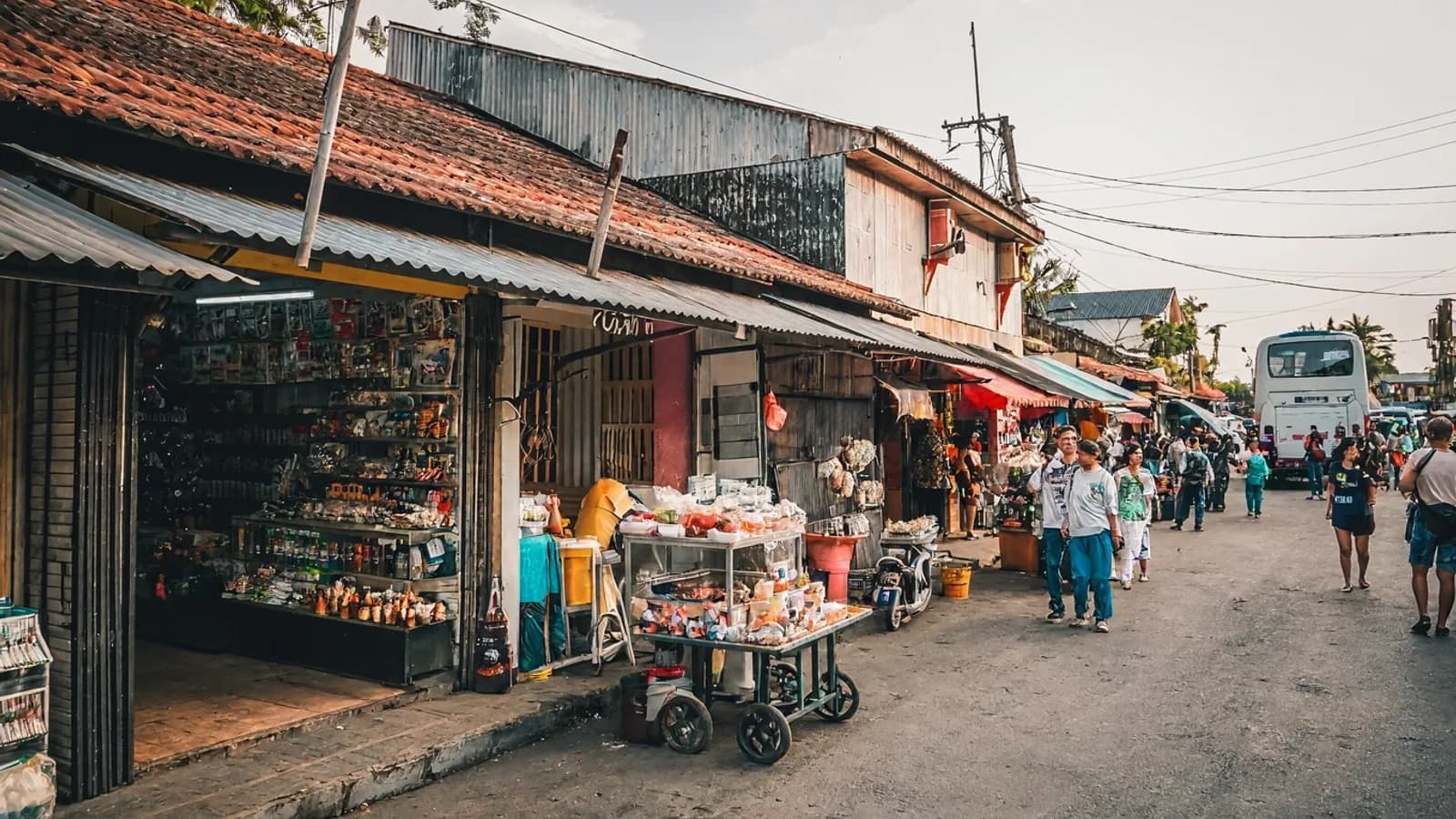
You visit a tourist area during a long holiday and see streets full of visitors, queues at every stall and tour buses lined up. It is natural to think: a business here would sell out. The problem is that the crowd you are seeing may only last a few weeks a year. Outside the holidays, the same area can be quiet while the rent still falls due every month. This guide helps you assess a site in a tourist area as a whole, not on the strength of one busy day.
Why tourist areas need different maths
Ordinary locations, such as near housing or on a main road, tend to have fairly stable daily and weekly patterns. Tourist areas have far sharper seasonal swings. Three things set them apart:
The gap between peak and low season can be huge. A few weeks of peak sales often have to carry months of costs.
Most customers come once. Tourists rarely become regulars, so you must attract new buyers every day.
Rent is often priced on the peak-season story. Landlords usually quote based on peak crowds, not the yearly average.
Know the three layers of customers
Businesses that last in tourist areas rarely depend on tourists alone. Try mapping these three groups:
Tourists. They arrive in numbers during holidays, weekends and events. They buy on impulse and respond to how a shop looks, but seldom return.
Tourism workers. Guides, bus drivers, parking attendants, hotel staff, ticket clerks and other traders. Fewer in number, but present almost every day, including in the low season.
Local residents. People living in the villages or neighbourhoods around the attraction. They cushion your sales in quiet months, provided your products and prices suit them too.
The more layers you can serve, the smaller your low-season risk. A fairly priced eatery can serve all three; a specialist souvenir shop depends almost entirely on tourists.
Reading the busy and quiet calendar
Before running any numbers, build a 12-month calendar for the area. Common triggers for crowds include:
School holidays (usually mid-year and year-end), which drive family trips.
Eid, Christmas and New Year holidays, often the highest peak for domestic destinations.
Long weekends created by public holidays and collective leave days.
Ordinary weekends, which can be much busier than weekdays.
Local events: festivals, traditional ceremonies, pilgrimages or competitions with fixed dates.
Weather and the rainy season, which can cut visits to nature attractions such as beaches or mountains.
How to check: look at this year's national holiday and collective leave calendar, ask the attraction's management or the local tourism office which months are busiest, and search the BPS website for tourist visit and hotel occupancy publications for your province or regency. Monthly hotel occupancy figures can show how visits rise and fall through the year, even though they will not match daily footfall at your exact spot.
Estimate a full year, not a busy day
The most common mistake is multiplying a busy day's takings by 30 days and 12 months. It is safer to split the year into seasons and estimate each one separately. The table below is an illustration for an eatery in a tourist area. The figures are not benchmarks; replace them with your own survey results and estimates.
Season | Months (example) | Daily revenue (illustration) | Revenue per month | Annual total |
|---|---|---|---|---|
Peak (school holidays, Eid, year-end) | 3 | Rp4,000,000 | Rp120,000,000 | Rp360,000,000 |
Normal (busy only at weekends) | 5 | Rp1,500,000 | Rp45,000,000 | Rp225,000,000 |
Low (rainy season, after holidays) | 4 | Rp600,000 | Rp18,000,000 | Rp72,000,000 |
Total | 12 | Average ±Rp54,750,000 | Rp657,000,000 |
Look at the gap. Using only the peak-day figure, annual revenue would come out at Rp1.44 billion, more than twice the seasonal estimate. With example fixed costs of Rp35 million a month, this business does very well in peak season but loses about Rp17 million in every low-season month. Over four quiet months, the shortfall could reach Rp68 million, which has to be covered from peak-season savings.
Steps to build a seasonal scenario
Decide how many months count as peak, normal and low, based on the calendar you built.
Survey or ask about the likely number of buyers per day in each season, then multiply by the average spend.
Work out monthly fixed costs: rent, wages, electricity, local levies and equipment instalments.
Compare low-season revenue with fixed costs. If it falls short, total the shortfall across the low season.
Set aside a reserve at least equal to that shortfall before you open, not once the quiet months arrive.
Choosing your spot within the tourist area
In a tourist area, a few dozen metres can change everything. Visitors follow set routes, and their mood differs on the way in and the way out.
The entry route suits pre-visit needs: breakfast, drinking water, equipment hire, raincoats, sunscreen.
The exit route suits souvenirs, a meal after a long walk and cold drinks. Many people only want to carry purchases when they are heading home.
Near bus and car parks is usually busy, but check that groups are not steered straight to shops partnered with guides or travel agents.
Inside the paid area may be busier, but management rules, revenue sharing and opening hours are usually stricter.
The access road from town or the main road can catch both tourists and residents, making it more resilient in the low season.
How to check: stand at the entry and exit gates on a busy day, watch where most people walk after getting out of their vehicles, where they stop, and which route they take back to the car park.
Rent and lease terms that fit the seasons
Because income is uneven, how you pay rent matters as much as how much you pay. Points worth asking about or negotiating:
A payment schedule that falls due after peak season, not in the middle of the quiet months.
Tiered rent or revenue sharing, especially where the space is run by a tourism authority or a tourism village.
Area levies and fees, such as cleaning, security or contributions to the operator, which may not be included in the quoted rent.
Rules on opening hours and closing days, such as whether you can stay open late or must close when the attraction closes.
Land certainty: who legally owns the land or kiosk, and whether a redevelopment of the area could relocate traders.
Business types that cope better with the low season
No business is guaranteed to succeed, but some patterns tend to hold up better in tourist areas:
Businesses also needed by residents and tourism workers, such as fairly priced eateries, small convenience stores or laundry services for homestays.
Businesses with low fixed costs that can scale down when it is quiet, for example by cutting casual staff or opening hours.
Products that can be sold online out of season, such as packaged souvenirs with a long shelf life.
Businesses with flexible suppliers, so stock can be ramped up quickly in peak season without piling up in the quiet months.
Field survey checklist for tourist areas
Take this list on your site visits. Aim to go at least three times: on a busy day (a long weekend or ordinary weekend), on a normal weekday, and during the low or rainy season.
How many people pass the site every 15 minutes, on a busy day and on a normal weekday?
Is the site on the entry route, the exit route, or both?
Where do tourist buses and cars park, and how far is the walk to your site?
How many kiosks or shophouses are closed on a normal weekday? Many closed units can signal a long low season.
Are residents and tourism workers shopping nearby, not just tourists?
What happens in the rain: flooding, slippery paths, or visitors leaving?
Who manages the area, and what rules apply to traders (opening hours, levies, kiosk appearance)?
What do long-standing traders say about the quietest month and how long it lasts?
Are there plans for redevelopment, trader relocation or new construction in the area in the next few years?
A tourist area is not judged by its busiest day, but by whether your business can survive its quietest month.
Conclusion: count the year, not the day
A tourist area can be a very profitable location, as long as you run the numbers honestly. Your next steps: build a busy-and-quiet calendar for the area you are considering, visit outside the holiday season, fill in the seasonal table with your own figures, and make sure your reserve can cover the quiet months. If the numbers still make sense after all that, then negotiate the rent and its payment schedule.