7 Factors for Choosing a Business Location Before You Sign the Lease
Location is the most expensive decision in opening a business, and the hardest to undo. Here are seven factors to check, and how to check each one, before you pay for a shophouse lease.
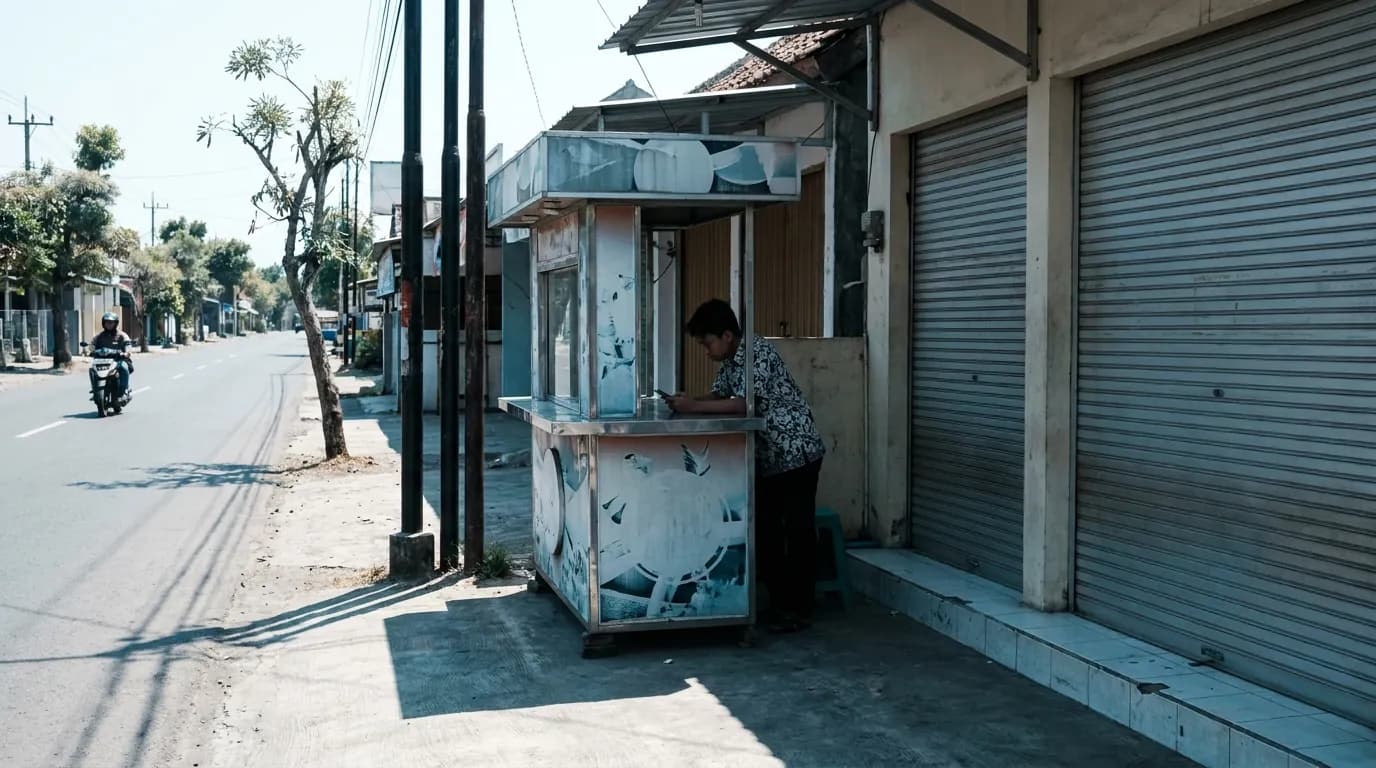
You can change a menu in a week and adjust prices tomorrow morning. A location, though, usually locks you in for years, because shophouse (ruko) leases in Indonesia are typically paid a year or more in advance. Pick the wrong spot and you pay a premium for a place customers never visit.
The good news: most location risk can be checked before you sign. Here are the seven factors that matter most, with a practical way to assess each one.
1. The target market around the site
Start with a simple question: who lives, works or studies within walking distance or a five-minute ride? A coffee shop for students needs a campus and boarding houses nearby. A laundry service needs dense housing. A dental clinic needs middle-income families.
How to check:
List the "traffic generators" nearby: campuses, schools, offices, hospitals, markets, stations and housing estates.
Look at the type of housing. Gated estates, apartments and boarding houses (kos) shop very differently.
Check prices at nearby businesses. If every café sells coffee for Rp15,000, your Rp45,000 menu needs a strong reason to exist.
2. Relevant foot traffic, not just crowds
A busy road does not automatically bring buyers. What matters is that the people passing match your target customer, and pass during your opening hours. Office districts peak at 7–9 a.m. and 5–7 p.m. but can be empty at weekends. Campus areas can go quiet for the whole semester break.
Count traffic on site at several times and on different days. We cover the method in our guide to measuring foot traffic.
3. Access and parking
In most Indonesian cities, customers arrive by motorbike. Questions to answer:
Is there safe motorbike parking in front of or close to the site?
Is the site on the morning-commute side of the road or the evening side? For food and drink, the way-home side often wins.
How far is the nearest U-turn? Few people will loop back 2 km for a coffee.
Is it close to a bus stop, a KRL or MRT station, or a ride-hailing pickup point?
4. Visibility
People cannot buy from a shop they do not see. Stand on the street and approach the site from both directions. Can drivers see the sign early enough? Is it hidden by trees, power poles or the building next door? Corner units and spots near traffic lights are usually easier to see.
5. Competitors and complementary businesses
Nearby competitors are not always bad news. A row of cafés or a food street pulls in visitors precisely because people come to choose. The danger is a saturated market: too many similar businesses with the same prices and concept, chasing a limited number of buyers.
Beyond competitors, look for complementary businesses: a print shop near a campus, a healthy-food stall near a gym, snacks near a school. We go deeper in our article on competitors near your location.
6. Total cost versus revenue potential
Do not compare rent alone. Add up the total cost: rent, deposit, fit-out, security and cleaning fees, electricity and permits. Then compare it with expected revenue. Many food and drink operators use a rough rule that rent should stay at or below about 10–15% of monthly revenue.
A cheap, quiet site can cost more than an expensive, busy one. See how to run the numbers in our break-even guide before leasing a shophouse.
7. Local rules and the neighbourhood
Before you pay, make sure your business is allowed to operate there:
Check the zoning with the local spatial planning office and arrange your licences through OSS, Indonesia's online business licensing system.
Ask the owner or building manager about rules on opening hours, signage and parking.
Get to know the neighbourhood. A café open late in the middle of a dense residential area can draw complaints.
Speeding up the checks with data
All seven factors can be checked by hand, but it takes days, especially when you are comparing several sites. Loka by PetaAI speeds this up: enter an address and a business type to get a feasibility score, a competitor analysis within a 1 km radius, a picture of foot traffic, a transport score from 0 to 100 and a PDF report you can show a partner or landlord.
Data does not replace a site visit. It helps you shortlist the sites worth visiting, and gives you clear reasons when you have to choose.
Frequently asked questions
What is the most important factor in choosing a business location?
The match between your target market and the people who are actually around the site. Foot traffic, access and cost only mean something if the people passing by are potential customers.
How long should I observe a potential location?
At least one weekday and one weekend day, in the morning, at midday, in the afternoon and in the evening. If your business depends on a campus or school, check during the holidays too.
Is a location with cheap rent always the safer choice?
No. Cheap rent often means low foot traffic. Compare the total cost with the revenue potential, not just the rent.
Analyze franchise locations with Loka
Check any spot's potential — POI density, competitors and a viability score in minutes.
Try Loka