Check the Owner and Title Before Renting a Business Space: How to Avoid Scams, Disputes and Double Leases
A great location means nothing if the person renting it out is not the rightful owner or the property is in dispute. Learn which documents to ask for, how to verify them and the warning signs to watch before paying a deposit.
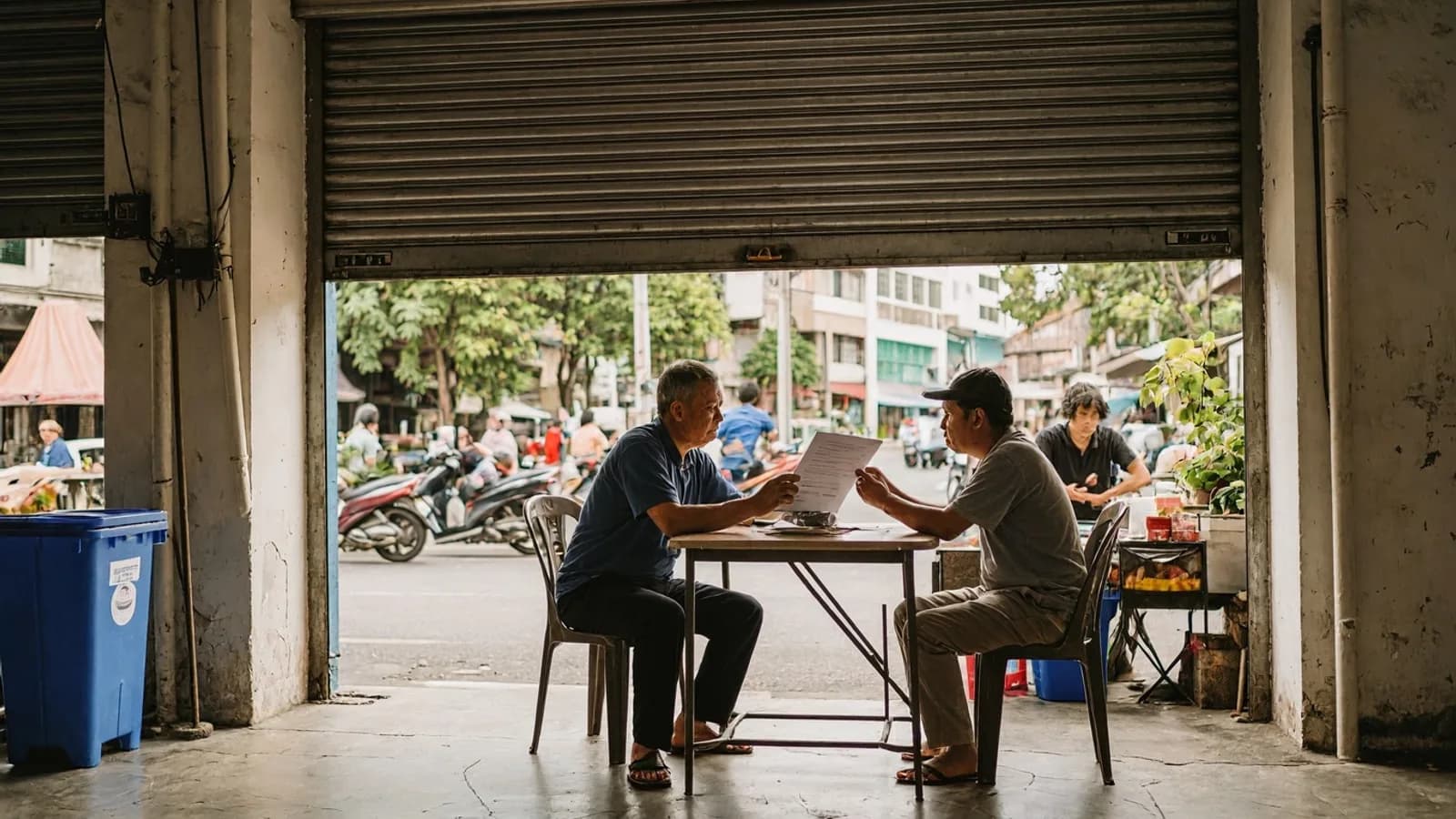
You have found a shophouse in the right spot, the street looks busy and the rent fits your numbers. Then the person who says they own it asks for a deposit today so nobody else takes the unit. This is where many small business owners lose money: not by choosing the wrong location, but by renting from someone with no right to rent it out, or from a property with problems attached.
This article covers a step that is often skipped before signing a lease: confirming who legally owns the space and whether it is safe to rent. We do not go through lease clauses in detail (that is a separate topic). Instead we focus on checking the owner's identity, the land title and the property's status, all of which should be done before you hand over any money.
Why the Owner's Legal Standing Matters as Much as the Location
Business rent in Indonesia is usually paid a year or more upfront. Add renovation, signage and equipment, and the money tied up in one address can be very large for a small business. If halfway through the lease someone else claims to own the property, or a bank turns up because it was collateral on a bad loan, you could be forced out before you recover your investment.
Situations that come up fairly often in practice include:
A tenant sub-letting without the owner's permission, then disappearing after taking your money.
Inherited property rented out by one heir while the other heirs disagree.
Marital property rented out by one spouse while the couple are in dispute.
Property pledged to a bank that could be auctioned if the owner's loan goes bad.
Fake online listings using photos of someone else's shophouse and asking for a booking transfer.
New shophouses from a developer whose titles have not yet been split or handed over to the buyer.
Documents to Ask For and How to Check Them
An honest owner rarely minds showing documents. You do not need to keep the originals; just see them and ask for copies or photos. The table below summarises the main documents, what to match and where to check.
Document | What to match | How or where to check |
|---|---|---|
Owner's ID card (KTP) | Name matches the name on the title exactly | See the original and compare the photo with the person |
Land title (SHM or HGB) | Title holder's name, address, area, certificate number | See the original; for certainty, request a title check at the local Land Office |
HGB expiry date | Right expires later than the end of your lease | Shown on the certificate; ask the Land Office if unsure |
Property tax notice (SPPT PBB) and receipts | Taxpayer name, property address, recent years paid | Look at the notice and receipts; arrears can signal trouble |
Family card or marriage certificate | Owner's marital status | If married, get the spouse's consent |
Statement of heirs | Full list of heirs | All heirs consent or grant authority |
Power of attorney | Specific authority to lease, from the titled owner | See the original; ideally drawn up or certified by a notary |
Previous lease (for a lease takeover) | Written owner permission to transfer the lease | Contact the owner directly, not only through the tenant |
Reading SHM and HGB in simple terms
SHM (freehold ownership) is the strongest land right and has no expiry. HGB (right to build) is common for shophouses in commercial areas and runs for a fixed period. With HGB, make sure the right does not expire during your lease. If the end date is close, ask whether the owner has started the renewal.
Title checks at the Land Office
For long or high-value leases, consider asking for a title check at the local Land Office (BPN), together with the owner or through a notary. This can show whether the title is registered and whether it carries a mortgage, a block or a seizure. Information on land services is available on the Ministry of ATR/BPN website. Fees and procedures can vary, so ask the local office or a notary directly.
Warning Signs That Should Make You Pause
Not every sign below means fraud, but each one deserves an explanation before you go further:
Rent far below similar units in the same row with no clear reason.
Pressure to pay today because there are supposedly many other interested tenants.
The owner cannot or will not show the original title, only a photocopy or photo.
Names on the ID card, title and tax notice differ without a written explanation.
You only ever deal with an intermediary and can never meet the owner.
Property tax unpaid for years, or signs and graffiti saying the property is in dispute.
Neighbours or the local RT head do not know the person claiming to be the owner.
Checking Steps From Site Visit to Signing
This order stops you jumping to payment before the checks are done:
Ask the neighbours and local community leaders. Who owns this unit, for how long, and have there been problems? The business next door often knows the history.
Meet the owner in person. If an agent or outgoing tenant is involved, ask to meet the person named on the title.
Match the ID card, title and tax notice. Names and property address should be consistent. Photograph all documents with the owner's permission.
Check marital and inheritance status. Get written consent from the spouse or all heirs where relevant.
Ask whether the property is pledged to a bank. If so, understand the risk and consider a Land Office title check.
For large amounts, involve a notary. A lease drawn up or certified by a notary gives stronger evidence if a dispute arises.
Only then pay a deposit, into the owner's account, with a clear receipt and a written agreement on refunds if the deal falls through.
Special Cases Small Businesses Often Meet
Kiosks in markets or shopping centres
Market kiosks are often not titled to the trader but held as a right of use from the market operator. Make sure the person transferring the kiosk is registered with the operator and that transfers are allowed. Visit the operator's office to check the registered holder and the transfer rules.
Taking over an existing lease
A lease takeover is attractive because the fit-out is already done. But the outgoing tenant only holds the remaining term, and their lease may forbid transfers. Get the owner to sign consent to the transfer, and know when the remaining term ends and what rent will be asked on renewal.
New shophouses from a developer
In new estates, shophouse buyers sometimes do not yet hold a title in their own name. Ask about the title status and, if it is still in process, request proof of purchase and confirmation from the developer that the buyer may rent the unit out.
The right location from the wrong person is still the wrong decision.
Field Checklist for Legal Standing
Take this list when you meet a prospective landlord. Tick each item before paying:
I have met the person named on the title in person.
The names on the ID card, title and tax notice match.
I have seen the original title, not just a copy.
The type of right (SHM/HGB) is clear and any HGB runs beyond my lease.
Property tax for recent years is paid.
Marital and inheritance status is clear, with written consent where needed.
I know whether the property is pledged to a bank.
For a power of attorney or lease takeover, there is written permission from the owner.
Neighbours or community leaders know the owner and are not aware of any dispute.
Payment goes to an account in the owner's name, with a stamped receipt.
I have read the written lease and, for large amounts, consulted a notary.
Conclusion: Check First, Pay Later
Choosing a busy, affordable location is only half the job. The other half is making sure you rent from someone entitled to rent it and that the property is safe. Next step: for every site on your shortlist, run through the checklist above before handing over a deposit. If any document cannot be explained, it is better to wait a few days or walk away than to risk a year's capital on a troubled address.