Check Flood and Waterlogging Risk Before Renting a Business Space: Water History, Floor Height and the Costs to Count
A site that is busy in the dry season can be flooded and empty in the rainy season. Learn how to trace a site's flood history, read floor height and drainage, and price the risk before you lease.
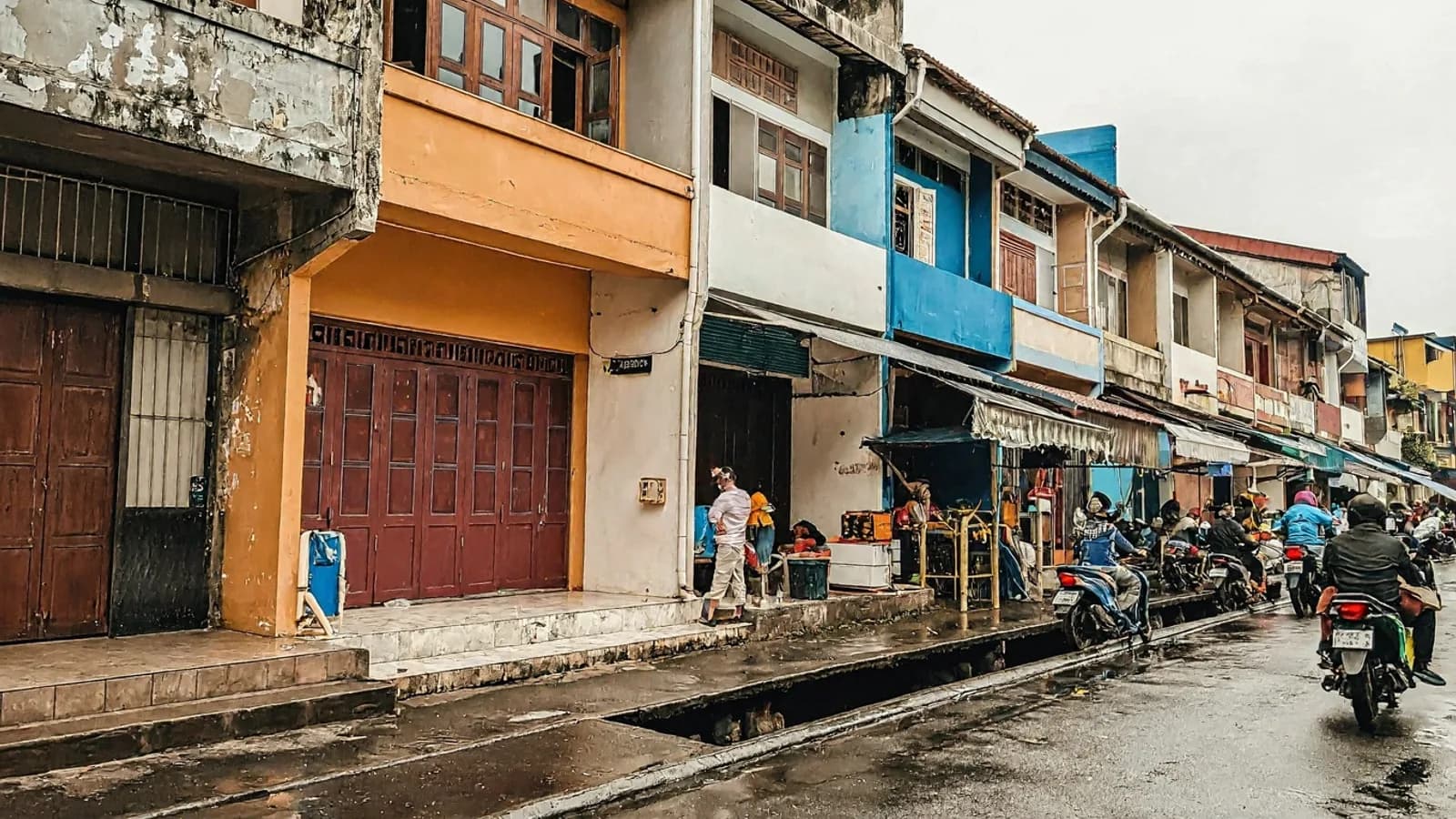
Many owners survey potential sites in the dry months: the road flows freely, the shophouse looks clean, the neighbours are busy. Then the rainy season arrives, water gets into the shop, stock is ruined, and the road outside turns into a pond so customers go elsewhere. Flooding and waterlogging are not just occasional bad luck; they are a location risk you can check before paying a year's rent upfront. This guide helps you trace the water history of an address, assess the building, and work out whether cheaper rent still makes sense once flood risk is priced in.
Why Flooding Belongs in Your Location Calculation
Flood losses rarely stop at wet goods. Several layers of cost are easy to overlook:
Closed days: you cannot open until the water recedes and the shop is cleaned.
Damaged stock and equipment: goods on lower shelves, machines, fridges and wiring.
Customers cannot reach you: even if your shop stays dry, a flooded access road sends people elsewhere.
Changed habits: after a few failed visits in the rain, some customers switch to a competitor for good.
Cleaning and repair costs: mud, paint, flooring and rusting folding doors.
So the question is not just "has it flooded?" but how often, how high, for how long, and what was affected: the shop, the road outside, or the whole area.
Know Which Kind of Water Threatens the Site
Not all flooding is the same. The type decides how you check it and how you prepare.
Type | Common cause | What you see on site | What to ask |
|---|---|---|---|
Local rain waterlogging | Narrow or blocked drains, or a road higher than the building | Water rises fast in heavy rain, drains within hours | How long does it take to drain? Does it enter the shop? |
River overflow or upstream flooding | A river or canal overflows after rain upstream | Water can arrive even when it is not raining locally and can last for days | When was the last time? How high? How many days? |
Tidal flooding (rob) | High tides in coastal areas | Recurs with the tides, often in certain months | Which months? Just the road or inside buildings? |
Leaks and seepage | Roof, gutters or a wall shared with a neighbour | Stains on the ceiling, damp walls, musty smell | When was it last repaired? Who pays? |
How to Trace the Flood History of One Address
Landlords and agents do not always tell the whole story. Combine these sources to get a full picture.
Ask neighbouring businesses and long-time residents. Stall owners, parking attendants and traders who have been there for years usually remember when water last came in and how high. Be specific: "When was the last flood? Ankle or knee deep? How many days were shops here closed?"
Look for water lines. Check for horizontal stains on walls, electricity poles, fences or the bottom of folding doors. Fresh paint only on the lower part of a wall is also worth questioning.
Ask the RT/RW or kelurahan office. They usually know the regular waterlogging spots and whether any drainage work is planned.
Check a disaster risk map. The BNPB InaRISK portal shows flood hazard index maps by area. Use it as an overview of the district, not a verdict on a single building.
Search local news and videos. Search the street or kelurahan name with "banjir" or "genangan" on search engines and social media. Residents' videos often show the water depth clearly.
Visit during or just after heavy rain. Watch the forecast from BMKG and go when it pours. This is the most honest test: see where the water flows and how long before the road is passable again.
Note the position relative to rivers, canals and low ground. Sites in a dip, near a riverbank or at the bottom of a sloping road carry more risk than those on higher ground.
Reading the Building and Its Surroundings
Floor height compared with the road
Many older shophouses now sit lower than the road in front because the road has been raised every time it was resurfaced. Stand on the pavement and compare: is the shop floor higher than, level with, or lower than the road? A lower floor will almost certainly take in water in heavy rain. Shophouses with a decent step or raised terrace are generally safer, but make sure the step does not put off customers, especially older shoppers or people carrying goods.
Drains at the front and back
Look at the width and depth of the drain in front, and whether it is sealed under concrete slabs with no inspection openings, full of rubbish or blocked. Check the back as well: water often enters through the rear door, the bathroom or floor drains that back up when the main channel is full.
Electrics, roof and shared walls
Position of the electrical panel and sockets: too low is dangerous when water comes in.
Ceiling stains and leaking gutters, especially on upper floors.
Walls shared with neighbours: a damp smell or bubbling paint signals seepage.
Customers' access routes
Your shop may stay dry, but if the only road into the area floods, customers still will not come. Trace the routes likely customers use from housing areas or the main road and mark the spots that regularly flood. Businesses that rely on ride-hailing couriers are affected too: orders can be cancelled when drivers avoid flooded streets.
Price the Risk: Comparing Two Shophouses
Cheaper rent often reflects flood risk. The most honest approach is to add estimated flood losses to your annual costs. The figures below are an illustration; replace them with your own business numbers and what you learn on the ground.
Annual item (illustration) | Shophouse A (has flooded) | Shophouse B (relatively safe) |
|---|---|---|
Rent | Rp40 million | Rp52 million |
Closed days (e.g. 3 events × 3 days = 9 days × Rp800k gross profit/day) | Rp7.2 million | Rp0 |
Stock and equipment damage (e.g. Rp3 million × 3 events) | Rp9 million | Rp0 |
Cleaning and repairs (e.g. Rp1 million × 3 events) | Rp3 million | Rp0 |
Upfront precautions (door barriers, high shelving, raised sockets) | Rp4 million | Rp1 million |
Estimated total cost of occupancy | Rp63.2 million | Rp53 million |
In this example, Shophouse A, with rent Rp12 million lower, ends up around Rp10 million more expensive once the risk is counted, before even considering customers lost to competitors during the rainy season. On the other hand, if the history is just brief waterlogging once a year that never enters the shop, the rent saving may well be worth it. The point is to decide with numbers, not with worry or relief.
Businesses Most Sensitive to Flooding
Laundry: washers, dryers and customers' clothes. Damaged items left in your care also damage trust.
Grocery kiosks and minimarkets: much of the stock sits on the floor or lower shelves.
Pharmacies: medicines exposed to water or damp cannot be sold.
Food businesses: the kitchen, gas and ingredients must be safe and hygienic after a flood, so closures can last longer.
Electronics and printing shops: expensive equipment that is sensitive to water and humidity.
If your business is in one of these groups, give flood risk more weight when comparing potential sites.
What to Agree With the Owner Before Signing
Leases rarely deal with flooding clearly. Without making the contract complicated, discuss and put in writing:
Who pays for building repairs caused by flooding or roof leaks.
Whether you may install door barriers, partially raise the floor or move wiring, and who pays.
Whether there is a rent reduction or lease extension if you cannot operate for more than a set number of days because of flooding.
The owner's obligation to fix the roof and gutters before you move in.
Field Checklist for Flood Risk
Asked at least three neighbouring businesses or long-time residents about the last flood, its depth and how long it took to drain.
Checked for water lines on walls, poles, fences and doors.
Asked the RT/RW or kelurahan about local waterlogging spots.
Checked the area on the InaRISK hazard map.
Searched for news or videos of flooding using the street and kelurahan names.
Visited during or just after heavy rain.
The shop floor is higher than the road and the step is still easy for customers.
Front and rear drains are wide enough, unblocked and can be cleaned.
The electrical panel and sockets are mounted high enough.
No leak stains on the ceiling or seepage on shared walls.
Main customer and courier routes avoid regular flood spots.
Flood risk costs are included in your annual cost calculation.
Responsibility for repairs has been discussed and written down.
Conclusion
Flooding and waterlogging are part of a location's character, just as important as footfall and rent. Before you lease, gather neighbours' accounts, look for physical evidence, check the risk map and visit in heavy rain. Then add your estimated losses to the annual cost and compare with your other options. Next step: take your two or three shortlisted sites, run this checklist for each, and decide on total cost and risk, not just the rent on the listing.