Choosing a Location for a Parcel Shipping Agent: Nearby Online Sellers, Courier Pickup Times, Parcel Space and Other Must-Checks
A parcel shipping agent lives on online sellers, resellers and residents who send packages regularly, not on passing trade. Learn how to read shipment sources, courier pickup times, parcel space, parking and the minimum daily parcels before you rent.
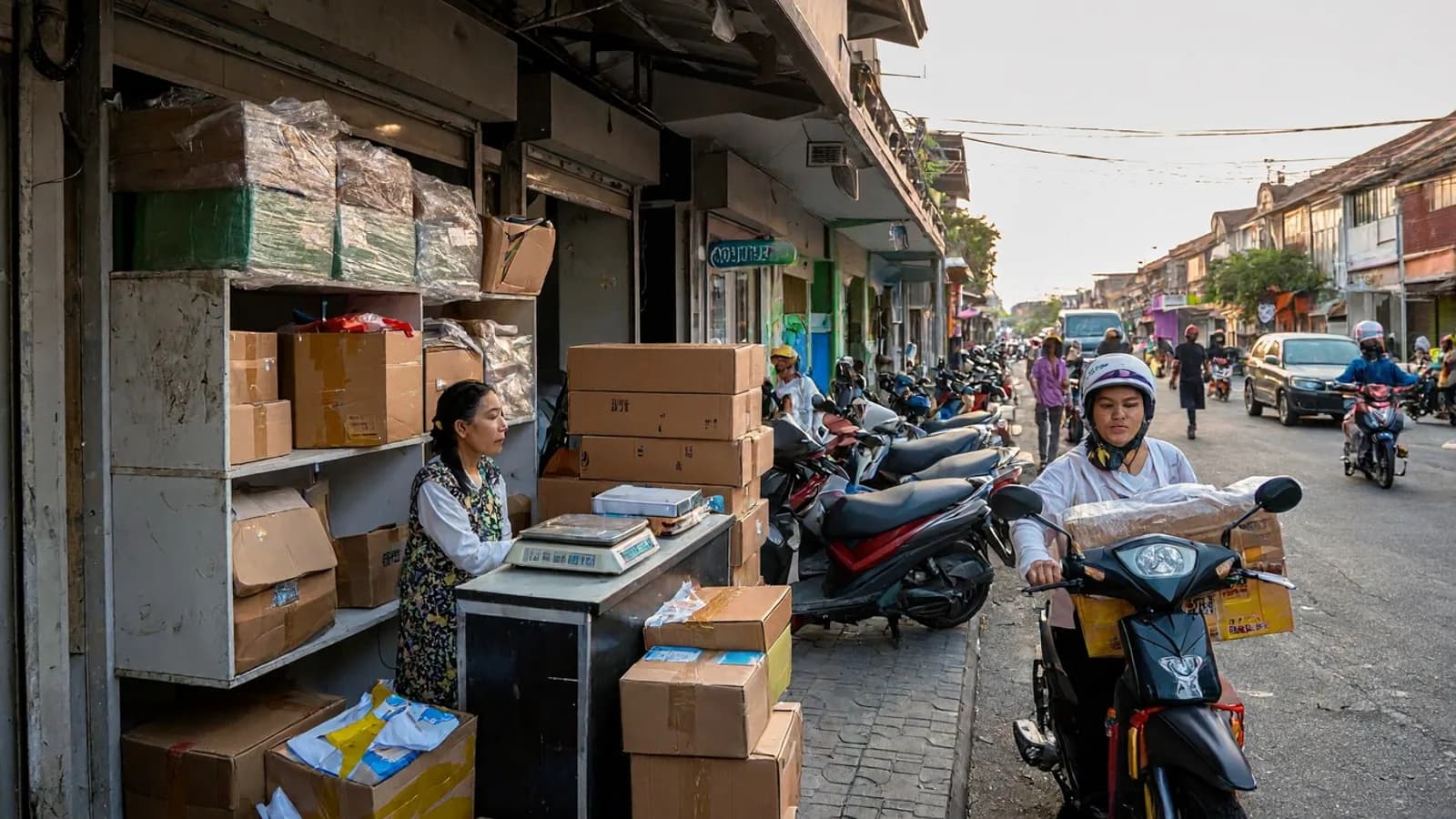
Many people open a shipping agent after noticing how busy their neighbours are selling online. The logic makes sense: more sellers, more parcels to send. Yet a busy agent and a quiet one are often just a few hundred metres apart. The difference is rarely about a busy road. It is about who sends parcels nearby, when they arrive, and whether your spot is easy to pull up to with a pile of packages strapped to a motorbike.
This guide helps you assess a potential site for a shipping agent or drop point in practical terms: reading where shipments come from, matching courier pickup times, and working out the minimum number of parcels needed to cover the rent.
Who Actually Sends Parcels Around You?
Before viewing any shophouse, map the types of senders. Each has a different pattern and different needs.
Regular online sellers: home garment makers, dry snack sellers, cosmetics and accessories shops. They come almost daily, often with dozens of parcels at once, and care a lot about distance and speed of service.
Resellers and dropshippers: volumes go up and down, but they can be loyal if you are friendly and quick.
Ordinary residents: sending things to family back home, especially before Lebaran and other holidays. Small volumes each, but steady.
Nearby offices, schools and businesses: sending documents, product samples or job applications, usually during working hours.
Shoppers returning items: not always much income, but more people get to know your counter.
The best agent locations are usually close to the first group. One active online seller can bring more parcels than dozens of ordinary residents.
How to Find Online Sellers Near a Site
Watch for couriers and sellers carrying sacks or large bags of parcels, especially in the afternoon.
Look for home production clusters: garments, screen printing, crisps, cookies, crafts. Ask the RT head or local community leaders.
On marketplace apps, try filtering sellers by city or district to see roughly how many shops come from that area. Treat it as a rough picture, not hard data.
Visit the nearest existing shipping agents and note who queues and how many parcels they bring.
Talk to two or three local online sellers: where they ship now, what bothers them, and how far they would travel to drop off parcels.
Courier Pickup Times and When Senders Arrive
Shipping agents have a distinct rhythm. Online sellers usually pack orders in the morning and early afternoon, then drop them off before evening so they ship the same day. That makes the agent's cut-off time and the courier's pickup time critical.
Ask the shipping company you plan to partner with what time couriers collect from agents in that area, and whether the schedule can change.
If your site is far from the courier route or sorting hub, pickup may be earlier. Sellers then have to come sooner, and may choose another agent instead.
Check afternoon congestion on roads leading to the site. Sellers stuck in traffic will switch to an easier agent.
Note peak days: often the start of the week after weekend orders pile up, marketplace double-date promotions, Ramadan and the run-up to Lebaran. Make sure the site and space can handle the surge.
Parcel Space, Parking and Loading Access
Parcels take up space faster than you expect. On busy days, hundreds can pile up before the courier arrives. A cramped building leads to scattered parcels, mix-ups and slow queues.
What to Check in the Building
Storage area: separate space for parcels that are weighed and ready for collection.
Weighing and packing desk: room for a scale, a label printer and extra packing materials such as tape and bubble wrap.
Dry floor and sound roof: cardboard parcels are ruined by water. Check for waterlogging history in the rain.
Power and internet: the computer, label printer and partner app must run throughout opening hours. Check mobile signal as a backup.
Doors that lock securely: parcels kept overnight are your responsibility.
Parking and Access
Almost every sender arrives by motorbike, often with parcels tied to the seat or stacked on the footboard. They need to stop for a few minutes right at the door. Make sure there is a forecourt or road shoulder for at least a few bikes, and that a courier van can stop briefly to load without blocking traffic. Sites on narrow single-lane roads or in front of a median with no nearby U-turn are often difficult.
Competition: Other Agents and Courier Brands
In many cities, one stretch of road can host several agents from different courier brands. That is not always bad, because online sellers often use several couriers depending on what buyers choose. What to assess:
Which brands already operate within walking distance or a few minutes by motorbike, and which are missing.
Whether competing agents often have long queues or close early, a sign of unmet demand.
Whether the courier company has a minimum distance rule between agents. Ask its official partnership team before renting.
Whether you can become a multi-courier agent, if partnership terms allow it.
Worked Example: How Many Parcels a Day to Cover the Rent?
Agent income usually comes from a commission or margin on shipping fees, plus sales of packing materials. Rates vary by company and can change, so ask your partner for the official scheme. The table below is purely an illustration of the method, not market figures.
Item (illustration) | Example assumption | Monthly value |
|---|---|---|
Rent | Rp24 million per year | Rp2,000,000 |
One staff salary | example | Rp2,500,000 |
Electricity, internet, label paper | example | Rp700,000 |
Total fixed costs | Rp5,200,000 | |
Average net income per parcel | example Rp2,500 | — |
Minimum parcels per month | Rp5,200,000 ÷ Rp2,500 | 2,080 parcels |
Minimum parcels per day (26 open days) | 2,080 ÷ 26 | about 80 parcels |
Once you have a figure like this, compare it with your survey. If you only found a few small sellers nearby, 80 parcels a day may be hard. If there is a garment cluster or several big sellers ready to switch, it is more realistic. To estimate households and businesses in a district, check the district-in-figures publications from BPS.
Comparing Location Types for a Shipping Agent
Location type | Advantages | Watch out for |
|---|---|---|
Near a home production cluster | High volume from regular sellers | Reliance on a few big customers |
Main road through a residential area | Easy for residents and sellers to find | Higher rent, parking can be tight |
Inside a housing estate or alley | Cheap rent, close to home sellers | Limited access for courier vans and bike queues |
Near a campus or boarding houses | Many young online sellers and returns | Quiet during semester breaks |
Shared with another business (photocopy, phone counter) | Shared fixed costs, existing visitors | Parcel space can get mixed and messy |
Field Survey Checklist for a Shipping Agent
At least several active online sellers or a production cluster within a few minutes by motorbike.
You have spoken directly with potential big customers about their shipping habits.
Courier pickup times for the area are confirmed with the shipping company.
Roads to the site are not badly congested in the afternoon when sellers drop off parcels.
There is stopping space for several motorbikes and a courier van at the door.
Parcel storage can handle peak-day surges and can be locked.
Dry floor, sound roof and no history of waterlogging.
Stable power and internet, with strong mobile signal as backup.
Competing agents, their brands and queue lengths are noted.
Partnership rules, including agent spacing and premises requirements, are checked with the official team.
The lease allows loading activity and partner signage.
Minimum daily parcels have been compared with the volume estimate from your survey.
A healthy shipping agent is not the one that looks busiest from the road, but the one sellers can reach most easily before the courier comes.
Conclusion: Start From the Senders, Not the Shophouse
A shipping agent's location depends on who sends parcels nearby and how easily they can reach you before pickup time. Next steps: map online sellers in two or three candidate areas, confirm courier schedules with your shipping partner, calculate minimum daily parcels using your own costs, and compare that with your survey. If the numbers do not add up yet, start small or share space in an existing business while you build regular customers.