Choosing a Location for a Pharmacy: Doctors' Practices, Clinics, Residential Areas and Other Must-Checks Before You Lease
A pharmacy does not live on passing trade but on prescriptions, regular medication needs and people who need something fast. Learn how to read nearby prescription sources, the local population, competitors, building readiness and permits before you lease.
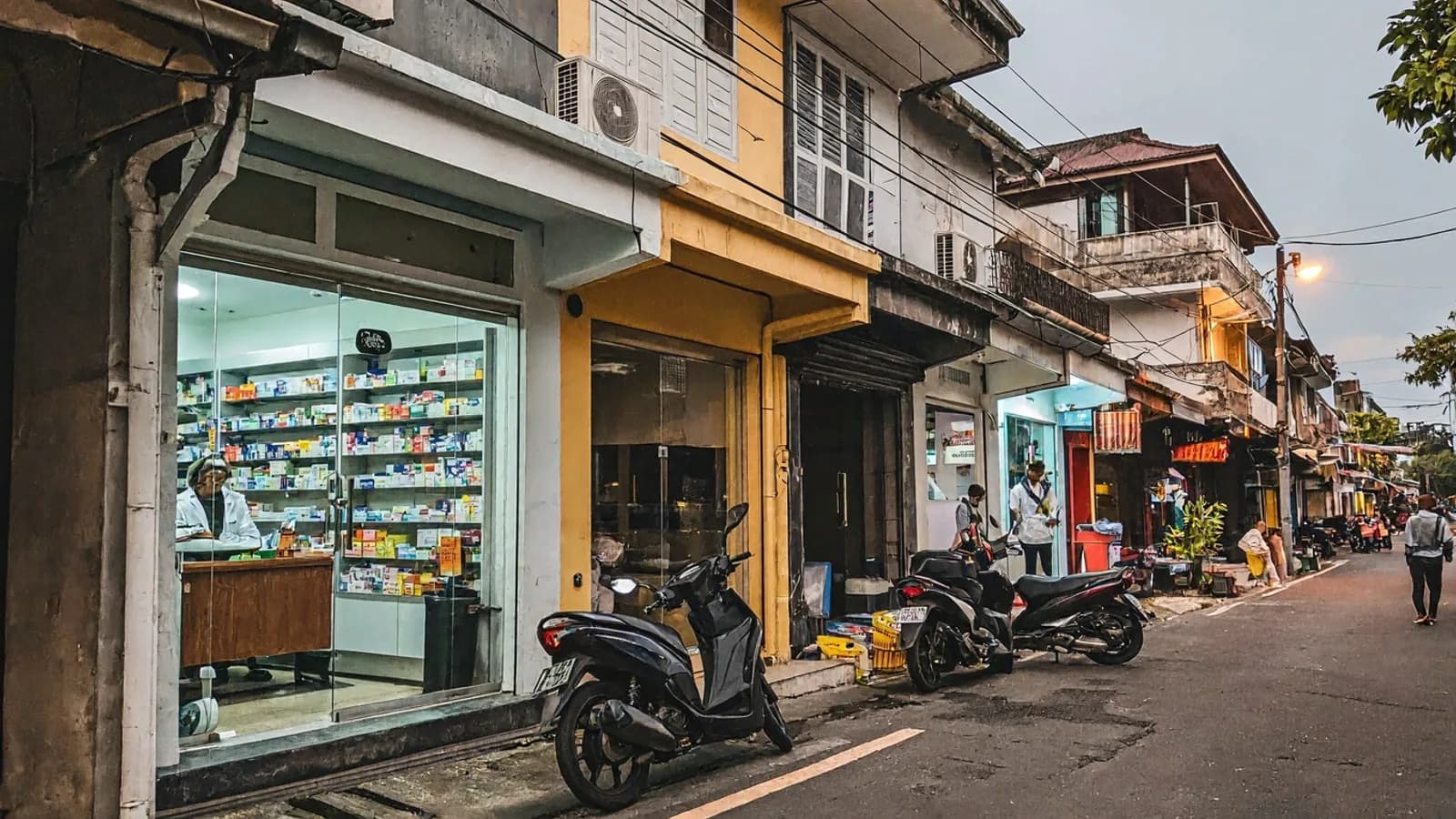
You already have a responsible pharmacist, starting stock capital and a few candidate shophouses. They all look busy. The problem is that a pharmacy does not work like a warung or a coffee shop. People rarely buy medicine because they happened to walk past and felt tempted. They come because they are holding a prescription, because their regular medication has run out, or because their child has a fever at eleven at night. If your site is not close to those sources of need, a busy road will not help much.
This guide helps you assess potential pharmacy sites in a practical way: where buyers come from, how to read prescription sources nearby, which population traits to check, the competitors people often overlook, building readiness, and the permits to confirm before you sign a lease.
First, Know the Four Kinds of Pharmacy Customer
Before judging a location, understand that pharmacy customers come for different reasons, and each type needs a different kind of site.
Prescription holders. Just out of a doctor's practice or clinic and wanting their medicine as quickly as possible. They choose the pharmacy nearest the practice, not the cheapest.
Regular-medication buyers. Residents with long-term needs such as blood pressure or diabetes medicine, vitamins or special formula milk. They stay loyal to a pharmacy near home with good stock and a friendly pharmacist.
Self-medication buyers. People with a cold, headache or stomach ache buying over-the-counter medicine. They pick whatever is easiest on their daily route.
Night-time emergency buyers. Parents with a feverish child or residents needing medicine outside working hours. They look for a pharmacy that is open, well lit and safe to visit.
A healthy pharmacy usually gets a mix of all four. The ideal site is where at least two of these groups meet, for example near several doctors' practices in the middle of a residential area.
Reading the Prescription Sources Around a Site
For a pharmacy, the most important anchor is not a minimarket or a shopping centre but the places where doctors see patients. Not every practice, however, will send prescriptions your way.
Independent doctors and dentists
GPs, paediatricians, internists or dentists without their own dispensary are the most valuable prescription sources. Ask the practice staff or waiting patients directly: is medicine handed out on the spot, or are patients given a prescription to fill elsewhere? Note the practice hours too, because your pharmacy needs to be open when patients walk out.
Clinics, puskesmas and hospitals
Many clinics and almost all puskesmas (community health centres) dispense medicine directly, so few prescriptions may reach outside pharmacies. Their visitor traffic can still bring buyers of vitamins, medical devices or medicines that happen to be out of stock there. Do not count a large clinic as a guaranteed prescription source until you have confirmed it on the ground.
Population Profile: Who Lives Close By?
Regular-medication and night-time buyers are almost always local residents, so density and age structure matter a great deal. You can find population and age groups by district in the Kecamatan Dalam Angka publications from BPS, then add your own observations.
Many older residents: demand for regular medication and devices such as blood pressure monitors or glucose meters.
Many young families: children's medicine, vitamins, baby supplies and night-time emergency purchases.
Many boarding houses and young workers: more self-medication, small over-the-counter purchases, price-sensitive.
Higher-income areas: more open to branded supplements and personal-care products with better margins.
Field signs help too: an active posyandu (community health post), kindergartens or PAUD, seniors' exercise groups, and how many homes look occupied by full families. Ask the RT or RW heads what their residents are like.
Comparing Types of Pharmacy Location
The table below summarises the strengths and risks of site types you will often be offered. Treat it as a starting point and then check the real conditions at your site.
Site type | Main customers | Strengths | Risks to check |
|---|---|---|---|
Near a row of doctors' practices | Prescription holders | Fairly steady prescription flow during practice hours | Doctors move or open their own dispensary; rent tends to be higher |
Inside a dense residential area | Regular medication, night emergencies | Loyal customers, less price competition | Takes time to build trust; limited car access |
On a main road | Self-medication, passing trade | Easy to see and find | Hard to stop, tight parking, road side matters |
Near a clinic or hospital | Visitors and patients' families | Busy for most of the day | Clinic has its own pharmacy; competitors cluster at the same spot |
Competitors People Often Miss
During a survey most people only count other pharmacies. Yet over-the-counter buyers have plenty of other options. Map every seller within a realistic radius, for example 500 metres to 1 kilometre in dense areas, adjusted to local conditions.
Large pharmacy chains: usually stronger on price and range, but not always open 24 hours and not always near small practices.
Long-established independents: already have loyal customers and relationships with local doctors. Find out their hours and what customers complain about.
Drug stores and minimarkets: sell over-the-counter medicine and vitamins, eating into self-medication sales.
In-clinic pharmacies: keep that clinic's prescriptions in-house.
Medicine delivery services: increasingly used in big cities for routine, non-urgent purchases.
Gaps often come from simple things: no pharmacy open at night in the area, none with a pharmacist always present for advice, or certain specialist prescription medicines frequently out of stock. Gaps like these matter more than the raw number of competitors.
Illustrative Example: Estimating Daily Transactions
The figures below are purely an illustration of the reasoning, not benchmarks. Replace each number with your own field counts and supplier price estimates.
Customer source | Example assumption per day | Share that might come to you | Estimated transactions |
|---|---|---|---|
Patients from the 2 nearest practices | 40 patients leaving with prescriptions | For example 40% | 16 |
Regular-medication residents nearby | Estimated from housing and resident profile | For example 10 buyers a day | 10 |
Self-medication from passing traffic | From pedestrian and motorbike counts | For example 15 buyers | 15 |
Night-time emergencies | Depends on hours and competitors | For example 5 buyers | 5 |
In this example the total is about 46 transactions a day. Multiply by an average spend per transaction estimated from product prices and other pharmacies' experience, then compare the monthly revenue with rent, pharmacist and assistant wages, electricity and stock capital. If the numbers only cover costs under your most optimistic assumptions, the site is too risky.
Building and Operations: A Pharmacy Has Special Needs
A shophouse that suits a grocery store may not suit a pharmacy. Medicines need controlled storage, and service needs an organised space.
Temperature and humidity: no direct sun all day, air conditioning possible, no damp or leaks.
Stable power: fridges for certain medicines must run continuously. Ask neighbours about outages and consider backup power.
Flood-free: flooded stock means heavy losses. Ask residents and the owner about past flooding.
Layout space: room for shelves, a small storeroom, a dispensing counter and a reasonably private consultation corner.
Security: solid doors and grilles, good lighting at the front, especially if you plan to open at night.
Quick access: medicine buyers want to stop briefly. Make sure motorbikes and cars can pull over easily.
Permits: Confirm Them Before You Pay Rent
A pharmacy is a health business with stricter licensing than an ordinary shop. Requirements generally include a responsible pharmacist with a practice licence, business registration through the OSS system, zoning that allows the use, and meeting building and facility standards. Some regions have also had additional rules, for example on distance between pharmacies or recommendations from the local health office.
Because rules vary and change, ask the district or city health office and the local investment office directly before signing a lease. Ask the landlord for any building documents you may need, and add a lease clause allowing cancellation or a partial refund if the permit cannot be issued for location reasons.
Field Survey Checklist for a Pharmacy Site
How many doctors, dentists or midwives are within walking distance? Do they send prescriptions outside?
What are the nearest practices' hours, and do your planned opening hours match?
How many patients leave with a prescription during one hour of observation?
Does the nearest clinic or puskesmas have its own pharmacy?
What is the local profile: older residents, young families, boarding houses or a mix? Check BPS district data and ask the RT/RW.
List every pharmacy, drug store and minimarket nearby, with their opening hours.
Is any pharmacy in the area open at night or 24 hours?
Can motorbikes and cars easily pull over and park briefly out front?
Is the shop visible from both directions, especially at night?
Is the building protected from direct heat, damp, leaks and flooding?
How reliable is the power supply according to neighbours?
Have zoning and pharmacy permit requirements been confirmed with the local offices?
Come back at night and at the weekend: are residents still around, and does it feel safe?
Conclusion: Follow the Prescriptions and the Regular Needs
A good pharmacy location is not just a busy road but a spot where doctors' prescriptions, residents' regular medication needs and emergency purchases meet. Your next step: map all doctors' practices and competitors around two or three candidate sites, observe prescription flow during practice hours, check the local profile with BPS data and conversations with neighbourhood heads, then estimate transactions using your own numbers. Make sure the permit can be issued before you pay rent, and choose the site that still makes sense when your assumptions are made more cautious.