Choosing a Location for a Welding and Metal Grille Workshop: Home and Project Orders, Power, Noise and Other Must-Checks
A welding workshop lives on homeowners ordering fences, window grilles and canopies, and on small contractors, not on passing trade. Learn how to read order sources and check power, vehicle access and the risk of neighbour complaints before you rent.
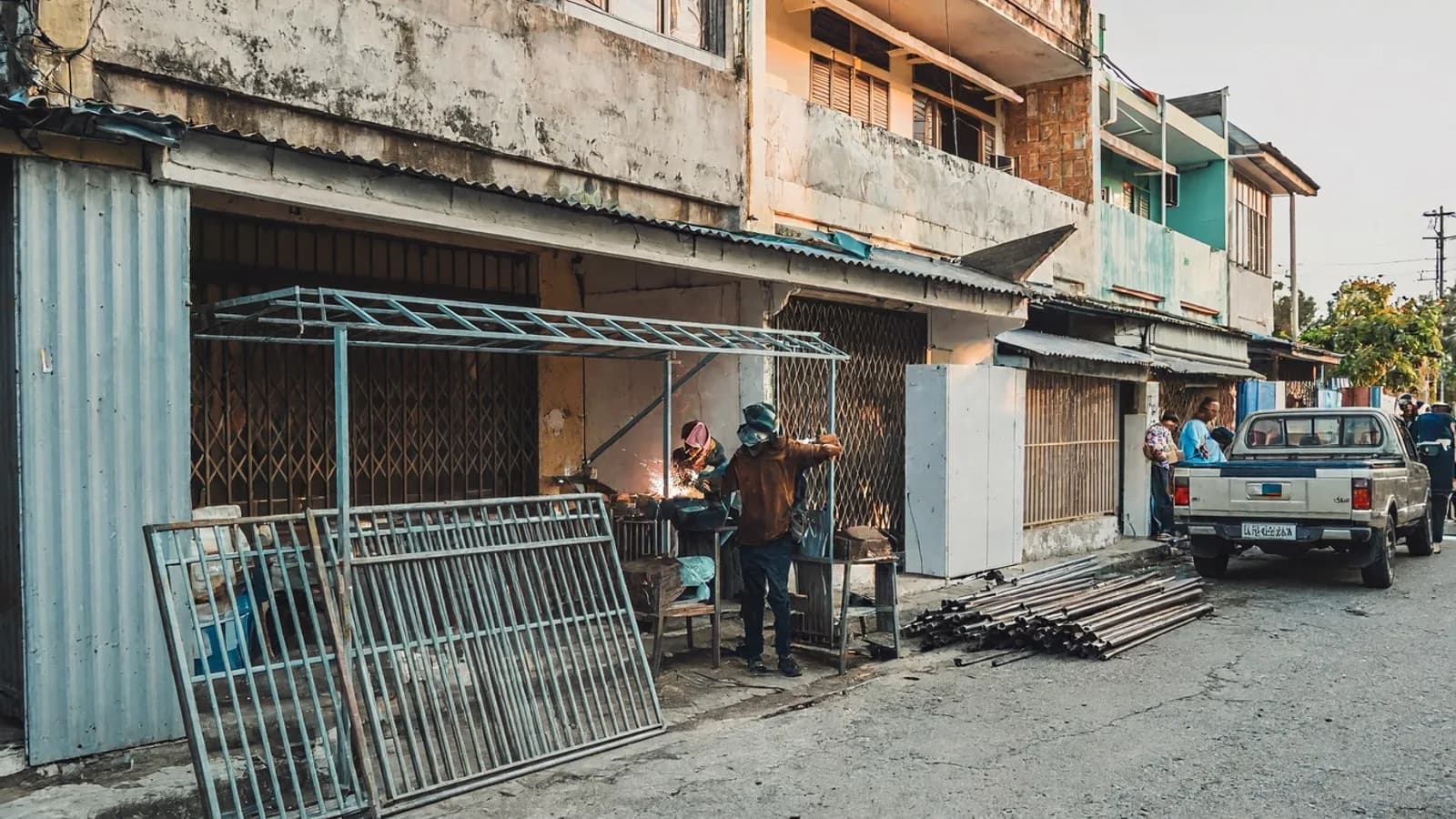
Many welders who want their own workshop are tempted to rent on the busiest road they can find. Yet people rarely order a fence or a canopy because they happened to drive past. Orders come from newly built or renovated homes, small contractors and word of mouth from past customers. A welding shop also brings problems an ordinary store does not: grinder noise, sparks, heavy power demand and long steel bars going in and out. Pick the wrong site and you may face constant power trips, angry neighbours or slow orders despite high rent.
This guide helps you assess a potential site for a welding and metal grille workshop in terms of order sources, access, workspace, power and your relationship with the neighbourhood.
Know where welding orders come from
Before looking at buildings, map out who is most likely to order from you. There are usually four groups:
Homeowners: fences, window grilles, carport canopies, steel stairs, balcony railings. Orders tend to appear when a house is first occupied or renovated.
Small contractors and foremen: light steel roof frames, gates, shophouse structures. They need a workshop they can rely on for deadlines.
Nearby businesses: rolling doors, steel shelving, food carts, display cases, booth frames.
Small repairs: broken gate hinges, re-welding carts, metal chairs. Low value, but they make your name known locally.
Whichever group is largest shapes your ideal site. A workshop relying on homeowners should be close to growing residential areas. One relying on contractors cares more about vehicle access and distance to steel suppliers.
Signs of demand on the ground
You do not need complex data to read demand. Drive around within a few kilometres and look for:
New housing estates where many homes still have no fence or canopy.
Houses under renovation, marked by piles of sand, bricks or scaffolding.
Rows of new shophouses without rolling doors or grilles yet.
The number of other welding shops and whether they look busy or idle.
Building and steel supply stores that are busy, a sign of active construction.
For the longer view, you can compare population and household growth across districts in the Kecamatan Dalam Angka publications from BPS. Districts whose population keeps rising usually keep building homes too, but always confirm with a site visit.
Comparing types of workshop location
The table below is a general overview of the pros and cons of several location types. The weight of each point varies by area, so use it as a starting point for discussion, not a fixed rule.
Location type | Pros | Cons | Best for |
|---|---|---|---|
Main road | Easy to find, finished work seen by many, easier truck and pickup access | Higher rent, limited parking, competition for roadside space | Workshops serving contractors and larger orders |
Entrance to a new housing estate | Close to fence and canopy orders, often few competitors | Developers may ban noisy businesses, demand drops once the estate is full | Workshops focused on homeowners |
Inside a dense neighbourhood | Cheap rent, close to residents for small repairs | High risk of noise complaints, narrow lanes make long bars hard to move | Small workshops doing light work |
Warehouse area or outskirts | Noise is not an issue, plenty of space, suits larger production | Far from homeowners, needs more active marketing | Production and project-order workshops |
Vehicle access and long steel bars
Hollow sections, pipes and angle bars are usually sold in long lengths. Finished fences and canopies are large too. So your site must be reachable by a pickup or small truck, with room to unload and turn long bars without blocking the road.
Measure the road width in front of the site and picture a pickup stopping to unload steel.
Check for barrier gates, high speed bumps or hours when goods vehicles are banned.
Look for sharp bends in the lane that would make long bars hard to carry through.
Work out the distance to the nearest steel supplier. The closer it is, the easier last-minute top-ups become.
Make sure there is somewhere to store finished work before delivery, not on the pavement or road.
Workspace and display space
A welding shop needs more room than it seems. A fence several metres long has to be assembled on the floor, painted and left to dry. If space is tight, work spills onto the road and invites complaints.
Cutting and welding area: hard floor, away from flammable materials, good ventilation.
Painting area: ideally separate so grinding dust does not stick to wet paint.
Material storage: racks for long bars and a safe place for cylinders and machines.
Display space: the front of the unit for sample fences, grilles or photos of past work. For a welding shop, real samples often persuade more than a sign.
Also ask the owner whether machines can be bolted to the floor or fixtures made permanent, and who pays for floor damage from heat and heavy loads.
Power supply: do not guess
Welders, grinders, drill presses and paint compressors may all run at once. If the installed capacity is too small, the breaker trips constantly and work stalls. The exact requirement depends on your machines, so do not guess.
List every machine you will use and the power rating on each label.
Check the installed capacity on the site's meter and ask the owner about past power trips.
Ask an electrician to calculate demand when several machines run together.
Check with PLN or its app about the cost and requirements of upgrading capacity, then agree with the owner who pays.
Inspect cables and sockets. Old wiring pushed to carry heavy loads is a fire risk.
Noise, sparks and the neighbours' blessing
This is the most common reason welding shops are forced to move. Grinder and hammer noise carries far, and paint fumes and welding glare bother some people. Before you sign, take these steps:
Visit the RT or RW head and ask whether there have been objections to noisy businesses in the area.
Look at the nearest neighbours: homes with babies, clinics, places of worship or tutoring centres will be more sensitive.
Set reasonable working hours, for example no grinding at night or during prayer times.
Ask the housing developer or shophouse manager whether workshops or noisy businesses are banned.
Check zoning and business permits for that area with the relevant local office or the regional licensing system before paying rent.
The welding shops neighbours like are not the quietest ones, but the ones with clear working hours and a forecourt that does not take over the road.
A rough rent and orders calculation
The figures below are purely an illustration of the thinking. Rent, prices and margins in your area may be very different, so replace them with figures from your survey and from talking to local operators.
Item (illustration) | Site A: main road | Site B: near a new housing estate |
|---|---|---|
Monthly rent | Rp6,000,000 | Rp3,500,000 |
Other monthly costs (power, labour, operations) | Rp9,000,000 | Rp8,000,000 |
Total fixed costs per month | Rp15,000,000 | Rp11,500,000 |
Example average gross profit per order | Rp1,500,000 | Rp1,500,000 |
Minimum orders per month to break even | 10 orders | about 8 orders |
In this illustration, the question is not which site is cheaper but whether you are confident of hitting that minimum number of orders at each one. Test your confidence by counting new homes without fences, contractors you know and competitors nearby.
Welding workshop site survey checklist
Take this list on your survey and fill it in for each potential site:
Are there new estates, renovations or new shophouses within a few kilometres?
How many other welding shops are nearby, and do they look busy?
Can a pickup or small truck get in, stop and unload without blocking the road?
How far is the nearest steel supplier, and do they deliver?
Is the floor big enough to assemble long fences, paint and store materials?
Is there a front area to display samples of your work?
Have you checked installed power, past power trips and the cost of an upgrade?
Is ventilation adequate and is the site away from flammable materials?
Are the RT/RW heads and nearest neighbours fine with your planned hours?
Does the developer or estate manager ban noisy businesses?
Have you asked the relevant office about zoning and business permits?
Does the lease say who pays for floor damage, electrical work and repairs?
Conclusion
A good welding workshop site is not just busy. It is close to your sources of orders, easy for steel-carrying vehicles to reach, has enough power and is accepted by the neighbourhood. Start by mapping where your orders have come from so far, then survey two or three candidate sites with the checklist above. Work out the minimum monthly orders for each, agree working hours with local community heads, and only sign the lease once power and permits are settled.