Choosing a Location for a Car Workshop: Road Access, Plot Size, Fleet Customers and Other Must-Checks
A car workshop needs a road cars can easily turn into, space for queues and overnight vehicles, and customers who come back. Learn how to read customer sources, check access and the building, and work out capacity before you lease.
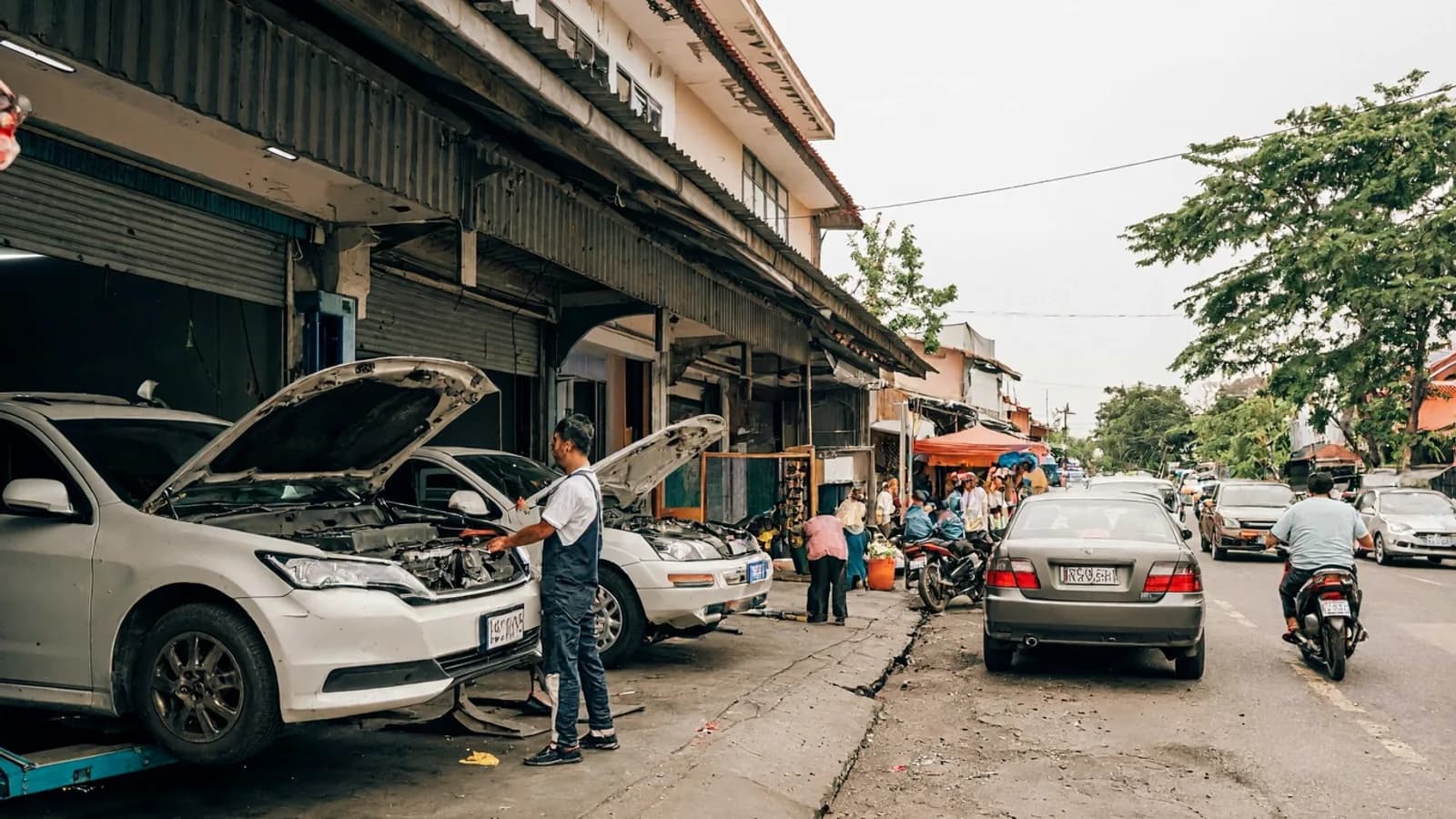
Many would-be workshop owners pick a site the way they would pick one for a food stall: find a busy road and rent whatever shophouse is available. The results are often disappointing. Cars struggle to get in because the road is narrow or has a median, there is no room for a queue, the floor cracks once a lift is installed, and neighbours start complaining about the compressor. A car workshop has very different space and customer needs from ordinary retail.
This guide helps you assess a potential workshop site more rigorously: who the customers are, where they come from, how easily cars can get in and out, what to check in the building, and how to work out working capacity before you pay rent upfront.
Start With Who Your Customers Are
Car workshops rarely live on passers-by. Most customers already intend to come, because a service is due, something is wrong or someone recommended you. That makes customer sources more important than raw traffic volume.
Private owners doing routine servicing: oil changes, tune-ups, brakes, suspension. They tend to stay loyal to a trusted workshop near home or work.
Emergency customers: flat batteries, tyres, overheating, broken air conditioning. They look for whatever is closest at that moment, so being on a route they use helps.
Fleets: rental cars, taxis and ride-hailing cars, company vehicles, business pick-ups. Steady volume, but usually with special rates and payment terms.
Specialist customers: people looking for specific expertise such as car air conditioning, electrics, automatic gearboxes or certain makes. They will travel further.
Decide which group your workshop will rely on. A general routine-service workshop needs to be near neighbourhoods with plenty of cars. A specialist can be a little further out if it is easy to find and pleasant to reach. A workshop targeting fleets should be close to the depots or offices that run them.
Gauging How Many Cars Are Nearby
Your market is set by the number of cars kept or operated nearby, not the number of people. Some practical ways to read it:
Count carports and garages. Walk the housing within a realistic radius and note homes with a car. Sample a few blocks, then scale up by your estimate of the number of houses.
Look at night-time parking. Evenings show the cars that actually live in the area, including those parked on the street for lack of a garage.
Note the age and type of cars. Cars past their factory warranty are more likely to be serviced at independent workshops. New cars tend to still go to the dealer.
Find fleet depots and offices. Ask residents or parking attendants where rental, travel or company cars usually gather.
Use official data for the big picture. BPS and provincial BPS offices publish motor vehicle counts by type. These help compare regions, but still need checking on the ground because they do not show distribution street by street.
Vehicle Access: Easy In, Easy Out
Workshop customers arrive in a car, often one that is misbehaving. If getting in is a hassle, they will go elsewhere. During your survey, drive in and out of the site yourself, from both directions.
Road width: can two cars pass while another is turning into the workshop?
Medians and U-turns: if there is a median, how far do customers from the other direction have to go to turn around?
Ramps and drains: low cars or broken-down cars must be pushed or towed in without scraping or getting stuck.
Tow truck access: can a tow truck stop and unload without blocking the road for too long?
Rush hour: a road that jams badly at going-home time makes it hard for customers to collect cars in the evening.
Plot Size and the Building
Space caps your capacity. Beyond the working bays, you need room for cars waiting their turn, cars waiting for parts and cars left overnight. Workshops short on space usually park customers' cars on the roadside, which quickly triggers complaints and raises the risk of theft or damage.
Technical points to check in the building
Floor strength: a hydraulic or two-post lift needs a thick, level concrete floor. Have a lift installer or an experienced builder assess it before signing.
Ceiling height and door width: a raised car needs clearance above it. Measure the clear height over the work area and the width of the front opening.
Electrical capacity: compressors, lifts, welders and other tools draw a lot of power. Check the installed capacity and whether PLN can upgrade it.
Ventilation: engines run indoors produce fumes, so airflow matters.
Drainage and waste: used oil and wash water must not go into the street drain. Make sure there is space to store waste oil and plan who will collect it.
A small lockable storeroom: for parts, tools and oil.
An example capacity calculation
Here is a simple illustration to check whether the space and revenue add up. All figures are examples only; replace them with numbers from your own survey and experience.
Component | Example figure | Note |
|---|---|---|
Working bays | 3 bays | Limited by floor area and number of mechanics |
Cars finished per bay per day | 2 cars | Mix of light servicing and repairs |
Working days per month | 25 days | Adjust to your own days off |
Maximum monthly capacity | 150 cars | 3 x 2 x 25 |
Realistic first-year utilisation | 40–60% | Assumption; check with similar workshops |
Cars per month (illustration) | 60–90 cars | Basis for revenue and rent calculations |
Queue and overnight space | At least 2–3 cars | On top of working bays |
Multiply cars per month by a realistic average bill for the area, then compare that with rent and other fixed costs. If rent already takes a large share of revenue in the low-utilisation scenario, the site is too heavy for your first year.
Comparing Types of Workshop Location
Location type | Advantages | Risks | Best for |
|---|---|---|---|
Arterial main road | Seen by many drivers, catches emergency customers | High rent, hard to stop, long medians | Tyres, batteries, quick servicing |
Collector road near housing | Close to car owners, calmer access | Noise can upset residents | General routine servicing |
Automotive cluster | Drivers already look for workshops there, parts nearby | Fierce competition, price pressure | Specialists with clear expertise |
Near a fleet depot or office | Steady volume from contracts | Reliance on a few clients, delayed payment | Workshops ready to serve fleets |
Competitors and Complementary Businesses
Map the dealer workshops, general workshops and specialists nearby. Do not just count them; look at what they offer and what customers complain about. Online reviews often reveal recurring issues, such as long waits or unclear pricing. That can be your opening.
Complementary businesses help: spare parts shops, tyre and wheel shops, car washes and battery sellers. Being close to a parts shop also speeds up jobs because mechanics do not wait long for deliveries.
Neighbours, Permits and the Lease
A car workshop brings compressor noise, grinders, running engines and the smell of oil. Before renting, talk to the head of the RT or neighbourhood committee and to the neighbours on either side. Ask whether there has been a workshop there before and how residents reacted.
Also confirm that workshop activity is allowed in that zone and that the owner permits installing a lift, modifying the floor and upgrading power. Put this in writing in the lease, including who pays to remove installations when the lease ends.
Field Survey Checklist for a Car Workshop
I have driven in and out of the site from both directions.
A tow truck can stop and unload in front of the site.
There is room for a queue and several overnight cars without using the roadside.
Someone qualified has confirmed the floor can take a lift.
Ceiling height and door width have been measured.
Installed electrical capacity is checked and upgrade costs are known.
There is a plan to store waste oil and drainage does not go straight to the street drain.
Car ownership in nearby housing has been sampled at night.
Nearby fleet depots or offices have been noted.
Competing workshops are mapped, along with their customers' complaints.
The nearest parts shop, its distance and opening hours are known.
The RT head and neighbours have been consulted about noise and working hours.
Workshop use is allowed in the zone and the owner's permission for fit-out is in the lease.
The site is safe for customers' cars overnight: lighting, fencing and security.
For a car workshop, the first question is not how busy the road is, but how easily a broken-down car can get in and wait safely.
Conclusion: What to Do Next
Start by deciding who your main customers will be, then filter potential sites by the number of cars nearby and ease of access. Once you are down to two or three candidates, survey them in your own car, measure the space and building, work out capacity with conservative numbers and talk to residents before you sign anything. A site that passes all of these steps gives your workshop a much better chance of building a loyal customer base.