Choosing a Location for a Trendy Drinks Booth: Impulse Buyers, Hot Hours, Delivery Orders and Other Must-Checks
Iced tea and trendy drinks booths live on buyers who decide in seconds because they are thirsty. Learn how to read stopping points, hot hours, waiting space for delivery riders, ice and power needs, and the minimum cups you need to sell each day.
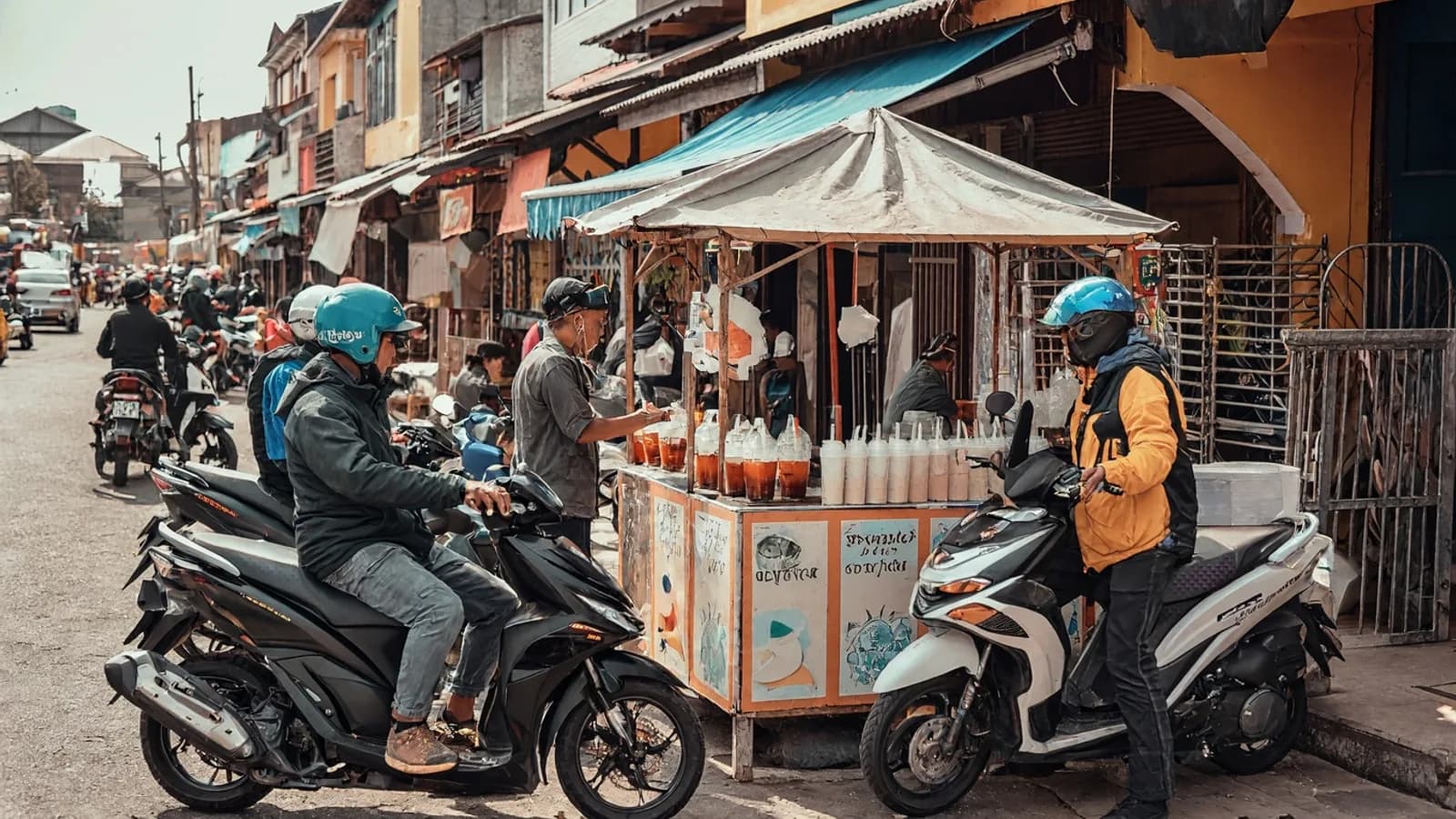
Iced tea, boba and other trendy drinks booths look easy to start: the capital is relatively small and even a tiny space will do. The trouble is that many booths close within months because their spot is busy but rarely stopped at. Drinks buyers decide in seconds, usually because they are thirsty, hot or just want a treat. If they have to turn around, hunt for parking or only notice your booth after passing it, the sale is gone. This guide helps you assess a site from the point of view of impulse buyers, online orders and the booth's practical needs.
Who Actually Buys Trendy Drinks?
Before judging a site, get to know where your buyers come from. Each group has its own hours, routes and buying habits.
School and university students: busy after school or between classes, price-sensitive and often buy in groups.
Office and shop workers: buy after lunch or in the afternoon, sometimes ordering several cups for colleagues.
Passing motorcyclists: buy because they are thirsty mid-journey and only stop if pulling over is easy.
App-based delivery customers: never see your booth, but need you inside their delivery radius and easy for riders to reach.
People visiting nearby businesses: customers waiting at a workshop, laundry or clinic, or queuing at the food stall next door.
A healthy booth usually has at least two buyer groups with different peak hours, such as students at midday and commuters in the late afternoon. A site that relies on just one group is exposed when that group is on holiday.
Reading a Site for Impulse Buyers
1. Easy to pull over in seconds
Impulse buyers will not go to any trouble. Check whether there is a road shoulder or small forecourt where a few motorbikes can stop without blocking traffic. Roads that are too fast, have no shoulder or have a barrier in front of the booth put people off stopping, however thirsty they are.
2. The right side of the road
Cold drinks sell best in the hot hours, roughly midday to late afternoon. Watch traffic during those hours: which side is busier? In many places the afternoon brings people heading home from work and school, so the homeward side often does better. Do not assume; count it yourself on site.
3. Visible from far enough away
Riders need time to see, decide and slow down. Stand about 50 metres before the booth, in the direction your buyers come from, and check that it is clearly visible and not hidden by trees, poles, other carts or parked cars. A bright booth and a large menu readable from a distance help a lot.
4. Somewhere to shelter briefly
Buyers wait around one to three minutes for their drink. If they have to stand in the blazing sun with no shade, some will not come back. A small canopy or a shaded shop terrace makes a real difference.
Hot Hours and Daily Patterns: When to Survey
Trendy drinks depend heavily on weather and time of day. A survey in the morning or in the rain will mislead you. Use the schedule below as an example and adjust it to the buyer groups around your site.
Survey time | What to watch | Why it matters |
|---|---|---|
11:30 – 13:00 | Workers and visitors after lunch | Post-meal drink buying |
13:00 – 15:30 | School finishing, peak heat | Impulse-buyer peak at many sites |
16:00 – 18:00 | Homeward traffic, busier side of the road | Tells you which side of the road to choose |
19:00 – 21:00 | Evening crowds, nearby food stalls | Shows whether opening late is worthwhile |
Rainy days | How many people still buy | Measures rainy-season risk |
Weekends and holidays | How buyers change versus weekdays | Crucial if you rely on schools or offices |
Survey at least two weekdays and one weekend day. If the site depends on a school or campus, remember that term breaks can cut sales sharply for several weeks.
Online Orders and Delivery Riders: Location Still Counts
Many drinks booths get a meaningful share of sales through delivery apps. Online buyers never see your booth, but location still matters.
Delivery radius: apps generally show sellers close to the buyer. A site surrounded by dense housing, boarding houses or offices tends to appear more often than one on a road lined with empty land.
Rider waiting space: make sure several riders can stop without getting in the way of walk-up buyers or neighbours.
Easy to find on the map: your pin must be accurate. Booths tucked inside a car park or behind a building often leave riders circling.
Commission: app prices are usually subject to a commission. Check the current rate directly in the merchant app and work out your online margin separately.
Practical Needs Owners Often Forget
A small booth still has practical requirements. Check these before agreeing to rent:
Electricity: cup sealers, blenders, dispensers and a fridge or freezer need enough stable power. Ask whether you share the owner's supply or have your own meter, and how the bill is split.
Clean water: needed for washing equipment and hands. A booth without water access is awkward and a hygiene risk.
Ice supply: ice is a core ingredient. Find out whether a tube-ice seller can deliver daily and how far the nearest ice agent is.
Rubbish and sugary waste: plastic cups and sweet leftovers attract ants and smells. Make sure there is a bin and an agreement on cleanliness with the owner or residents.
Night security: if the booth stays on site, check whether it can be locked, left in someone's care or must be taken home every day.
Competition: Is a Row of Other Brands a Problem?
In many cities, iced tea and trendy drinks booths line up close together. That is not necessarily bad, because a cluster can draw buyers. But you need to know where you stand. Note the prices, cup sizes and queues at competing booths at the same time of day. If every booth nearby sells iced tea at almost the same price, buyers tend to pick the one that is easiest to reach or that they see first on their way. If your position is weaker, you need a clear difference, such as a distinct menu, larger cups or bundle prices.
For a drinks booth, a competitor 20 metres ahead of you in the buyers' direction of travel is often more dangerous than one across the road.
Work Out the Minimum Cups per Day
Before renting, turn your monthly costs into a daily cup target. The table below is an illustration with example figures. Replace them with the selling price, ingredient costs, rent and wages that apply at your site.
Item (example) | Illustrative figure | Note |
|---|---|---|
Average selling price per cup | Rp8,000 | Match against nearby competitors |
Ingredient cost per cup (tea, sugar, ice, cup, straw) | Rp3,200 | Calculate from real purchases |
Gross margin per cup | Rp4,800 | Price minus ingredient cost |
Monthly rent | Rp1,500,000 | Also ask about power and cleaning charges |
Wages for 2 staff per month | Rp3,600,000 | Follow local wage standards |
Power, water and other monthly costs | Rp700,000 | Includes extra ice and gas if used |
Total fixed costs per month | Rp5,800,000 | Sum of the three rows above |
Minimum cups per month to break even | about 1,210 cups | Rp5,800,000 divided by Rp4,800 |
Minimum cups per day (open 30 days) | about 40 cups | Excludes profit and online commission |
Once you know the minimum, compare it with your survey. If, for example, only a handful of people stop at nearby drinks sellers in an hour during the hot period, 40 cups a day may be hard to reach. On the other hand, if competitors have long queues and many delivery riders are waiting for orders, the site has real demand. For an overview of population and young residents by district, you can check the district-in-figures publications at BPS.
Field Survey Checklist for a Drinks Booth
The booth is clearly visible from about 50 metres away in the main buyers' direction of travel.
There is room for at least 3 to 5 motorbikes to pull over without blocking the road.
There is shade for waiting buyers.
The side of the road matches the busiest flow between 1 pm and 6 pm.
There are at least two buyer groups with different peak hours.
Delivery riders can find the site easily and have somewhere to wait.
Power is sufficient for a sealer, blender and fridge.
There is clean water for washing equipment.
An ice supplier can deliver every day.
There is a bin and an agreement on cleanliness.
Competitors' prices and queues have been noted.
Sales on rainy days and during school holidays have been estimated.
The initial lease is short and electricity charges are clear.
Conclusion: Start From the Stopping Point, Not the Crowd
For a trendy drinks booth, the key question is not how busy the road is but how easily a thirsty person can stop and buy within a minute. Pick two or three candidate sites, survey them during the hot hours, calculate your daily cup target with your own figures, and compare. If one site passes the checklist and the demand looks reasonable, start on a short lease and record daily sales from day one.