Choosing a Location for a Refill Drinking Water Depot: Nearby Households, Source Water, Gallon Delivery and Other Must-Checks
A refill water depot lives on households that buy a gallon every few days, not on passing trade. Learn how to count customers within delivery range, check tanker access for source water, assess local hygiene and work out the minimum gallons per day.
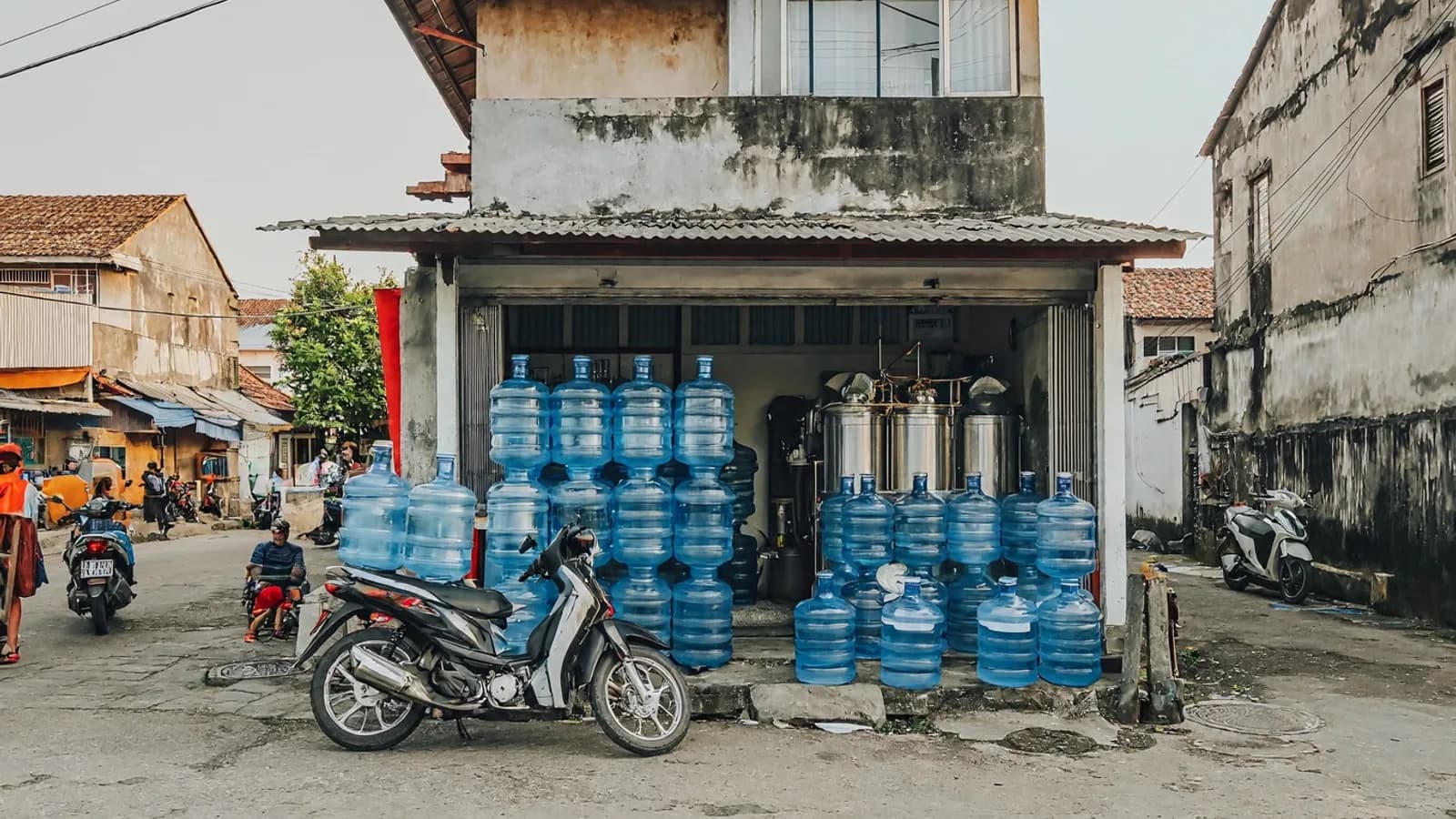
A refill drinking water depot looks like a simple business: install a filter system, line up the gallons and wait for customers. In practice, many depots struggle because the location was wrong from day one. Some sit right next to three other depots, some are hard for the source-water tanker to reach, and some are beside an open drain that makes residents doubt how clean the water is. This guide helps you assess a potential site for a refill water depot before you sign a lease.
A Water Depot Lives on Repeat Gallons, Not Passing Trade
Unlike a drinks stall or a roadside shop, a water depot sells almost entirely to people who live nearby. They buy repeatedly, usually every few days, and many prefer the gallon delivered to their door. That means your market size is set by the number of households within delivery range, not by how many vehicles drive past.
So a very busy main road is not necessarily a good fit. A neighbourhood street that serves as the way in and out of a housing estate or dense kampung is often better: the rent is lighter and customers can drop in on their motorbikes as they pass.
Step 1: Count the Households Within Delivery Range
Start by deciding how far you can realistically deliver gallons by motorbike before cost and time get out of hand. Many depot owners limit themselves to a few minutes' ride, but the right distance depends on local road congestion and how many delivery staff you have.
Mark the site on a map and draw a realistic delivery radius, for example 1 km as a starting illustration.
Find population and household figures by district or sub-district in the Kecamatan Dalam Angka publications from BPS, then estimate the share that falls inside your circle.
Check housing types on the ground: landed houses, boarding houses, rented rooms or housing estates. Boarding houses and rented rooms tend to rely heavily on refill water, while some middle- and upper-income estates prefer branded gallons.
Ask residents and warung owners directly whether they use refill water, branded gallons or boil their own. This gives you a rough share of refill users in the area.
Count competitors in the same radius and estimate a realistic share of the market you could win.
Example Gallon Demand Calculation
The table below is an illustration, not real data. Replace every figure with your own survey results and local prices.
Component | Example figure | How to verify |
|---|---|---|
Households within delivery range | 1,500 | BPS sub-district data plus a rough count on site |
Share using refill water | 30% (450 households) | Ask residents, warung owners and the RT head |
Share you could realistically win | 20% (90 households) | Look at the number and condition of competing depots |
Use per household | 6 gallons per week | Ask other depots' customers or residents |
Estimated gallons per day | About 77 gallons | 90 × 6 ÷ 7 |
Refill price per gallon | Rp5,000 (example) | Check prices at nearby depots |
Estimated monthly revenue | About Rp11.5 million | 77 × Rp5,000 × 30 days |
Next, work out the minimum gallons per day needed to cover fixed costs. Say rent is Rp2.5 million a month and wages, base electricity and maintenance add Rp4 million, for Rp6.5 million in fixed costs. If, after source water, caps and delivery fuel, you keep about Rp3,000 per gallon, you need roughly 2,170 gallons a month, or about 72 a day, just to break even. In this example, an estimated 77 gallons a day leaves a very thin safety margin. A site like this needs cheaper rent or a bigger market.
Step 2: Make Sure Source Water Can Get In Easily
The quality of your drinking water starts with the source water. Many depots buy source water from suppliers who deliver by tanker truck, while others use a local supply. Either way, the site has to support it.
Tanker access: is the road in front wide enough, with no barriers or truck bans? Can the tanker stop long enough without blocking the street and upsetting neighbours?
Hose distance to the tank: the source-water tank should ideally sit close to where the truck parks. A site deep inside a narrow alley can make filling difficult or add cost.
Local water source: if you plan to use a well or the municipal supply, ask for a laboratory water-quality test first, and ask nearby businesses whether the water ever turns cloudy, smells or cuts out.
Supply reliability: ask source-water suppliers whether the area is already on their delivery route and how quickly they can come when stock runs low.
Step 3: Assess the Building and Local Cleanliness
Residents choose depots that look clean. The surroundings shape that trust, and they also matter when the health office assesses hygiene standards.
What to check inside the building
Enough space for the source-water tank, filter system, an enclosed filling room and stacks of empty and full gallons.
A floor strong enough to carry a full water tank, easy to clean and not damp.
Drainage for gallon rinse water and filter backwash that will not overflow onto the street or into neighbours' homes.
Good ventilation and lighting, and walls free of mould.
What to avoid around the site
Rubbish dumps, smelly open drains or livestock pens right next door.
Workshops, vehicle washes or businesses producing dust, oil and fumes.
Areas that flood when it rains, where dirty water could reach your production space.
Step 4: Check Power and Opening Hours
Pumps, UV lamps and other equipment need a stable power supply. Ask about the building's connected capacity and compare it with the requirements your equipment supplier gives you. If you need an upgrade, include that cost in your opening budget. Ask neighbours how often the power goes out, too: a depot that is closed when residents need water can lose customers to a competitor.
Step 5: Read the Competition Carefully
Almost every dense neighbourhood already has a water depot. The question is not whether there is competition but whether there is still room. Visit the nearest depots and look for:
Queues or gallons piling up waiting for delivery, a sign of unmet demand.
Whether the depot is clean, the equipment well kept and the service quick.
Whether they deliver and how much they charge for it.
Warung selling large volumes of branded gallons, a sign that some residents trust branded water more.
Comparing Site Types for a Water Depot
Site type | Advantages | Risks | Works if |
|---|---|---|---|
Neighbourhood street at the entrance to an estate or kampung | Residents pass daily, moderate rent | A competitor may already hold the same spot | Household density is high and tankers can still get in |
Inside an alley in a dense neighbourhood | Cheap rent, customers very close | Tankers struggle to get in, limited space | There is a source-water unloading point at the alley mouth |
Main road frontage | Highly visible and easy for tankers | Expensive rent, passers-by rarely buy gallons | Dense housing sits directly behind it |
Permits and Hygiene Standards
Drinking water depots are supervised from a health perspective, including hygiene and sanitation checks and regular water-quality testing. Before you rent, ask the local health office or puskesmas for the current requirements for a water depot, and check that the address is zoned for your business. Also ask the property owner whether they allow you to install tanks and drill a well or connect pipes.
Field Survey Checklist for a Refill Water Depot
Households within delivery range estimated from BPS and checked on the ground.
Share of refill-water users checked with several residents and warung owners.
Number and condition of competing depots in the same radius recorded.
Source-water tankers can get in, stop and fill the tank without blocking the road.
Source-water supplier has confirmed the area is on their delivery route.
Enough space for the tank, filters, enclosed filling room and gallon stock.
Solid, dry floor with proper drainage.
No sources of contamination such as rubbish, smelly drains or workshops next door.
Site does not flood when it rains.
Enough electrical capacity, and power-cut history checked.
Health office permit and hygiene requirements checked.
Break-even gallons per day calculated and compared with estimated demand.
Conclusion
A good site for a refill water depot is not the one with the most passing traffic, but the one surrounded by enough households that use refill water, easy for source-water tankers to reach and clean in its surroundings. Your next step: shortlist two or three sites, work out households and break-even gallons per day for each, then survey them with the checklist above. Choose the site with the widest gap between estimated demand and break-even, not simply the one with the cheapest rent.