Choosing a Location for a Coffee Shop: Peak Hours, How Long Customers Stay, Power Supply and Online Orders to Check
A coffee shop needs more than a busy road. Learn how to match your concept to a site's peak hours, work out seating and dwell time, check power for your machines and judge online-order potential before you lease.
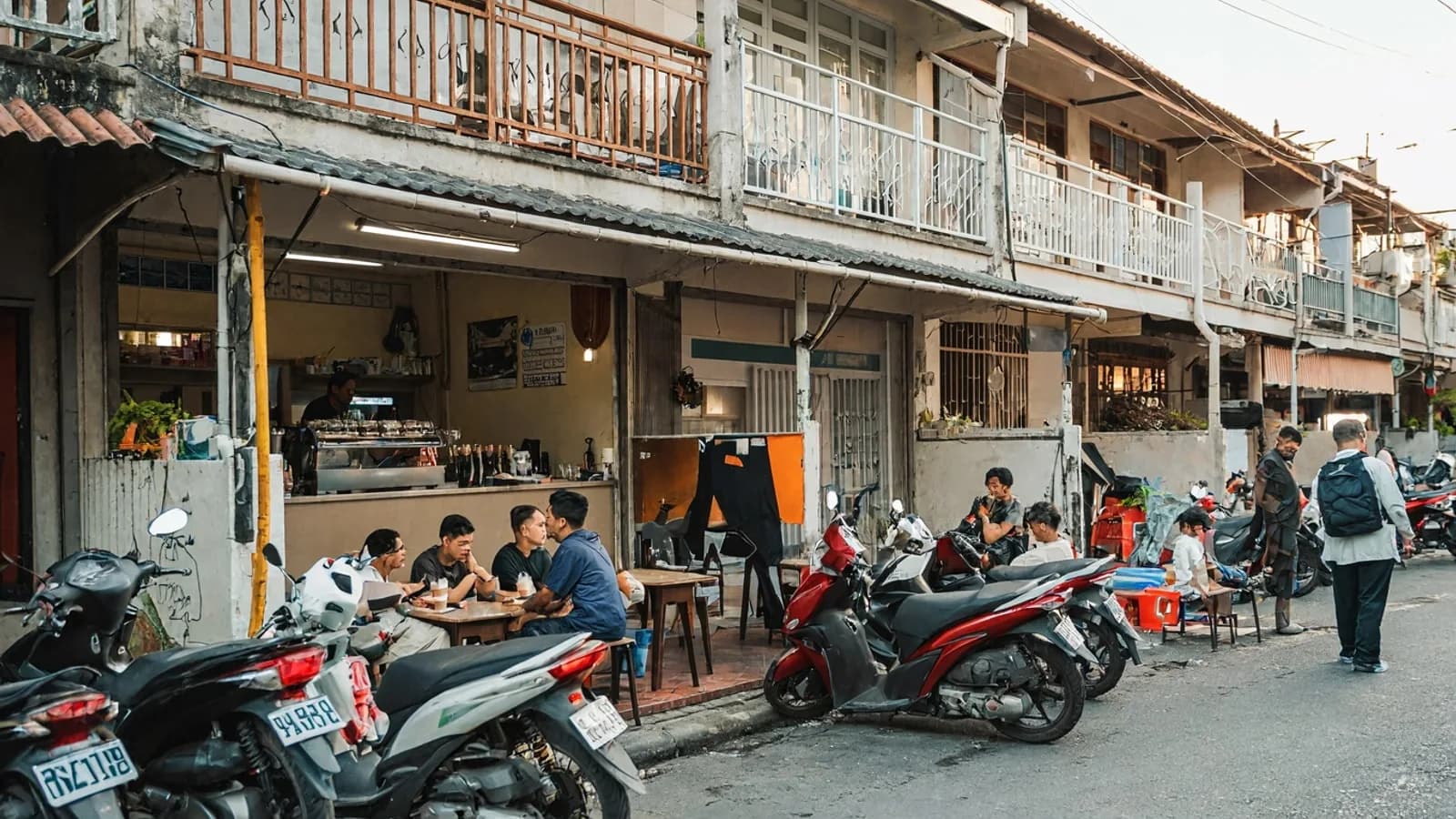
Many would-be coffee shop owners pick a site on one rule: the road is busy. Once they open, customers turn up only at certain hours, seats fill with people nursing one drink for hours, the espresso machine keeps tripping the power, and online orders are thin because the shop barely shows up in delivery apps for the area. The problem is not your coffee. It is a location that does not fit your concept.
This guide helps you judge a potential site specifically for a coffee shop: matching your concept to peak hours, working out seating capacity, checking the building's technical needs and reading online-order potential. Every number here is an illustration you should adjust to what you find on the ground.
Decide What Kind of Coffee Shop You Are Opening
A good spot for a takeaway kiosk can be a poor spot for a hangout café, and the other way round. Before you survey, be clear about which type you are opening, because each has different customers, peak hours and space needs.
Type of shop | Main customers | Typical peak hours | Space needs | Position that tends to suit |
|---|---|---|---|---|
Takeaway (grab-and-go) | Workers and commuters passing by | Morning commute, lunchtime | Small, queue area and room for motorbikes to stop | Morning-commute side of the road, near offices or stations |
Hangout café | Students, young people, groups of friends | Late afternoon to night, weekends | Lots of seats, terrace, separate smoking area | Near campuses, young neighbourhoods, food streets |
Work-and-study café | Freelancers, students | Midday to afternoon on weekdays | Tables, power sockets, stable Wi-Fi, quiet | Quieter side streets near boarding houses and campuses |
Neighbourhood café | Local residents, families | Late afternoon and weekends | Medium, enough motorbike parking | Housing estate entrance or the local main street |
Match the Site's Peak Hours to Your Selling Hours
A road is not equally busy all day. A street near offices may be packed from 7 to 9 a.m. and empty after sunset. A street near a campus may come alive from late afternoon until late at night. Your coffee shop needs to be busy during the hours you are open.
Pick the three time windows that matter most for your concept, such as morning, midday and evening.
Visit the site in each window on a weekday and at the weekend.
Count people and motorbikes passing the unit for 15 minutes, and note how many stop at nearby businesses.
Watch the nearest coffee shops: when are their seats full and when do takeaway queues form?
Compare the results with your planned opening hours. If the site's busy hours and your selling hours do not overlap, cross it off.
For takeaway shops, traffic direction matters too. People on their way to work tend to stop on the side of the road that matches their direction, because crossing or making a U-turn costs them time.
Work Out Seats and How Long Customers Stay
Hangout and work cafés have a limit that is easy to forget: the number of seats. If customers stay a long time, full seats do not mean high sales. You need to estimate how many times a seat can turn over during peak hours.
A simple example: a shophouse fits 20 seats. If customers stay 90 minutes on average and the peak lasts 3 hours, each seat is used about twice. That means roughly 40 seated customers at peak. If each buys one and a half drinks on average, seated sales in that window come to about 60 cups. The rest has to come from takeaway and online orders.
To estimate dwell time in the area, watch the nearest coffee shops and note when a few customers arrive and leave. Near campuses and boarding houses, people usually stay longer than near offices. Also make sure the space can hold the seats you need, including a terrace or smoking area if your market expects one.
Work Out the Cups a Day You Need to Cover Costs
Before you fall for a shophouse, work out how many cups a day you must sell to cover fixed costs. The table below is an illustration; replace every figure with real rent offers, wages and ingredient prices in your city.
Item (illustration, per month) | Example value | Note |
|---|---|---|
Shophouse rent (monthly share) | Rp5,000,000 | Use the landlord's actual quote |
Wages for 2 baristas | Rp6,000,000 | Adjust to local wage levels |
Electricity and water | Rp1,500,000 | Espresso machines and fridges draw a lot of power |
Other costs (Wi-Fi, cleaning, local fees) | Rp1,500,000 | Ask the landlord about neighbourhood fees |
Total fixed costs | Rp14,000,000 | |
Margin per cup after ingredients, packaging and app commission | Rp11,000 | Example only; calculate from your recipe and price |
Cups per month to cover costs | about 1,273 cups | Rp14,000,000 divided by Rp11,000 |
Cups per day (open 30 days) | about 42 cups | Compare with your field survey |
If your survey suggests the site can realistically sell well above the break-even figure, it is worth considering. If even break-even looks like a stretch, look for cheaper rent or a leaner concept.
Check the Building's Technical Needs
Coffee shops use more power and water than many small businesses. A unit that looks ready to move into can still need costly upgrades.
Electrical capacity
The espresso machine, grinder, fridge, freezer, blender and air conditioning may all run at once. Check the installed capacity on the meter and ask your equipment supplier for each machine's power rating. If you need more capacity, ask PLN about the process and cost, and settle in the lease who pays.
Water and drainage
Water quality affects both taste and machine life. Ask whether the supply is piped (PDAM) or from a well, check for cloudiness or smell, and budget for a filter. Make sure the sink drains properly too.
Noise and neighbours
A café open late can bother residential neighbours. Ask the neighbourhood head (RT) or the people next door whether late-opening businesses on that row have drawn complaints before.
Motorbike Parking and Quick Stops
Most coffee buyers in Indonesia arrive by motorbike, including ride-hailing drivers collecting orders. Without a place to stop, takeaway customers ride on and drivers struggle to pick up. Count how many bikes can park in front of the unit, check whether there is a parking attendant, and see whether stopped bikes block the road.
Judge the Potential for Online Orders
Delivery-app orders can carry you through quiet hours, but their potential depends on who lives and works within your delivery radius. A simple way to gauge it:
Open a food delivery app with the pin on the potential address and see how many coffee shops appear and how many reviews they have.
Look for signs that nearby shops get many orders, such as drivers waiting outside at lunchtime.
Check what lies within 2 to 3 km: boarding houses, offices, campuses or housing. District population figures are available from BPS.
Remember that app commission cuts your margin per cup, so include it in your break-even calculation.
Read the Local Coffee Competition
Several coffee shops on one street is not necessarily bad; it can mean this is where people come looking for coffee. What matters is whether there is a gap. Note the prices, opening hours, concept and busy times of every shop within walking distance. If they all sell cheap milk coffee but none opens early, or none is comfortable to work in, that could be your position.
The question is not "is there already a coffee shop here?" but "what need are the shops here not meeting?"
Field Checklist for a Coffee Shop Site
Your concept is written in one sentence and fits the character of the area.
The site has been surveyed in the morning, midday and evening, on weekdays and at the weekend.
The site's busy hours overlap with your planned selling hours.
For takeaway: the unit is on the side of the road your main customers travel along.
Seat count and expected dwell time have been worked out.
Cups a day to break even have been calculated and compared with survey results.
Installed electrical capacity is enough, or the cost of an upgrade is clear.
Water source and quality are checked and drainage works.
There is motorbike parking and a stopping spot for ride-hailing drivers.
The number of coffee shops in delivery apps for that pin has been checked.
Prices, hours and concepts of competitors within walking distance are noted.
Neighbours and the RT have been asked about businesses that stay open late.
Conclusion
The right coffee shop location is busy with the customers your concept serves, at the hours you sell, with the space, power, water and parking to support it. Start by writing down your concept, then survey two or three candidate sites with the checklist above, calculate cups a day to break even using the landlord's real figures, and choose the site with the widest gap between break-even and your expected sales.