Choosing a Location for a Night-Time Food Business: Evening Peaks, Lighting, Parking and Neighbours' Approval to Check
Angkringan, martabak, nasi goreng and other night food businesses live on crowds that only appear after sunset. Learn how to survey a site at night, assess lighting and parking, work out revenue per opening hour and stay on good terms with residents.
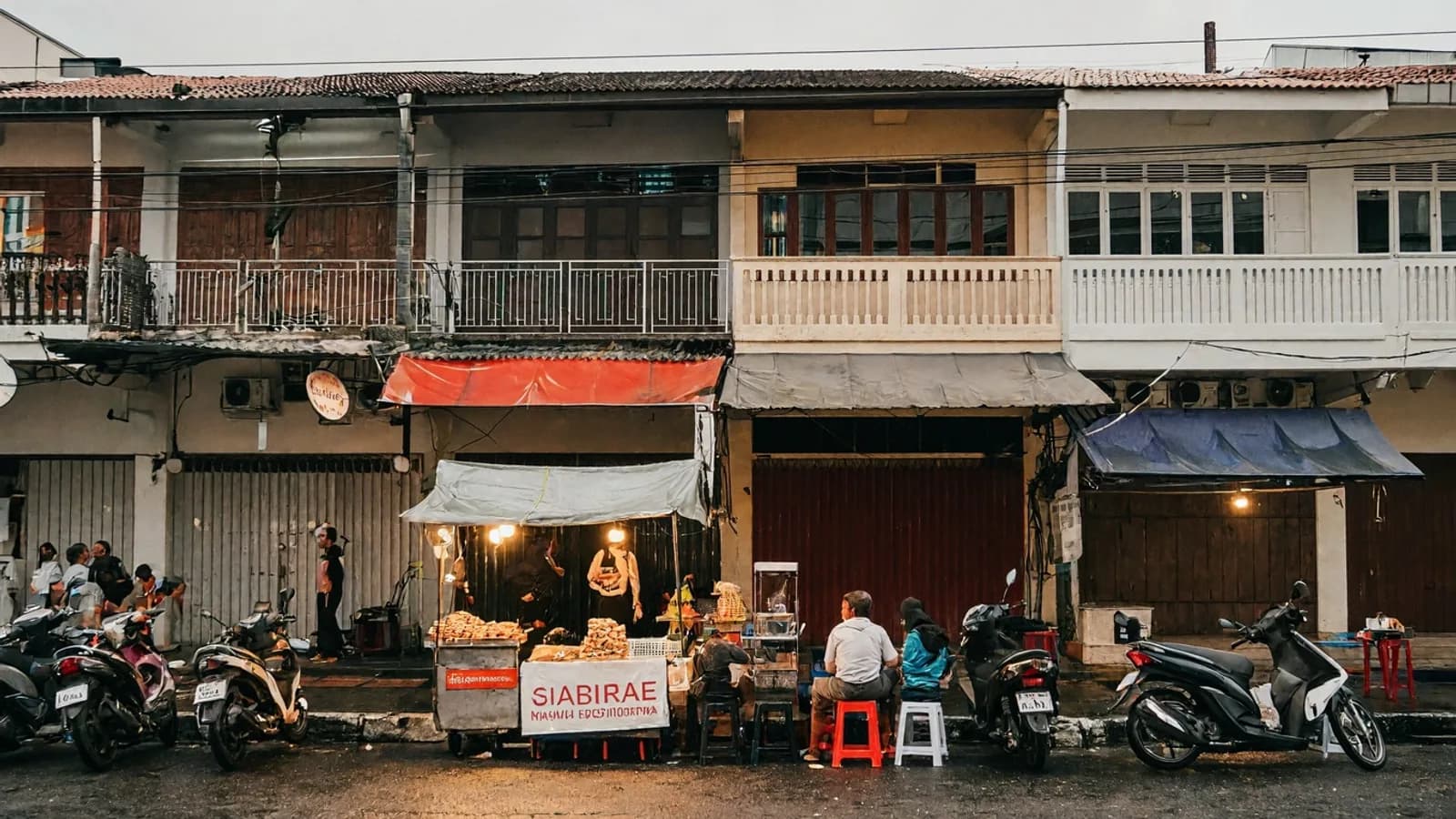
Many would-be night food sellers choose their spot the wrong way: they visit at midday, see a busy road and agree to rent on the spot. But angkringan, martabak, nasi goreng, pecel lele or satay only start trading as other shops close. A road packed at noon can be empty by nine at night, while an ordinary-looking corner can become a busy hangout until well past midnight. This guide helps you read a location through night-time eyes.
Who Actually Buys Food at Night?
Before judging a site, get to know the groups most likely to come. Each has different hours, habits and budgets, so a spot that suits one group may not suit another.
Commuters heading home who buy dinner to take away, usually on their route home and early in the evening.
Boarding-house residents and students who eat late, watch prices and like cheap seating where they can linger.
Families buying martabak or snacks to take home, often stopping by motorbike or car at weekends.
Ride-hailing drivers and couriers who need a place to rest, a quick meal and easy motorbike parking.
Shift workers from factories, hospitals or warehouses heading home around midnight.
Groups hanging out who arrive after nine and sit for a long time ordering drinks.
Pick the two main groups you want to serve. Takeaway menus like martabak depend more on passers-by who stop briefly, while angkringan or late-night coffee depends more on people willing to sit for a while.
Evening Peaks Are Not the Same as Daytime Peaks
The night comes in several waves, each with different buyers. The table below is a general picture you need to check against what you see on the ground, because every city and neighbourhood has its own rhythm.
Time window | Typical buyers | Suitable menus | What to check |
|---|---|---|---|
18:00–20:00 | Commuters, families | Takeaway dishes, martabak, satay | Direction of homebound traffic and how easy it is to stop briefly |
20:00–22:00 | Families, students, ride-hailing drivers | Fried rice, pecel lele, meatball soup | How many people are still around and seating space |
22:00–00:00 | Hangout groups, students, shift workers | Angkringan, coffee, instant noodles | Lighting, safety, residents' tolerance for noise |
After 00:00 | Shift workers, drivers, night owls | Simple hot food | Any closing-time rules and who is still passing |
How to Survey a Site at Night
Arrive before dark, around 17:30, and watch how things change as nearby shops close.
Count people and vehicles that slow down per 15 minutes in each time wave, not just those passing. Night food lives on people willing to stop.
Note the side of the road and traffic direction. During the commute home, the side heading towards housing usually works better for takeaway.
Watch existing night vendors. How many are queuing, when do they get busy and when do they pack up?
Talk to vendors and night parking attendants. Ask which nights are busiest, what happens in the rain and whether there are levies or raids.
Check conditions after 22:00. Are street lights on, do people still feel safe walking, and are there groups that put buyers off stopping?
Repeat on different nights and compare your notes.
Lighting and Visibility After Dark
At night your stall is only visible if it is bright. A stall between two dark shophouses can actually stand out, but a spot under a leafy tree with no street light makes buyers hesitate to stop.
Check that the street light at that point works and does not fail often.
See whether your sign or cart is visible from far enough away before drivers pass it.
Make sure there is a safe power source for lights and equipment, not an illegal tap that risks short circuits.
Notice whether neighbouring shops switch off their porch lights, leaving your area dark after a certain hour.
Night Parking: Often Easier, But Still Worth Checking
One advantage of night trading is that shophouse forecourts full during the day may be empty after closing. But do not assume you can automatically use that space. Ask who manages parking at night, whether the neighbouring owner objects, and whether an attendant already controls the area.
For takeaway menus, what matters is that motorbikes and cars can pull over briefly without blocking traffic. For a sit-down business, you need enough space for people who stay one or two hours.
Residents' Approval, Noise, Smoke and Closing Time
Night businesses most often run into trouble not because they are quiet but because residents feel disturbed. Chatter, motorbikes coming and going, satay smoke and leftover rubbish can trigger complaints and eventually a ban on trading.
Meet the local RT or RW head before you start and explain your hours and how you will handle rubbish.
Pay attention to the distance from homes, especially bedrooms facing the road.
Direct smoke and smells away from residents' houses.
Ask the kelurahan or relevant agency whether there are operating-hour rules or vendor enforcement on that road, as rules differ by area.
Make sure your business is properly registered, for example by getting an NIB through OSS.
Worked Example: Revenue per Opening Hour
Night food businesses usually open for only five to seven hours. So judge viability by revenue per opening hour, then compare it with what the space costs. The figures below are purely an illustration; replace them with your own survey counts and prices.
Item | Site A (illustration) | Site B (illustration) |
|---|---|---|
Hours open per night | 6 hours | 5 hours |
Estimated portions per hour | 8 portions | 12 portions |
Average price per portion | Rp20,000 | Rp20,000 |
Revenue per night | Rp960,000 | Rp1,200,000 |
Trading days per month | 26 days | 26 days |
Revenue per month | Rp24,960,000 | Rp31,200,000 |
Space cost per month | Rp1,500,000 | Rp3,500,000 |
Space cost as share of revenue | about 6% | about 11% |
In this example Site B costs more but brings in more. The assumption you need to test is portions per hour. Get it from counting people who actually stop at nearby vendors, not from the number of passing vehicles. Then work out profit after ingredients, gas, labour and any security or parking costs.
Seasons and Factors That Change the Night Crowd
Rainy season
Rain can cut outdoor diners but boost delivery orders. Check whether the site has enough roof or tent cover and whether the road floods in heavy rain.
Ramadan
The night pattern changes completely: busy before iftar, then perhaps another wave after tarawih prayers and at sahur. Ask established vendors how that spot behaves during Ramadan.
Weekends, paydays and campus holidays
Saturday nights and the days around payday are usually busier. If students are your main buyers, plan for semester breaks when boarding houses empty out.
Field Checklist for a Night Food Location
Surveyed at least three different nights: a weeknight, a Saturday night and a rainy night.
Recorded people stopping per 15 minutes in each time wave.
Know which side of the road the homebound traffic uses.
Street lights work and the area stays lit after nearby shops close.
Safe, legal power is available for lights and equipment.
There is motorbike or car parking that does not block traffic.
Know who manages parking and whether there are night levies.
Have met the RT/RW and neighbouring shop owners.
Homes are far enough away to avoid noise and smoke issues.
Checked operating-hour rules and enforcement on that road.
Water for washing and a place to dispose of rubbish are available.
Revenue per opening hour makes sense against the space cost.
A good night food location is not the busiest one by day, but the one that stays lively, well lit and welcome to residents after other shops have closed.
Conclusion: Survey When Your Business Will Actually Be Open
The key to choosing a night food location is judging it at the same hours you will trade. Start by naming your two main buyer groups, then survey two or three candidate sites on three different nights. Record who stops, check lighting, parking and residents' approval, and feed the numbers into a revenue-per-hour calculation. Only once a site passes every point on the checklist should you start negotiating the rent or space agreement.