Choosing a Location for a Laundry-by-the-Kilo Shop: Boarding Houses, Water Supply, Power and Other Must-Checks
A laundry shop needs more than lots of people nearby. Learn how to read boarding-house density, check water and power, assess wastewater drainage, work out the kilos per day you need to break even, and take a checklist into the field.
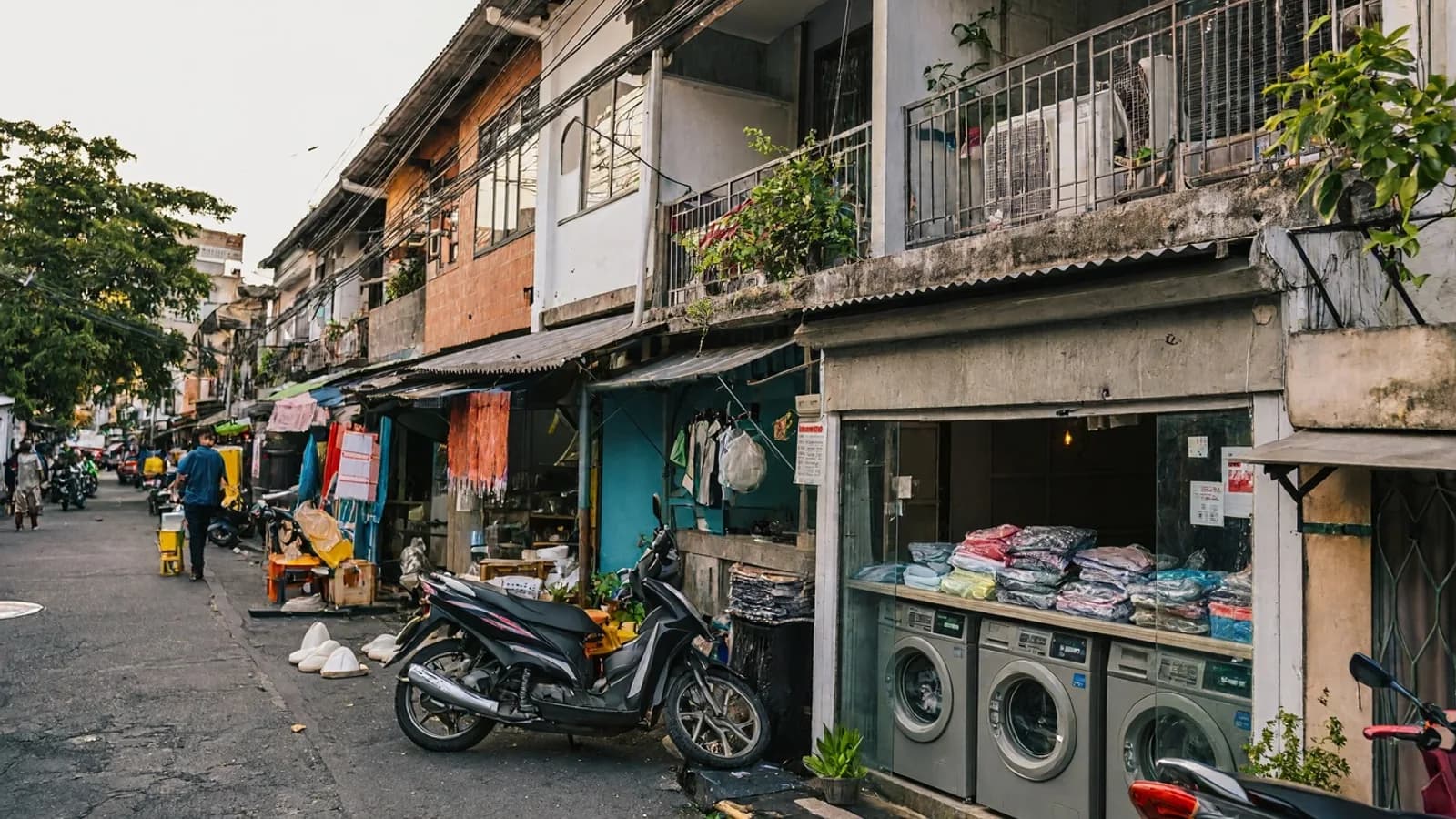
A laundry-by-the-kilo shop is often seen as a business that will "always sell" as long as it sits near boarding houses. In reality, many new laundries close not for lack of customers but because the well water is murky, the power trips when every machine runs, neighbours complain about the wastewater, or the boarding houses nearby already give tenants free washing machines. This guide helps you assess a laundry site from the angles people rarely check before signing a lease.
Why Laundry Locations Are Different
Laundry customers visit twice for every transaction: once to drop off and once to pick up. The site has to be easy to reach repeatedly, not just noticeable once in passing. At the same time, laundry is a "heavy" business behind the counter: it needs a lot of water, plenty of electrical capacity and drainage that works. A busy site with weak infrastructure can push operating costs up fast.
So you need two lenses at once: a market lens (who will bring you their washing) and a technical lens (whether the building can run machines every single day).
Who Are the Laundry Customers Around the Site?
Before you measure how busy an area is, identify the groups most likely to use you. Each behaves differently.
Boarding-house (kos) and rental tenants: students and young workers without a washing machine. They usually come weekly with small to medium loads.
Busy families: dual-income households who prefer to outsource washing, especially in middle-income estates. Bigger loads per visit.
Business customers: salons (towels), food stalls (cloths and aprons), homestays or small guesthouses (sheets and towels), small clinics. Steady volume, but they often ask for special rates.
Per-item customers: bed covers, rugs, suits or shoes. Margins per item can be higher, but orders are infrequent.
Reading Boarding-House Density Properly
Count the "Terima Kos" or room-for-rent signs within walking distance of the site. But do not stop at the number. Ask a few caretakers or owners directly: are tenants allowed to wash their own clothes, is there a shared washing machine, and is laundry included in the room rent? Premium boarding houses that bundle laundry into the rent are effectively not your market.
For a wider view, you can check district population and density in the Kecamatan Dalam Angka publications on the BPS website. It will not tell you how many boarding houses there are, but it helps you compare candidate areas before you head out.
Technical Checks That Often Get Missed
1. Water Source and Quality
Ask whether the building uses piped municipal water (PAM/PDAM), a bore well, or both. Turn on the tap and look at the colour, then ask neighbours whether the water ever turns murky, smells or runs dry in the dry season. Water high in lime or iron can yellow white clothes and scale up your machines quickly, so you may need an extra filter. Get a quote from a local supplier so that cost is in your numbers from day one.
2. Electrical Capacity
Several washers, dryers and steam irons running together need far more power than a typical home. Note the capacity shown on the meter and compare it with the total load of the equipment you plan to use (check each machine's rating label). If you need an upgrade, ask PLN about the procedure and cost, and make sure the landlord agrees. If you plan to use gas dryers, also consider ventilation and safe storage for the cylinders.
3. Wastewater Drainage
A laundry discharges large amounts of soapy water every day. Check where the building's drain leads, whether the gutter out front flows freely or often clogs, and whether any residents' wells sit near the drain. Complaints about foam and smells can lead to warnings from the neighbourhood head (RT) or even closure. Talk to the neighbourhood committee before you rent, and ask the local agency whether there are wastewater rules for laundries in your area.
4. Work Space and Drying Area
Allow room for machines, a folding table, storage racks and a clear dirty-to-clean flow so loads never mix. If you plan to line-dry some items, make sure there is a drying area protected from road dust and rain that will not bother the neighbours.
Access: Customers Must Find It Easy to Stop Twice
Laundry customers usually arrive by motorbike with a big bag. Make sure there is room to pull over briefly in front without blocking the road. Sites on the way home from work or campus tend to be more convenient, because people drop off in the morning and collect in the evening. If you offer pickup and delivery, work out how far your courier can realistically go before fuel and time eat your margin.
Reading the Competition Nearby
Several laundries on one street do not automatically mean a saturated market, but you need to know where you stand. Visit the nearest competitors as a customer: drop off a small bag and note the price per kilo, turnaround time, express options, folding quality and how many finished bags are piled on the racks. Full racks signal strong demand; an empty shop slashing prices signals fierce competition.
Factor | Site A (near campus) | Site B (housing estate) | Site C (main road) |
|---|---|---|---|
Main customers | Boarding-house tenants | Families | Mixed, passers-by |
Water source | Piped (PAM) | Bore well, slightly murky | Piped (PAM) |
Electrical capacity | Needs upgrade | Sufficient | Needs upgrade |
Wastewater drainage | Flows well | Near residents' wells | Flows well |
Competing laundries within walking distance | 4 shops | 1 shop | 2 shops |
Motorbike stopping space | Tight | Spacious | Available but busy |
Notes | Quiet in semester breaks | Needs water filter and residents' approval | Highest rent |
The table above is an illustrative example of how to record a comparison. Fill it in with your own field findings.
Work Out How Many Kilos a Day You Need to Break Even
Once you know the rent and fixed costs at a candidate site, calculate how many kilograms of laundry need to come in each day. The figures below are an illustration; replace them with prices and costs from your own competitor visits, water and power bills, and rent offers.
Item | Example figure | Notes |
|---|---|---|
Selling price per kg | Rp7,000 | Match to local competitors' prices |
Variable cost per kg | Rp2,500 | Detergent, softener, water, power, gas, bags |
Margin per kg | Rp4,500 | Price minus variable cost |
Fixed costs per month | Rp9,000,000 | Example: rent, two staff, other overheads |
Kilos per month to break even | 2,000 kg | Fixed costs divided by margin per kg |
Kilos per day (30 days) | About 67 kg | At an average of 4 kg per customer, about 17 customers a day |
Then ask yourself honestly: is about 17 customers a day realistic at this site, given the boarding houses, families and competitors you found? If it feels far off, look for lower rent or a denser market.
Steps for Surveying a Laundry Site
Map the walking radius and the pickup-and-delivery radius around the site on a digital map.
Count boarding houses, rentals and housing within that radius, and interview a few caretakers about washing facilities.
List and visit every competing laundry; record prices, turnaround and how full their racks are.
Check the water: run the tap, confirm the source and ask neighbours about quality through the year.
Check the power: note the meter capacity and compare it with your planned machines.
Trace the drainage and discuss your plans with the RT/RW neighbourhood heads.
Add rent and extra costs (filter, power upgrade, drainage work) into your kilos-per-day calculation.
Compare all candidate sites in one table before deciding.
Laundry Site Field Checklist
Boarding houses and rentals within walking distance have been counted
You know whether nearby boarding houses provide their own washers or laundry service
Quiet periods are known (campus holidays, Lebaran homecoming) if your main market is students or migrants
Water source is clear and quality has been checked in person
Power is sufficient, or the upgrade cost is known and approved by the landlord
Drainage flows well and is not close to residents' wells
Neighbourhood heads have been consulted
There is space for motorbikes to stop for drop-off and pickup
Competitors' prices and services have been recorded
The break-even kilos per day look realistic
Conclusion
A good laundry location is not just busy; it can also run machines every day without water, power or wastewater problems. Start by shortlisting two or three sites, work through the survey steps above, then put everything into a comparison table and a kilos-per-day calculation. The site that passes on both the market side and the technical side is the one worth negotiating rent for.