Choosing a Location for a Building Materials Shop: Truck Access, Loading, Storage and Nearby Projects to Check
A building materials shop does not live on passing trade but on builders, home renovations and nearby projects. Learn how to read local demand, check truck access and storage space, and work out your stock capital before you lease.
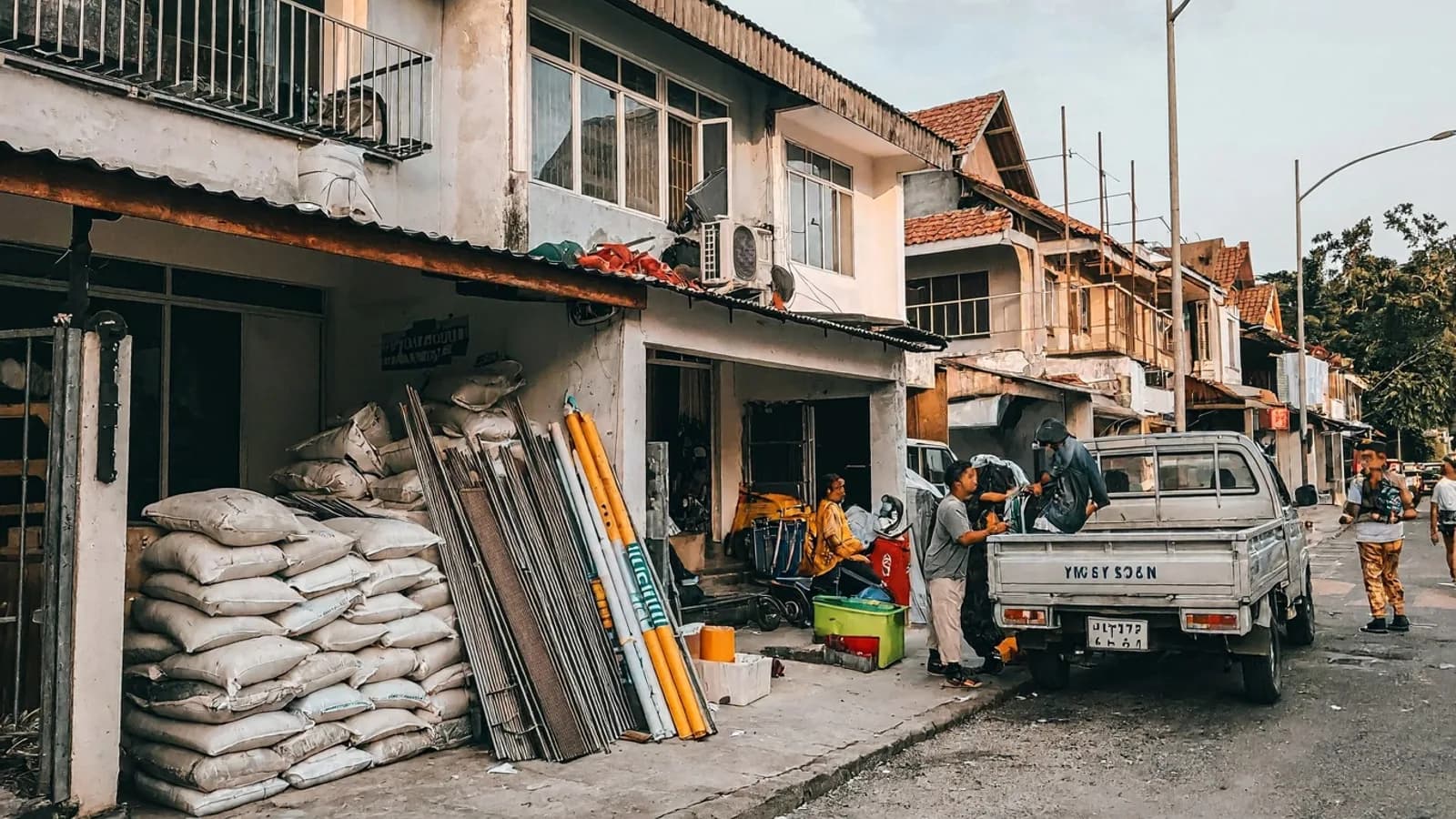
You want to open a toko bangunan, a building materials shop, and there is a cheap shophouse on a fairly busy road. The trouble is that a building materials shop is not like a food stall or coffee shop. Customers rarely drop in because they happen to pass by. They come because they are building or repairing a house, and what they buy is heavy, bulky and often needs delivering. The wrong site can mean supplier trucks cannot get in, cement piles up with nowhere to go, and builders prefer another shop closer to their job.
This guide helps you assess a potential site from the angles that matter most: who your customers are, where demand comes from, how goods get in and out, and how much capital is tied up in stock.
Who Actually Buys From a Building Materials Shop?
Before judging a site, get to know the three main customer groups. Each needs something different from a location.
Customer type | What they buy | What they want from the location |
|---|---|---|
Builders and foremen | Cement, sand, steel, nails, everyday site materials | Close to the job, fast delivery, can order by phone or message |
Homeowners (small renovations) | Paint, taps, lamps, locks, pipes, a few tiles | Easy to reach from home, parking for a motorbike or car, advice on hand |
Contractors and housing projects | Large volumes, often on credit terms | Price, stock availability, truck delivery capacity |
A small shop is usually strongest with the first two groups. Serving large contractors needs far more stock capital and a delivery fleet, so do not choose a site just because a big project is nearby.
Reading Demand Around the Site
Demand comes from houses being built, repaired or extended. You can read this directly on the ground.
Visible signs of demand
Houses under renovation: piles of sand out front, bamboo scaffolding or builders at work.
Growing plots or estates: new houses going up one by one, rather than all at once by a developer.
Older housing: areas with many decades-old homes regularly need roof, paint and drainage repairs.
Related trades: welders, door and window frame makers or septic services nearby signal building activity.
A simple way to count it
Set a service radius, for example 2 to 3 km, matching a realistic delivery distance for a three-wheeled motorbike or pickup.
Drive around the area on a weekday morning when builders start work. Count houses being built or renovated.
Repeat in a different week to see whether activity is steady or a one-off.
Ask the builders you meet where they shop, why, and what is often out of stock.
Add household numbers and population growth per district from BPS to see whether the area is still gaining residents.
Truck Access and Loading: Often Forgotten, Always Decisive
Cement, steel and tiles usually arrive by truck from a distributor. If a truck cannot stop outside your shop, every delivery becomes a problem: extra unloading costs, goods moved by handcart, or suppliers reluctant to deliver.
Road width: can a truck stop without blocking the road completely? Watch for tight bends or alleys on the way.
Truck hour rules: some cities restrict trucks on certain roads at peak times. Ask nearby business owners or the local transport office.
Front yard: ideally there is room for a truck to unload and for customers' pickups to load.
Height barriers and bridges: check for overhead barriers or small bridges with weight limits on the route.
Turning options: make sure your delivery vehicle can head towards job sites without a long detour.
Storage, Floors and Rain Protection
A building materials shop needs far more storage than display space. Heavy goods belong on the ground floor, so upper floors of a shophouse rarely help much.
Floor strength: stacks of cement and tiles are very heavy. Ask about the floor and do not stack heavy goods upstairs without checking the structure.
Free of floods and leaks: cement that gets wet can harden and become unsellable. Ask neighbours about flooding and check the roof when it rains.
Covered outdoor space: sand, gravel and steel are often kept outside. Make sure the owner agrees and neighbours are not disturbed.
Separate warehouse: if the unit is small, is affordable storage available nearby? Count the cost and travel time.
Competitors and Distance to Suppliers
Building materials shops usually compete on price, range and delivery speed. Map the shops within your service radius and note their size, whether they deliver, and what they often run out of.
Distance to distributors matters too. Being close to a distributor's warehouse makes small, quick restocks easier, so less capital is locked in large stockpiles. Ask several distributors directly about minimum orders, delivery charges to the candidate address and lead times.
Illustrative Calculation: Rent, Stock and Revenue
The figures below are purely illustrative to show the reasoning. Rent, margins and stock turnover vary widely by area and product, so replace them with figures from your own survey and supplier quotes.
Item | Site A (main road) | Site B (edge of a growing estate) |
|---|---|---|
Annual rent (example) | Rp90 million | Rp45 million |
Loading space | None, trucks park on the road shoulder | Yes, fits one small truck |
Visible renovation projects within 2 km | Few, the area is built out | Many, new houses keep going up |
Opening stock capital (example) | Rp150 million | Rp150 million |
Extra unloading cost per month (example) | Rp1.5 million | Almost nil |
In this illustration Site A looks more prestigious, but Site B is closer to demand and cheaper to run. Repeat the exercise with your suppliers' average margin to find the minimum monthly revenue needed to cover rent and fixed costs.
Permits, Neighbours and Dust
Loading, cement dust and the noise of cutting steel can cause complaints, especially in residential areas. Talk to the RT or RW neighbourhood heads before leasing. Also make sure the land use at that address allows building materials trade and that your KBLI business code matches when you apply for your business licence.
Field Survey Checklist for a Building Materials Shop
Number of houses being built or renovated within your service radius, recorded in two different weeks.
Answers from at least three builders about where they shop and what frustrates them.
Number and size of competing shops, and whether they deliver.
Road width and whether a truck can stop outside without blocking traffic.
Truck hour restrictions, height barriers or weight-limited bridges on the route.
Yard space for loading and for customers' pickups.
Condition of the floor and roof, and flooding history according to neighbours.
Availability of covered outdoor space or extra storage nearby.
Distance, minimum order and delivery charge from your main distributors.
Neighbours' and local leaders' attitude to loading activity.
Zoning and business permit fit for that address.
Conclusion
A good building materials shop location is not the one with the most passing traffic but the one closest to houses being built and easiest for trucks to reach. Start by driving around on weekday mornings and counting renovation projects, then talk to builders and distributors. Next, compare two or three candidate sites with a table like the one above using your own numbers, and only sign a lease once truck access, storage and stock capital are clear.