Choosing a Location for a Fruit and Vegetable Shop: Morning Shoppers, Wholesale Market Supply, Spoilage and Other Must-Checks
A fruit and vegetable shop lives on daily household shopping and stock that sells before it wilts. Learn how to read shopping times, work out the distance to the wholesale market, assess a building for fresh produce and calculate minimum revenue after spoilage.
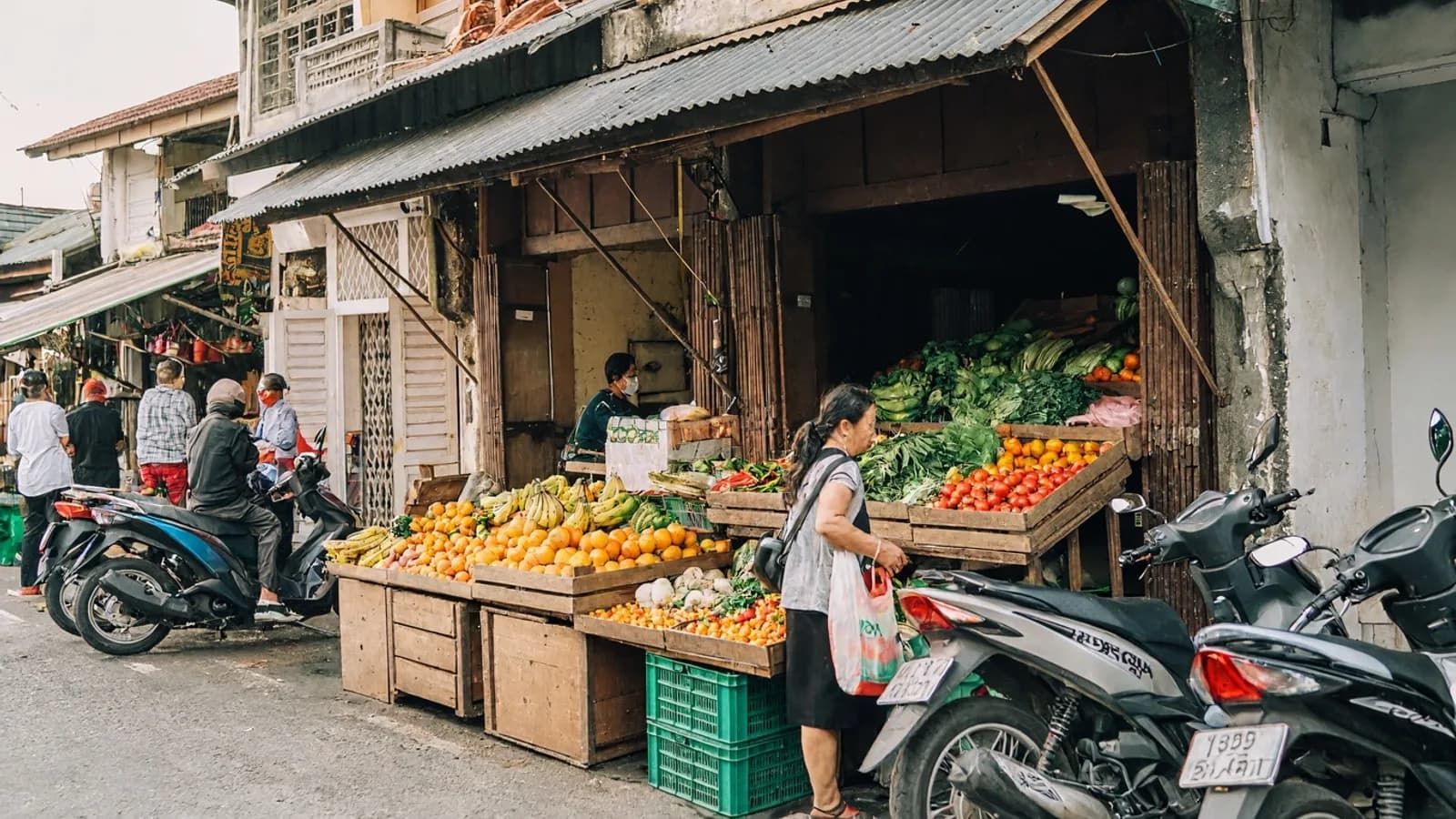
A fruit and vegetable shop looks simple: rent a space, buy from the market and lay out your stock. The problem is that your goods have a short life. Greens that do not sell today may wilt tomorrow, and overripe fruit has to be discounted or thrown away. So a site for a fresh produce shop needs more than crowds. It must keep stock turning over quickly, sit close to your supply, and have a building that keeps produce fresh. This guide helps you assess a potential site before you pay the rent.
Know who will actually buy
Fruit and vegetable shoppers rarely come in by chance. Most come out of routine need. Before judging a site, decide which buyer group you are targeting, because each one needs a different kind of location.
Households buying vegetables daily or every two or three days. They want a shop close to home, usually a short walk or motorbike ride.
Workers heading home in the afternoon who stop for fruit or vegetables for dinner. They need a shop on the homebound side of the road with easy motorbike stopping.
Food stalls, home caterers and fritter vendors buying in bigger quantities. They care about price and reliable stock, not the shop's look.
People buying fruit as a gift or for a hospital visit, such as fruit baskets. They are more common near hospitals, offices and during festive seasons.
Delivery customers ordering by WhatsApp or app, who need a shop within a sensible delivery radius of housing.
A shop relying on local families suits the edge of a dense neighbourhood. A shop relying on commuters needs a connecting road that is busy in the late afternoon. A shop supplying food stalls can work in a plainer spot as long as loading is easy.
Read shopping times at the site
In many neighbourhoods vegetable shopping peaks in the morning, when households prepare meals. Where many people work, the peak may shift to late afternoon and early evening. A site that suits one pattern can be quiet for the other.
Visit the site in the morning (roughly 6 to 9 am) and late afternoon (roughly 4 to 7 pm), on weekdays and weekends.
Count people carrying shopping bags, motorbikes stopping at stalls or vegetable vendors, and the direction they come from.
Watch whether mobile vegetable vendors are crowded by residents. That is a strong sign of daily vegetable demand.
Note which side of the road people use on the way home. Afternoon shoppers rarely cross over or U-turn just to buy vegetables.
Work out the distance and time to your supply
Freshness depends heavily on how fast produce gets from the wholesale market or supplier to your shelves. Many owners buy before dawn and must be open when morning shoppers arrive. A site too far from the wholesale market means earlier starts, more fuel and produce bouncing around on the road for longer.
Aspect | Close to wholesale market | Far from wholesale market |
|---|---|---|
Buying trips | Shorter, can restock the same day | Longer, usually once a day only |
Transport cost | Lower | Higher, needs a monthly estimate |
Freshness | Better preserved | Greater risk of bruising and wilting |
Rent (typically) | Can be higher where traders cluster | Can be lower |
Competitors | Often many similar traders | Can be fewer |
This table is a general picture, not a fixed rule. Check it yourself by driving the route from the wholesale market to the site at real buying hours and noting time and fuel. Also ask whether any supplier will deliver to your location, as that can change the numbers.
A building that suits fresh produce
A fruit and vegetable shop needs a different building from a dry-goods shop. Heat, direct sun and poor airflow all speed up spoilage.
Sun direction and shade
Check which way the building faces. A shopfront hit by direct afternoon sun will wilt greens fast. See whether there is a roofed terrace, canopy or shade tree, and whether the owner allows you to add a canopy.
Water, power and cold storage
You need water to wash and mist produce, and power if you plan a display fridge or chiller for cut fruit and leafy greens. Ask about the installed electrical capacity and whether it can be upgraded. A cool back room for reserve stock also helps a lot.
Loading and organic waste
Make sure a pickup truck or motorbike cart can stop near the door to unload crates. Ask where organic waste goes and what the fee is. Piled-up vegetable waste smells and can trigger complaints from neighbours.
Map the competition around the site
Your competitors are not just similar shops. Traditional markets, mobile vegetable vendors, roadside stalls, supermarkets and online grocery apps all compete for the same buyers. Map them within walking distance and within a five to ten minute motorbike ride.
If a traditional market is very close, you need a strong reason for residents to choose you, such as longer hours, a cleaner shop or delivery.
If mobile vegetable vendors are very busy, residents are used to buying at their doorstep. Consider supplying those vendors or offering delivery.
If a supermarket is nearby, compare price and freshness. Small shops often win on small-quantity pricing and speed.
If a busy produce shop already exists, watch its rush hours and what often sells out. Stock gaps can be your opening.
Calculate minimum revenue after spoilage
A common mistake is calculating profit only from the gap between buying and selling price. With fresh produce there is spoilage: items that wilt, rot, bruise or get sold at a discount. Spoilage cuts into your margin. Here is a simple example. All figures are illustrations only; replace them with figures from your own site and suppliers.
Item (illustrative, per month) | Example figure | Note |
|---|---|---|
Rent | Rp3,000,000 | Check comparable rents nearby |
Shop assistant wage | Rp2,500,000 | Adjust to local wages |
Power, water, waste | Rp800,000 | Higher with a chiller |
Fuel for buying trips | Rp700,000 | Drive the real route to estimate |
Total fixed costs | Rp7,000,000 | Sum of the items above |
Gross margin after spoilage (example) | 20% of revenue | Starting margin minus expected spoilage |
Minimum monthly revenue | Rp35,000,000 | Rp7,000,000 divided by 20% |
Minimum daily revenue (30 days) | about Rp1,170,000 | Compare with real shopper counts |
In this example, if the average basket is, say, Rp40,000, you need about 30 shoppers a day just to cover costs. Compare that with your field counts. If the area shows only a dozen or so likely shoppers a day, the site is risky, however cheap the rent.
To estimate households around a site, look at the district-in-figures publications on the BPS website, then cross-check them with your own observations and information from the local RT or RW head.
Steps to assess a potential site
Decide your main buyer group and the shopping hours you are targeting.
Shortlist two or three sites that fit that pattern.
Survey mornings and afternoons, weekdays and weekends, and count likely shoppers.
Test the buying route from the wholesale market to each site at real hours.
Check the building: shade, water, power, storage, loading and waste.
Map all competitors, including mobile vendors and markets.
Calculate minimum revenue with realistic spoilage and compare it with your survey.
Ask nearby business owners about their experience before signing a lease.
Field checklist for a fruit and vegetable shop
Plenty of households within a short walk or motorbike ride.
Signs of daily shopping: busy vegetable vendors, food stalls or people carrying shopping bags.
The site is on the side of the road shoppers use at the main shopping hours.
There is space for motorbikes to stop in front.
Travel time from the wholesale market is reasonable for daily buying.
The shopfront is shaded from direct sun or can take a canopy.
Clean water is available and sufficient for washing produce.
Electrical capacity is enough for a display fridge or chiller.
There is a cool, ventilated storage space.
A pickup or motorbike cart can load and unload near the door.
Organic waste disposal is clear and its cost is known.
The site does not flood when it rains.
Nearby competitors are mapped, with their prices and opening hours.
Conclusion
A good site for a fruit and vegetable shop is one where stock sells before it wilts. Start by defining your main buyers, survey real shopping times, test the route from the wholesale market and check the building for fresh produce. Then calculate minimum revenue with honest spoilage figures and match it against shopper counts on the ground. If the numbers do not meet, it is better to keep looking than to be tied to a lease you will struggle to cover.