Choosing a Location for a Florist: Event Venues, Funeral Homes, Graduation Season and Other Must-Checks
A florist lives on event orders, condolence arrangements, grave visits and gift seasons, not just passing trade. Learn how to read nearby order sources, assess arranging space and delivery access, and work out minimum revenue.
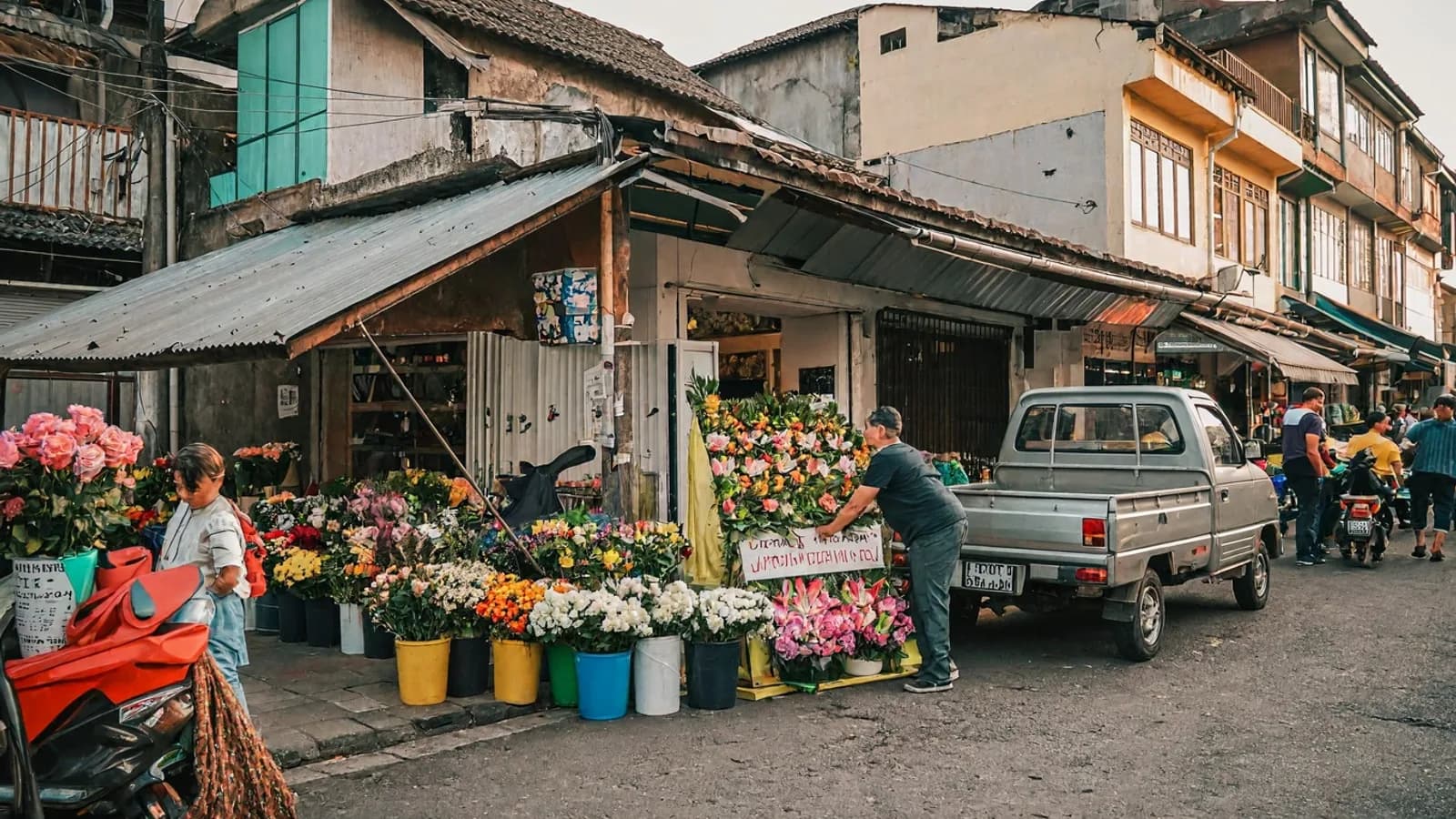
Many would-be florists pick a shophouse on the busiest road in town, then wonder why so few people walk in. The problem is that most of a flower shop's revenue does not come from passers-by who suddenly want a bouquet. It comes from congratulatory flower boards, funeral wreaths, petals for grave visits, event decoration and spikes during graduations and holidays. This article helps you read a location through that lens before you sign a lease.
Start With Where Florist Customers Come From
Before assessing any site, map the types of buyer you want to serve. Each type needs a different kind of location, and shops that try to serve everyone at once often choose the wrong spot.
Buyer type | Typical needs | What matters most about the location |
|---|---|---|
Walk-in buyers | Gift bouquets, single stems, table flowers | Visible from the road, easy to stop, near campuses or busy areas |
Flower board customers | Congratulations, office openings, weddings, condolences | Wide arranging space, delivery vehicle access, near event venues and funeral homes |
Grave visitors | Scattering petals, mixed petals, rose water | Near a cemetery, visible on the route to it |
Online and delivery orders | Delivered bouquets, flower hampers | Wide delivery radius, roads that do not gridlock |
Decoration clients | Wedding stage, tables, event stages | Storage space, near wedding halls and hotels |
Choose one or two main buyer types. A shop that relies on flower boards can take a cheaper unit on a moderate road with a wide forecourt, while a gift bouquet shop needs an eye-catching window where young people regularly pass.
Map Order Sources Within Your Delivery Radius
For a florist, what counts is not just the households nearby but the places that regularly trigger orders. Open a map, draw a radius that is realistic for delivery by motorbike or small pickup, and note the following.
Wedding halls, function rooms and hotels: a source of congratulatory boards and decoration, especially at weekends and in wedding season.
Funeral homes, hospitals and large mosques or churches: a source of condolence wreaths that are often ordered at short notice and must arrive fast.
Cemeteries: a daily source of scattering petals, with spikes before Ramadan, Lebaran and certain memorial days.
Campuses and schools: a source of graduation and farewell bouquets, busy in particular months.
Office districts and new commercial areas: a source of boards for openings, inaugurations and congratulations.
Churches and Chinese temples: a source of altar flowers and orders around Christmas, Easter or Chinese New Year.
The more order triggers within your delivery radius, the less you depend on passing trade. A site that looks ordinary can be excellent if it sits among several event venues and funeral homes.
Read the Seasonal Calendar Before Estimating Revenue
Florist sales rise and fall with the calendar. Do not judge a site from a single visit in a busy or quiet season. Build a rough calendar for the area around your candidate site.
Find graduation dates for nearby campuses on their official websites or ask vendors near the campus gate.
List the holidays that drive flower buying in the local community, such as Valentine's Day, Mother's Day (Hari Ibu), Christmas, Chinese New Year and the grave-visiting period before Ramadan.
Ask wedding venue managers which months are fully booked and which are quiet.
Ask petal sellers near the cemetery when buyers are most numerous.
Combine everything into busy, average and quiet months, then make sure rent is still covered in the quiet ones.
This calendar differs from city to city and even between districts. Treat every estimate as a hypothesis to recheck on the ground.
Check the Building: Arranging Space, Shade, Water and Power
Flowers spoil quickly and flower boards are bulky. Those two facts make a florist's building needs different from an ordinary shop.
Space to arrange and store boards
Congratulatory boards are usually assembled upright and need a lot of room, inside or on the forecourt. Measure door width, ceiling height and forecourt area. Ask the owner whether you can work on the terrace or pavement, because neighbours and local management may object if boards block the way.
Sun direction and temperature
A window that takes direct afternoon sun can wilt flowers fast. Note which way the building faces and whether there is an awning. If you plan to use a flower fridge or air conditioning, make sure the power supply is enough and ask the owner about the cost and process of upgrading it before you agree.
Water and drainage
Flowers need fresh water daily, stems recut and buckets washed. Make sure there is a reachable tap, working drainage and a place to dispose of leaves and stems without bothering neighbours.
Delivery Access and Distance to Suppliers
Many florist orders must be delivered on time, especially funeral wreaths that are often ordered in the morning and expected within hours. Check whether a small pickup can stop briefly out front to load boards, whether roads to event venues and funeral homes often gridlock, and whether there are alternative routes.
On the supply side, time the trip to your flower market or regular supplier. In Jakarta, for example, many florists buy from large flower markets such as Rawa Belong, while elsewhere suppliers may be a local flower market or growers in the highlands. The further the supplier, the higher your fuel costs and the greater the risk of damage in transit. Ask other florists or suppliers how many times a week they usually restock.
Competitors: Flower Cluster or Standalone Shop?
Some cities have rows of flower kiosks clustered along one road. Being in a cluster makes you easy to find, but price competition is fierce. A standalone shop near order sources can hold better prices, but you have to build a name through online orders and relationships with venues. Count competitors within your delivery radius and check whether they serve the same buyer types.
A Sample Minimum Revenue Calculation
Here is a simple illustration to see whether nearby order sources can cover fixed costs. All figures are examples only; replace them with the rent, selling prices and supplier costs in your area.
Revenue source | Example gross margin per unit | Example monthly volume | Margin contribution |
|---|---|---|---|
Congratulatory and condolence boards | Rp200,000 | 30 boards | Rp6,000,000 |
Gift and graduation bouquets | Rp60,000 | 50 bouquets | Rp3,000,000 |
Grave-visit petals | Rp10,000 | 100 packs | Rp1,000,000 |
Total gross margin | Rp10,000,000 |
If rent, wages, electricity, delivery fuel and other costs in this example come to about Rp10 million a month, the shop only breaks even at that volume. The next question is whether 30 boards a month is realistic at that site. Compare it with the boards you counted at nearby venues and funeral homes, then subtract the share competitors are likely to take. Repeat the calculation for a quiet month.
Field Survey Checklist for a Florist
How many wedding halls, hotels and function rooms are within delivery range? How many boards do you see at weekends?
How many funeral homes, hospitals and cemeteries are within delivery range?
When do nearby campuses hold graduations, and when is the grave-visiting season here?
Is the shop visible from the road, and can buyers stop briefly?
How much floor and forecourt space is there for assembling boards? Can you use the terrace?
Which way does the building face, and does the window take afternoon sun?
Is there a tap, working drainage and a place for organic waste?
What is the installed power, and can it be upgraded for a flower fridge or air conditioning?
Can a small pickup stop to load flower boards?
How long is the trip to the flower market or main supplier?
How many florists are within delivery range, and which buyers do they serve?
Does the lease allow arranging, displaying boards and loading in front of the shop?
Conclusion: Start From Order Sources, Not From the Busiest Road
A healthy florist usually sits close to places that regularly generate orders, has room to assemble arrangements and can deliver on time. Your next step: pick two or three candidate sites, map the event venues, funeral homes, cemeteries and campuses within each delivery radius, count flower boards at the weekend, and plug real numbers into the calculation table above. The site that still covers its costs in a quiet month is the one worth looking at more closely.