Choosing a Location for a Wholesale Grocery Shop: Warung Customers, Traders' Shopping Routes, Truck Unloading and Other Must-Checks
A wholesale grocery shop lives on warung owners, food vendors and bulk buyers, not passing trade. Learn how to read traders' shopping routes, check truck access and storage, and work out a sensible rent on thin margins.
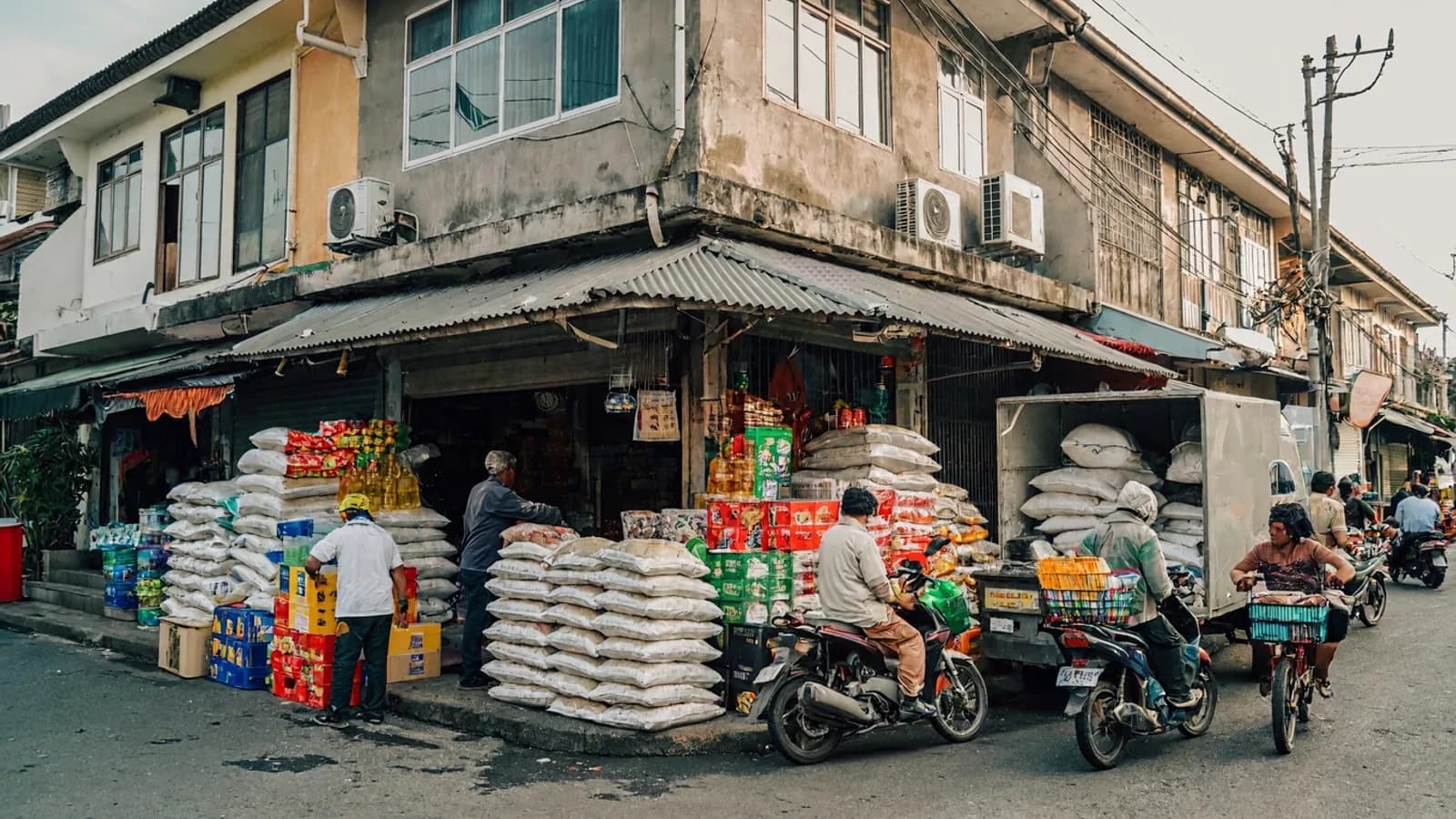
Many would-be owners of a wholesale grocery shop (toko grosir sembako) pick a site the way they would for a retail shop: find the busiest road. But a wholesaler's main customers are not people who happen to pass by. They are warung owners, fried-snack sellers, small eateries and families buying in bulk for a celebration. They arrive on motorbikes with baskets or in pickup trucks, buy by the sack, and care deeply about price and how easy it is to load up. Your shop also has to take deliveries from distributors' trucks several times a week. This guide helps you assess potential sites through that lens.
Who Actually Buys From a Wholesale Grocery Shop
Before judging a location, map out who will keep your shop running. Each group has different buying times, ways of arriving and travel distances.
Warung and toko kelontong owners: your core customers. They buy regularly, often in the morning, and take rice, cooking oil, sugar, instant noodles, cigarettes and bottled drinks by the carton or sack.
Food vendors: small eateries, fried-snack sellers, nasi uduk stalls and home caterers. They need oil, flour, eggs and gas in volume, sometimes daily.
Bulk household buyers: families doing a monthly shop or preparing a celebration. They come irregularly but spend a lot.
Resellers and grocery-hamper sellers: people reselling online or putting together hampers for offices and Lebaran.
Local retail shoppers: they will come, but do not rely on them, as their margins and habits resemble an ordinary corner shop.
If most of the revenue you expect comes from warungs and vendors, the best site is one that is easy for many warungs to reach and easy to load goods at, not the one most people see.
Reading Traders' Shopping Routes
Warung owners rarely ride far just to restock if there is an option on their usual route. Many shop on the way back from the market, after the school run, or during a quiet spell at their stall. A good wholesale site usually sits on a route they already use.
How to observe shopping routes
Visit the nearest traditional or wholesale market between about 5 and 8 am. Watch which way loaded motorbikes head home.
Follow one or two of those main routes and note the dense neighbourhoods they pass through.
Watch which side of the road matters. Traders carrying a load prefer to stop on the left without cutting across traffic or hunting for a U-turn.
Repeat on a weekday and a weekend, and on market days if your area still follows them.
Note the wholesale rush hours at existing competitors along the route.
Counting warungs within reach
The most practical method is to count warungs and food vendors yourself within a set radius, for example 2 to 3 km or a 10-minute motorbike ride. Start from home with a digital map, then verify on the ground, because many small warungs are not on any map. Population and household figures by district from BPS help you estimate how dense the area is, but you still need to count the warungs yourself.
While surveying, chat with a few warung owners. Ask where they usually restock, how often, what keeps them loyal to a particular wholesaler, and whether distributors' sales reps visit them. Their answers are often worth more than a vehicle count.
Comparing Types of Wholesale Site
There are three common types of position. The table is a general picture, not a fixed rule; local conditions vary.
Site type | Strengths | Weaknesses | Best for |
|---|---|---|---|
Near a wholesale or large market | Traders already come here, strong morning flow | Many competitors, high rent, congested parking and unloading | Wholesalers with very sharp prices and large stock capital |
Connector road between neighbourhoods or villages | Passed by traders from several areas, truck access fairly easy | Check whether trucks are restricted at certain hours | Mid-sized wholesalers serving warungs across a wider area |
Inside a dense neighbourhood | Cheaper rent, close to small warungs, few wholesale rivals | Hard for trucks to enter, limited customer reach | Semi-wholesale shops that also sell retail and deliver |
Unloading and Storage: Often Overlooked, Always Decisive
A wholesaler receives goods in bulk. If distributors' trucks cannot stop outside, you pay for extra porters, stock spends longer on the street and relations with neighbours can sour.
Road width and truck stopping space: make sure a small or medium truck can stop without fully blocking the road.
Truck hour restrictions: some cities limit goods vehicles at certain times. Ask residents, nearby shop owners or the local transport office.
Floor strength: stacks of rice sacks and oil cartons are very heavy. Look for cracks and ask about the building's history.
Damp and leaks: rice, sugar and flour spoil quickly in humidity. Check the roof, walls and flooding history.
Pests: look for signs of rats in the building and nearby, such as open drains or large rubbish points.
Storage space: measure whether one to two weeks of stock fits without filling the shop front.
Parking for Customers Carrying a Load
Wholesale buyers need room to arrange goods on a motorbike or vehicle. Motorbikes with side baskets take up more width, and loading can take several minutes. A generous forecourt, or at least a safe road shoulder, is a big plus. Also check whether there is a parking attendant and what they charge, because traders who come almost daily will count even small costs.
Reading the Competition
Your competitors are not only other wholesalers. You also compete with distributors' travelling sales reps who deliver straight to warungs, franchise minimarkets running big promotions, and wholesale ordering apps for warungs that are increasingly common in many cities.
List the nearest wholesalers, their opening hours and how busy they are in the morning.
Compare prices on a few staples, such as 25 kg rice, cooking oil by the carton and sugar by the sack.
Ask warung owners whether they mostly buy from sales reps or order through an app.
Look for a gap: opening earlier, offering delivery, or stocking items rivals rarely carry.
Working Out Rent on Thin Margins
Wholesale groceries generally run on thin gross margins and rely on volume. Rent that looks reasonable for a retail shop can be too heavy for a wholesaler. The example below is purely an illustration of how to calculate; fill in real figures from your price survey, distributor quotes and local costs.
Item (illustrative, per month) | Example figure | Notes |
|---|---|---|
Daily revenue | Rp5,000,000 | Estimated from warung count and average order value |
Trading days | 26 days | Monthly revenue about Rp130,000,000 |
Gross margin | 8% | Gross profit about Rp10,400,000; check real margins per item |
Rent | Rp4,000,000 | Equal to Rp48 million a year |
Wages for 2 staff | Rp4,500,000 | Adjust to local wage levels |
Power, water, fees | Rp700,000 | Including neighbourhood fees |
Shrinkage and damage | Rp400,000 | Torn sacks, dented packs, expired goods |
Other | Rp400,000 | Delivery fuel, bags, supplies |
Left before repaying capital | Rp400,000 | Very thin for such large stock capital |
The illustration shows how a small rise in rent or dip in revenue can tip the shop into a loss. Your options: find a site with lower rent, secure higher volume, or add higher-margin items. Remember too that wholesale stock ties up a lot of capital, so work out how long it takes to recover that money, not just the monthly profit.
For a wholesaler, a good location is one where traders feel buying from you saves them the most time and makes loading the easiest.
Field Survey Checklist for a Wholesale Grocery Shop
How many warungs and food vendors are within 2 to 3 km or a 10-minute motorbike ride?
Is the site on traders' route home from the market, on the side of the road where stopping is easy?
Can a distributor's truck stop outside without blocking the road?
Are goods vehicles restricted at certain hours on this road?
Is the floor strong, the roof leak-free and the site free from flooding?
Are there signs of rats or pests in or around the building?
Is there enough storage for one to two weeks of stock?
Is there parking for motorbikes with baskets and pickup trucks?
Who are the nearest competitors, their opening hours and staple prices?
Are local warungs served by sales reps or wholesale apps?
Will neighbours object to early-morning unloading?
Does the rent still make sense with a realistic gross margin?
Conclusion
A wholesale grocery shop is not judged by how busy the road is, but by how many warungs and vendors you can serve easily and how smoothly goods flow in and out. Your next step: shortlist two or three sites, watch traders' routes home from the market in the morning, count the warungs within reach, check truck access at distributors' delivery times, then fill in the calculation table with real numbers from your survey. If the result is still thin, it is better to negotiate the rent or look elsewhere than to force it.