Choosing a Location for a Toko Kelontong: Distance From Franchise Minimarkets, Daily Household Shopping and Stock Space
A neighbourhood grocery kiosk lives on daily shopping by households within walking distance, not on a busy road. Learn how to count nearby households, position yourself against franchise minimarkets and check stock space before you lease.
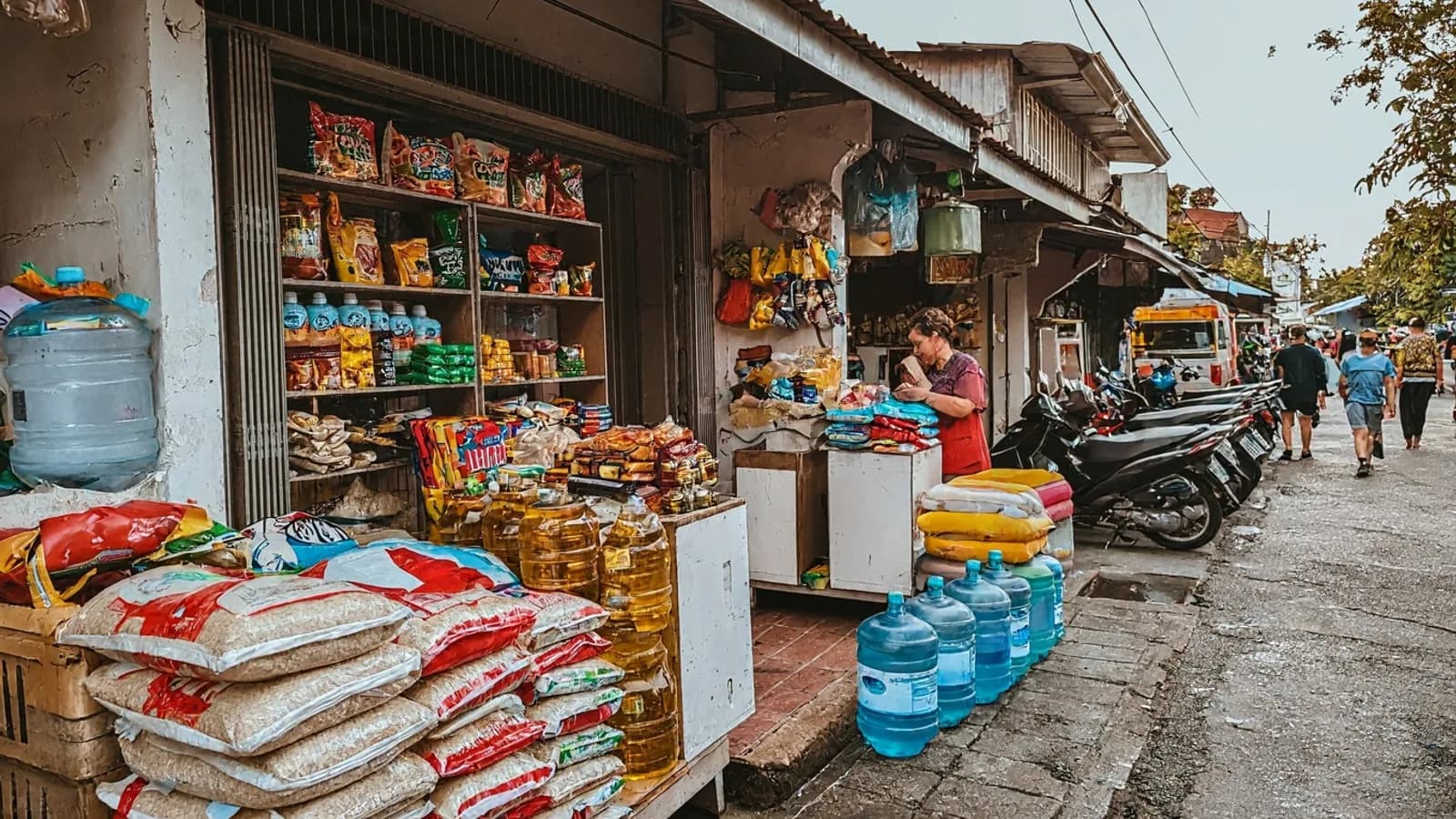
You want to open a toko kelontong, a small neighbourhood grocery shop, but almost every street corner already has a bright, air-conditioned franchise minimarket that stays open late. It is a fair question: is there still room for a small shop? The answer is often yes, provided you choose the site the right way. A kelontong does not compete on the same ground as a minimarket. It lives on the daily needs of people who live very close by, on trust, and on goods bought in small amounts but often.
This guide helps you assess a potential site specifically for a grocery kiosk: who the buyers are, how far they will walk, how you sit relative to franchise minimarkets, and the practical details people forget, such as stock space and supplier access.
Understand Where a Kelontong's Customers Come From
Kelontong customers usually walk over or take a quick motorbike ride from home. They buy half a litre of cooking oil, a few eggs, a quarter kilo of sugar, sachet soap or a water gallon. These purchases happen almost daily, are often last-minute and are small in value.
That means revenue depends not on how many vehicles pass but on how many households live close by and how often they choose to shop with you. A busy main road can actually be worse if the people passing do not live nearby and will not stop for small items.
Regular buyers: households buying kitchen basics almost every day.
Emergency buyers: residents who run out of gas, drinking water or spices mid-cooking.
Small-business buyers: fritter sellers, food stalls or mobile coffee vendors who need small quantities regularly.
Boarding-house tenants and workers: instant noodles, drinking water and toiletries, usually morning and evening.
Count Households Within Walking Distance
For a kelontong, a realistic radius is usually short, for example around 200 to 500 metres, depending on density and street layout. Treat this as a starting point only; confirm it by watching where customers of other grocery kiosks in the area come from.
Open a digital map, mark the site and draw a rough circle of about 300 metres.
Remove areas cut off by barriers: rivers, railway lines, major roads with no crossing, or walled gated estates. Residents behind them will rarely come.
Estimate the number of homes in what remains. Walk the alleys and count doors, or ask the RT head how many households live there.
For a wider picture, check population and household figures by district in the Kecamatan Dalam Angka publications from BPS.
Also note boarding houses, rented rooms and small food businesses, as they are regular buyers that are easy to overlook.
Your Position Relative to Franchise Minimarkets
Franchise minimarkets usually choose visible roads with easy parking. A kelontong does not need to fight them on the same spot. What you need to judge is whether there is a pocket of housing that is not conveniently served.
What Minimarkets Usually Do Not Offer
Very small or loose quantities, such as cooking oil, sugar and rice by the litre or kilo.
Heavy items delivered to the door, such as water gallons and gas cylinders.
Shopping on credit for known regulars.
Very early opening, when families prepare breakfast and packed lunches.
Small bulk quantities for micro-traders.
How to Read Distance
If the minimarket is on the main road and your site sits inside a neighbourhood far enough that walking to the main road is a hassle, you can become the nearest option. If your site is right next to a minimarket on the same road, you will be compared directly on price, cleanliness and comfort, with far less capital.
Look at other kelontong shops too. One busy kiosk at the end of an alley can signal strong demand, but three in one short alley usually means the market is already thinly split.
Example Comparison of Three Positions
The table below is an illustration, not real data. Use the same format for your own candidate sites with figures from your field survey.
Criterion | Site A: main road, next to a minimarket | Site B: alley entrance, dense housing | Site C: inside a gated estate |
|---|---|---|---|
Estimated households within ~300 m | Moderate, partly cut off by a major road | Many, dense housing | Moderate, estate residents only |
Distance to nearest minimarket | Next door | About 400 m on the main road | Outside the estate gate |
Other grocery kiosks | None | One, at another alley end | None |
Supplier truck access | Easy | Possible, unload at alley entrance | Limited, set entry hours |
Example annual rent | High | Medium | Low to medium |
First assessment | Risky, direct competition | Most promising to test | Viable if management allows |
Rough Maths: Does the Rent Still Work?
Grocery kiosk gross margins are generally thin, so even rent that looks cheap can hurt. Here is a simple example. All figures are illustrations; replace them with your survey results and supplier prices in your area.
Item | Example figure | Notes |
|---|---|---|
Households in radius | 400 | From door counts or RT data |
Share who shop with you regularly | 25%, or 100 households | Assumption; check by watching similar shops |
Average spend per household per day | Rp25,000 | Illustration; observe receipts at similar shops |
Estimated daily revenue | Rp2,500,000 | 100 x Rp25,000 |
Gross margin (e.g. 10–15%) | Rp250,000–Rp375,000 per day | Margins vary widely by product |
Monthly gross profit (30 days) | Rp7.5–11.25 million | Before wages, power, rent, spoilage |
Example rent of Rp30 million a year | Rp2.5 million a month | Roughly 22–33% of gross profit |
If rent eats a third of gross profit before other costs, question the site. Test your assumptions again: will a quarter of households really shop with you regularly, or only a tenth? Always run a pessimistic scenario too.
Stock Space and Supplier Access
A kelontong holds lots of heavy, fast-moving stock: sacks of rice, cartons of oil, water gallons and instant noodles. A site that suits shoppers can still be a headache if stock is hard to bring in and store.
Back room or storage: is there space for reserve stock covering at least a few days of sales?
Floor and shelving: the floor must be solid and dry. Rice sacks and cartons on a damp floor spoil fast.
Flooding and seepage: ask neighbours about flood history. Even ankle-deep water can ruin stock worth millions of rupiah.
Supplier vehicle access: can a distributor's van or pickup stop near the door without disturbing residents?
Distance to a distributor or wholesaler: the closer it is, the easier it is to restock yourself when something runs out.
Security: a decent steel or roller door and a reasonably safe street at night.
Peak Times to Observe
Visit the site at least three times: early morning from dawn to about seven, late morning when people cook lunch, and late afternoon into the evening after work. Watch whether residents walk past, whether there are schoolchildren, and how busy nearby grocery kiosks or warung are at those times. If similar shops look quiet even at cooking time, take that seriously.
Field Checklist for a Grocery Kiosk Site
Households within walking distance counted or confirmed with the RT.
Barriers cutting off the area (rivers, railways, major roads, estate walls) noted.
Distance and position of the nearest franchise minimarket known.
Number of other grocery kiosks in the same radius counted, including busy ones.
There is a pocket of housing closer to your site than to any minimarket.
Enough stock space, dry floor, no history of flooding or seepage.
Supplier vehicles can load and unload reasonably.
Distance to the nearest distributor or wholesaler checked.
Enough electrical capacity if you will run a fridge or chiller.
Morning, midday and evening observations done.
Neighbours and local leaders are fine with deliveries.
Rent versus gross profit calculated under normal and pessimistic scenarios.
Common Mistakes
Choosing the busiest road. Fast-moving traffic rarely stops for a sachet of coffee.
Ignoring barriers. A large neighbourhood across a main road with no crossing is not your market.
Forgetting stock space. A tiny shop with no storage forces constant restocking and lost sales when items run out.
Copying the minimarket. Competing on chillers, air conditioning and big promotions drains capital. Lead with closeness, small quantities and delivery.
Conclusion
The grocery kiosks that last are usually not the most visible ones but the ones closest to residents' kitchens. Start by shortlisting two or three sites, count households within walking distance, map the minimarkets and similar shops, then check stock space and supplier access. Fill in the comparison table and rent calculation above with your own survey figures before you sign. If you are unsure, compare the candidates using density and competitor data so your decision rests on more than gut feeling.