Choosing a Location for a Souvenir Shop: Travellers' Route Home, Coach Parking, Holiday Seasons and Other Must-Checks
A souvenir shop lives on people heading home, not on locals who pass every day. Learn how to read travellers' return route, assess coach parking, plan for peak and quiet seasons, and check local product supply before you sign a lease.
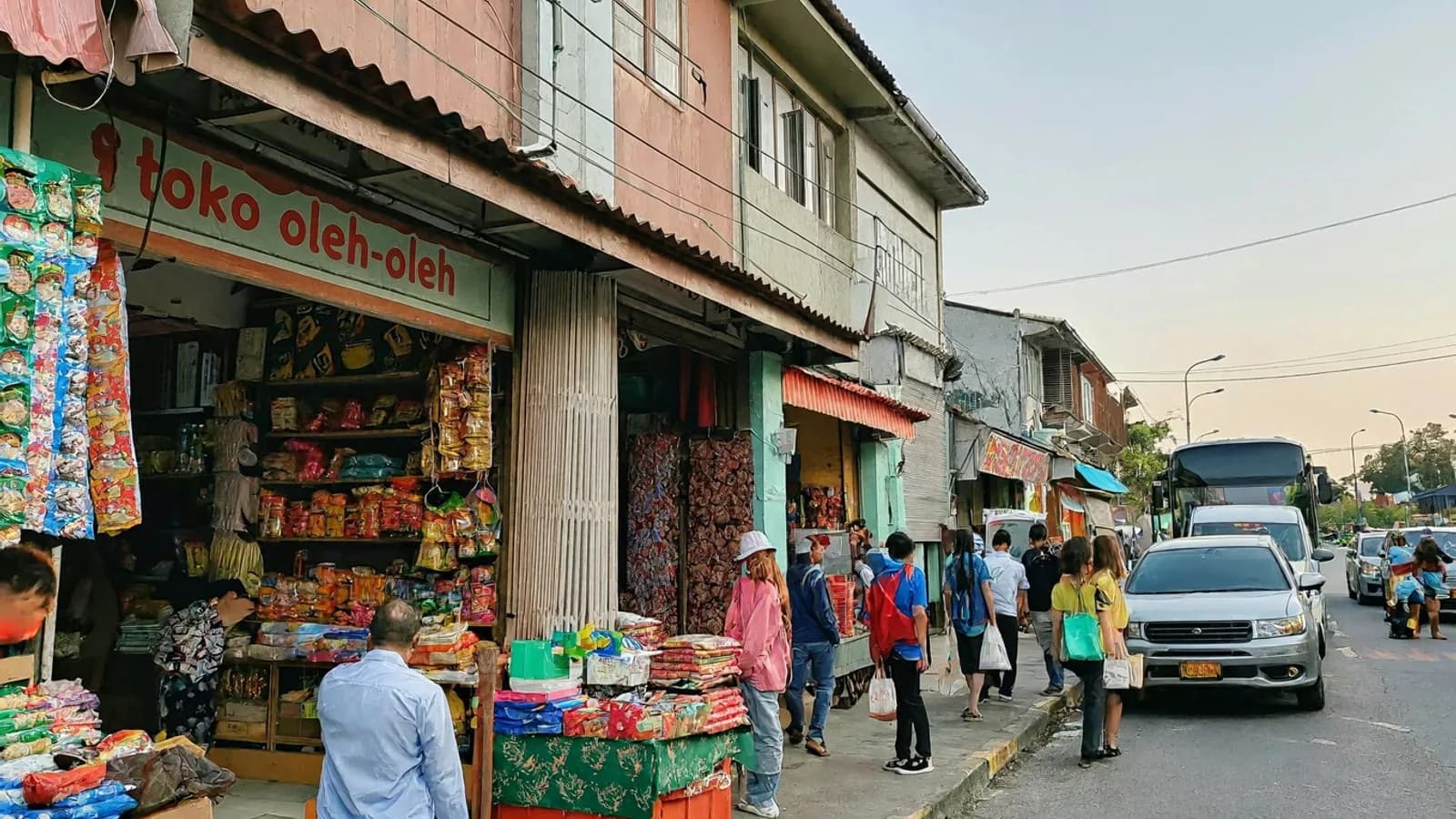
You want to open a toko oleh-oleh, a shop selling local snacks and souvenirs, and you have found a shophouse on a road full of traffic. But souvenir shops have a very particular customer: someone who is on their way home and wants to bring something back for family, colleagues or neighbours. They rarely stop on the way in, rarely come twice, and are strongly swayed by parking, toilets and how easy it is to pull over. A busy road is not automatically the right road.
This guide helps you work out who your buyers are, pick the right side of the road and stopping point, plan for busy and quiet seasons, and check practical details such as coach parking and storage before you sign a lease.
Start With Who Actually Buys Souvenirs
Souvenir buyers usually fall into several groups. Each arrives differently, so a location that suits one group can be poor for another.
Tour groups by coach: dozens of people arrive at once, shop quickly, and depend on the driver or guide deciding where the coach stops.
Families in private cars: stop on the way home and need easy parking, toilets and a place to rest briefly.
Business travellers: staff staying in hotels or leaving via stations and airports, who shop just before departure and want neat, portable packaging.
Local residents: buy gifts to take out of town, for guests or for events. This group keeps the shop alive outside holiday periods.
Online buyers: orders from people living away who miss regional food. They do not need a busy site, but they do need smooth courier access.
Decide on the two main groups you want to serve. A shop on a road out of town will rely on cars and coaches, while a shop near a station or hotel relies on pedestrians and business travellers.
Compare the Main Types of Souvenir Shop Location
Location | Main buyers | Strengths | Watch out for |
|---|---|---|---|
Main road leading out of town | Families by car, tour coaches | Buyers are heading home and ready to shop | Needs a large forecourt; at risk from new toll roads or route changes |
Established souvenir cluster | Tourists who come on purpose | People arrive intending to buy | Rows of competitors, easy price comparison, rent tends to be high |
Near a station, terminal or airport | Business travellers, passengers | Steady flow of people all year | Very short shopping window; goods must be compact and portable |
Near hotels and the city centre | Hotel guests, official visitors | Evening buyers after their activities | Limited parking; depends on hotel occupancy |
In town, near housing | Local residents, online orders | Cheaper rent, less seasonal | Hardly any tourists; you must do your own marketing |
Choose the Homeward Side of the Road
This is the single most important principle for a roadside souvenir shop. Tourists seldom buy souvenirs on arrival because they do not want to carry them around all holiday. They shop on the last day, as they leave the town or tourist area. So the shop should sit on the side of the road used by traffic heading home, so drivers can simply turn left (Indonesia drives on the left) without making a U-turn.
Map where most visitors come from, for example the nearest big city or the direction of the airport.
Identify the road they take home, including access to the toll gate.
Make sure the shop is on the left-hand side for that homeward flow.
Check for long medians, no-turn rules or one-way systems that force drivers into a long detour.
Consider distance from the attraction: too close and people are not ready to leave; too close to the toll gate and they no longer want to stop.
Coach Parking, Toilets and a Place to Rest
Successful souvenir shops often double as rest stops. People pull in because they need a toilet, a prayer room or a stretch, and end up shopping.
The forecourt
If you are targeting tour groups, make sure a coach can drive in, park and leave without reversing onto the main road. Measure the entrance width and forecourt length on site, then ask tour coach drivers whether they would stop there. For private cars, check whether the forecourt can take several cars at once during peak times, not just one or two.
Toilets and a prayer room
Clean toilets and a decent musala are often the main reason groups choose one shop over another. Check whether the building has the space and drainage to add toilets and what the work would cost. Include this in your startup budget from the start, not as an afterthought.
Understand the Role of Drivers, Guides and Travel Agents
For group business, the decision to stop usually rests with the driver, guide or travel agency rather than the tourists. In some areas, souvenir shops offer incentives to whoever brings a group, such as free meals for drivers or a commission on purchases. Practices and amounts vary widely, so do not assume.
Ask souvenir shop owners in other towns, or contacts at travel agencies, how things work locally.
Treat incentives as a cost of sale that reduces your margin, not an optional extra.
If you would rather not depend on groups, focus the location on families by car and local buyers.
Model a Full Year of Revenue, Not Just the Peak
A souvenir shop can be packed during Lebaran, school holidays and year-end, then quiet for weeks. Rent has to be paid all year, so use the quiet months as your baseline, not the busy ones.
Below is an illustration for one ordinary month outside the holidays. All figures are examples only; replace them with your own survey results and conversations with nearby shop owners.
Buyer segment | Assumption (illustration) | Estimated monthly revenue |
|---|---|---|
Tour coaches | 8 coaches × 40 people × 50% buying × Rp150,000 | Rp24,000,000 |
Families by car | 6 cars a day × 30 days × Rp175,000 | Rp31,500,000 |
Locals and business travellers | 5 buyers a day × 30 days × Rp100,000 | Rp15,000,000 |
Online orders | 40 orders × Rp200,000 | Rp8,000,000 |
Total, ordinary month | Rp78,500,000 |
Next, work out gross margin. Many souvenir shops sell consignment or wholesale goods from local small producers at varying margins, for example somewhere in the 15–35% range. Ask several suppliers directly for real figures. At a 25% margin, the illustrative revenue above yields gross profit of around Rp19.6 million, from which group incentives, wages, electricity and rent still have to be paid.
Then build two more scenarios: the quietest month (say revenue halves) and the peak month. If the shop can still cover fixed costs in the quietest month, the site is worth considering.
Check Supply, Storage and Shelf Life
A souvenir shop also needs to be close to its sources. Crackers, chips, dodol, biscuits, coffee and crafts are usually supplied by small producers around the region.
Map your key producers and their distance from the site. Nearby supply makes quick restocking before peak season easier.
Make sure there is a dry, non-humid storage room, because snacks go stale quickly and packaging is easily damaged.
Check that processed food from suppliers carries the right distribution permit, such as PIRT or BPOM, depending on the product.
Plan space for buffer stock before Lebaran, as deliveries can run late when every shop orders at once.
Watch for Route Changes and New Toll Roads
A shop on a road out of town is highly exposed to route changes. A new toll road, ring road or traffic scheme can shift tourist flow almost overnight. Before signing a long lease, look for news of road projects in the area, ask residents and the local kelurahan office, and consider a shorter lease with a renewal option if a project is still uncertain.
Field Survey Checklist for a Souvenir Shop
The shop is on the left-hand side for travellers' homeward flow.
No long median or no-turn rule forces drivers into a long detour.
Distance from the attraction and the toll gate makes stopping reasonable.
The forecourt fits several cars and, if targeting groups, a coach can enter without reversing onto the road.
Clean toilets and a prayer room exist or can be built.
The sign is visible far enough ahead for drivers to react before passing.
You have counted out-of-region cars on the afternoon of the last holiday day.
You have asked coach drivers or guides about their stopping habits.
Key producers are easy to reach and willing to supply regularly.
There is dry storage for buffer stock before peak season.
No planned toll road, ring road or route change threatens the traffic flow.
Your quietest-month revenue estimate still covers rent and fixed costs.
Conclusion: Follow Your Buyers' Way Home
A souvenir shop needs more than a busy road. It has to sit where people are heading home, be easy to pull into, be comfortable for a short stop, and survive once the holidays are over. Your next steps: choose your two main buyer groups, survey candidate sites on the afternoon of the last holiday day, talk to drivers and suppliers, then model your quietest month before you sign a lease.