Choosing a Location for a Clothing Shop or Boutique: Comparison Shoppers, Window Displays, the Lebaran Season and Other Must-Checks
A clothing shop lives on people who browse, try things on and compare, not just on a busy road. Learn how to choose between a fashion cluster and a standalone street, assess displays and fitting rooms, and model a full year of revenue including Lebaran.
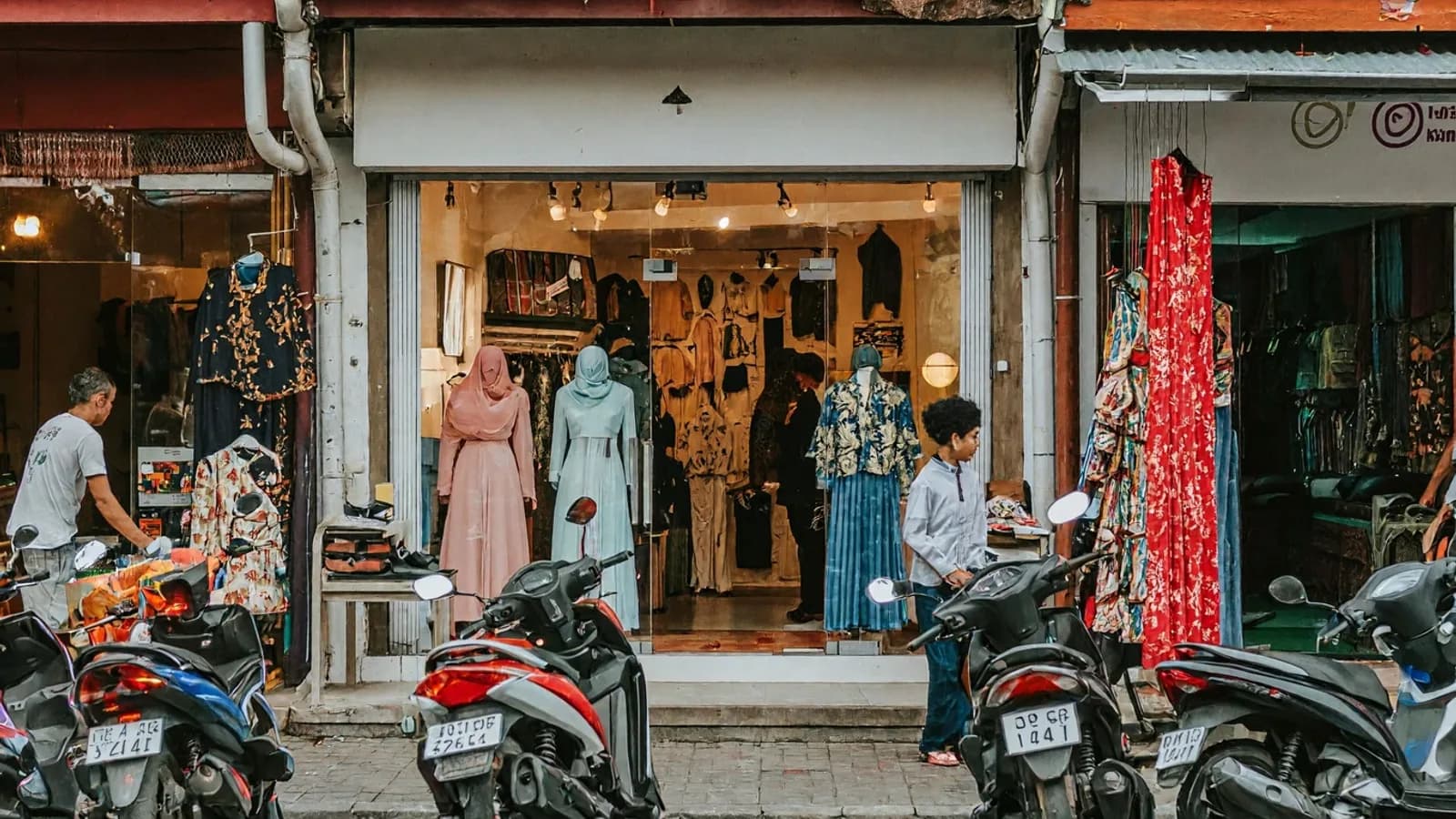
Many clothing shop owners pick a shophouse on the busiest road they can find, then wonder why people walk past without coming in. The issue is that people rarely buy clothes on impulse the way they buy a drink. They want to browse, try things on, compare prices across several shops, and often come with family or friends. The right location for a clothing shop is one that supports that way of shopping.
This guide helps you assess a potential site for a clothing shop, boutique or modest-wear store: understanding your buyer type, choosing between a fashion cluster and a standalone street, checking the window display and interior, modelling a full year of revenue including the Lebaran season, and taking a checklist into the field.
Start With How Your Customers Shop
A budget T-shirt shop, a mid-range modest-wear store and a boutique with exclusive designs serve very different buyers. Before you look for a shophouse, decide which group your shop belongs to, because the location needs differ too.
Shop type | How buyers arrive | Locations that usually suit | What to watch out for |
|---|---|---|---|
Affordable everyday clothing | Drop in while passing, compare several shops | Near markets, clothing clusters, streets with plenty of pedestrians | Price wars with the shop next door and online sellers |
Modest wear and mid-range fashion | Come on purpose, often with family, busy before Lebaran | Shophouses on shopping corridors, near middle-income housing, car parking available | Revenue depends heavily on the season |
Limited-edition or custom boutique | Come through recommendations or social media | Easy-to-find streets, not necessarily the busiest, comfortable parking | Prestige rents that do not match actual buyer numbers |
School uniforms and children's wear | Planned visits before the new school year | Near schools or young-family neighbourhoods | Long quiet spells outside the school season |
The table is a general picture, not a fixed rule. The easiest way to confirm it is to ask customers at your existing shop, if you have one, or to watch similar shops: where their buyers come from, how they travel and whether they come alone or in groups.
Fashion Cluster or Standalone Street?
With clothing, sitting among competitors is often an advantage. People shopping for Lebaran outfits tend to head for a row of clothing shops so they can compare, not to a single shop on its own. But being in a cluster also means you need a strong reason to be chosen.
Advantages of a cluster or clothing row
Buyers already arrive intending to shop for clothes, so the chance of a visit is higher.
You do not have to build footfall from scratch.
Suppliers and couriers are often used to serving the area.
Disadvantages
Rent is usually higher and good units are rarely vacant.
Buyers are very price-sensitive because they can compare instantly.
If your designs match the shop next door, you get pulled into discount wars.
A standalone street makes more sense for a boutique with distinctive designs or a shop whose buyers already come via social media. For these shops, what matters is an easy-to-find address, comfortable parking and a convincing shopfront, not the number of passers-by.
Window Display and Shopfront: Clothes Sell Through the Eyes
Mannequins and displays at the front are your free advertising. That makes frontage width and window quality more important for a clothing shop than for many other businesses. On your site visit, look at:
Frontage width: is there room for two or three mannequins and a door that looks open and inviting?
Sun direction: a window hit by direct afternoon sun can fade fabric quickly and create glare that hides the display.
Obstructions: electricity poles, trees, carts or billboards blocking the window.
Night lighting: clothing shops are often busy in the late afternoon and evening, so street lights and neighbouring shops' lighting matter.
Terrace and pavement: can shoppers stop to look at the display without being squeezed by parked motorbikes?
Inside: Fitting Rooms, Stock Space and Comfort
Clothing buyers need to try things on. A shop without decent fitting rooms will lose sales, especially for modest wear and occasion wear. Check whether the floor plan allows at least one or two fully enclosed fitting rooms, a large mirror in a well-lit area and aisles that are not cramped.
Clothing stock also takes up space, especially before Lebaran when you stock up. Ask whether there is an upper floor, a storeroom or a dry back room. Fabric picks up damp and mould easily, so check for seeping walls, roof leaks and airflow. If you plan to use air conditioning and spotlights, make sure the electrical capacity is enough or cost the upgrade before you agree.
Model a Full Year of Revenue, Not Just the Peak
Clothing shops in Indonesia generally peak before Lebaran, with other busy periods around the new school year, year-end and paydays. A common mistake is choosing rent based on how busy Ramadan feels, when rent is paid for all twelve months.
Below is an illustrative example. The figures only show the method and are not price benchmarks. Replace them with numbers from your own survey and experience.
Item | Illustrative example | Note |
|---|---|---|
Annual shophouse rent | Rp60 million | Equal to Rp5 million a month |
Other fixed costs per month | Rp6 million | Staff, electricity, internet, fees |
Total fixed costs per month | Rp11 million | Monthly rent plus other costs |
Average gross margin | 40% | Selling price minus purchase price, checked against your invoices |
Minimum monthly revenue | Rp27.5 million | Rp11 million divided by 40% |
Minimum daily revenue (30 days) | About Rp920 thousand | Compare with what you observe at similar shops |
Even if the months before Lebaran are much stronger, do not assume the rest of the year is safe. Ask clothing shop owners near the site how they fare in quiet months, for example two to three months after Lebaran. If quiet-month revenue does not cover fixed costs, you will need peak-season savings to fill the gap, and that has to be planned from the start.
Location Still Matters Even If You Sell Online
Many clothing shops now also sell through social media and marketplaces. The physical shop then becomes a place where buyers see the real fabric, try sizes and collect orders. For that role, consider:
An address that is easy to find on map apps and easy to explain to buyers.
Parking for people who come specifically, including cars if your segment is middle-income families.
Courier access for daily shipments without getting in the way of in-store shoppers.
Enough light to photograph products or run live-selling sessions.
Steps to Assess a Potential Clothing Shop Site
Define your shop type and price range, then write down who your main buyers are.
Check district population and age structure data on BPS to see whether your buyer group is large enough in the area.
Shortlist two or three sites, including at least one in a clothing cluster and one on a standalone street if both make sense.
Visit on a weekday afternoon, at the weekend and around payday. Count people entering clothing shops and those leaving with purchases.
Note the designs and prices of the nearest competitors and look for gaps, such as plus sizes, children's modest wear or a particular price band.
Ask nearby shop owners about quiet months, rent increases and tenants who have closed.
Inspect the building: window display, fitting room space, storage, damp and electrical capacity.
Work out your minimum revenue as in the example above and compare it with your observations before negotiating rent.
Field Checklist for a Clothing Shop
Are there other clothing shops or a shopping centre bringing in buyers who intend to shop?
Are your designs and prices clearly different from the shop next door?
Is the frontage wide enough for a display and mannequins visible from the road?
Is the window protected from direct sun that fades fabric?
Are there no poles, trees or stalls blocking the display?
Can you fit at least one enclosed, comfortable fitting room?
Is there dry stock space with no seepage or leaks?
Is the electrical capacity enough for air conditioning and lighting, or has the upgrade been costed?
Is motorbike and car parking available during busy afternoons and weekends?
Is street lighting good enough for evening shoppers?
Do you know how quiet months look from nearby shop owners?
Is the minimum daily revenue realistic compared with what you saw in the field?
Conclusion
A good clothing shop location is not just a busy road but a place that makes people stop, look, try on and come back. Start by defining your shop type and buyers, then compare a fashion cluster with a standalone street, check the window display and interior, and work out minimum revenue across twelve months, not just the Lebaran rush. Take the checklist above on your site visits, fill it in for every candidate location and use the results as your basis before you sign a lease.