Choosing a Location for a Baby Supplies Shop: Young Families, Maternity Clinics, Access for Parents With Children and Other Must-Checks
A baby supplies shop lives on nearby young families, people buying birth gifts and parents who need nappies or formula fast. Learn how to read your likely buyers, sources of visits, access for parents with children and the minimum revenue before you rent.
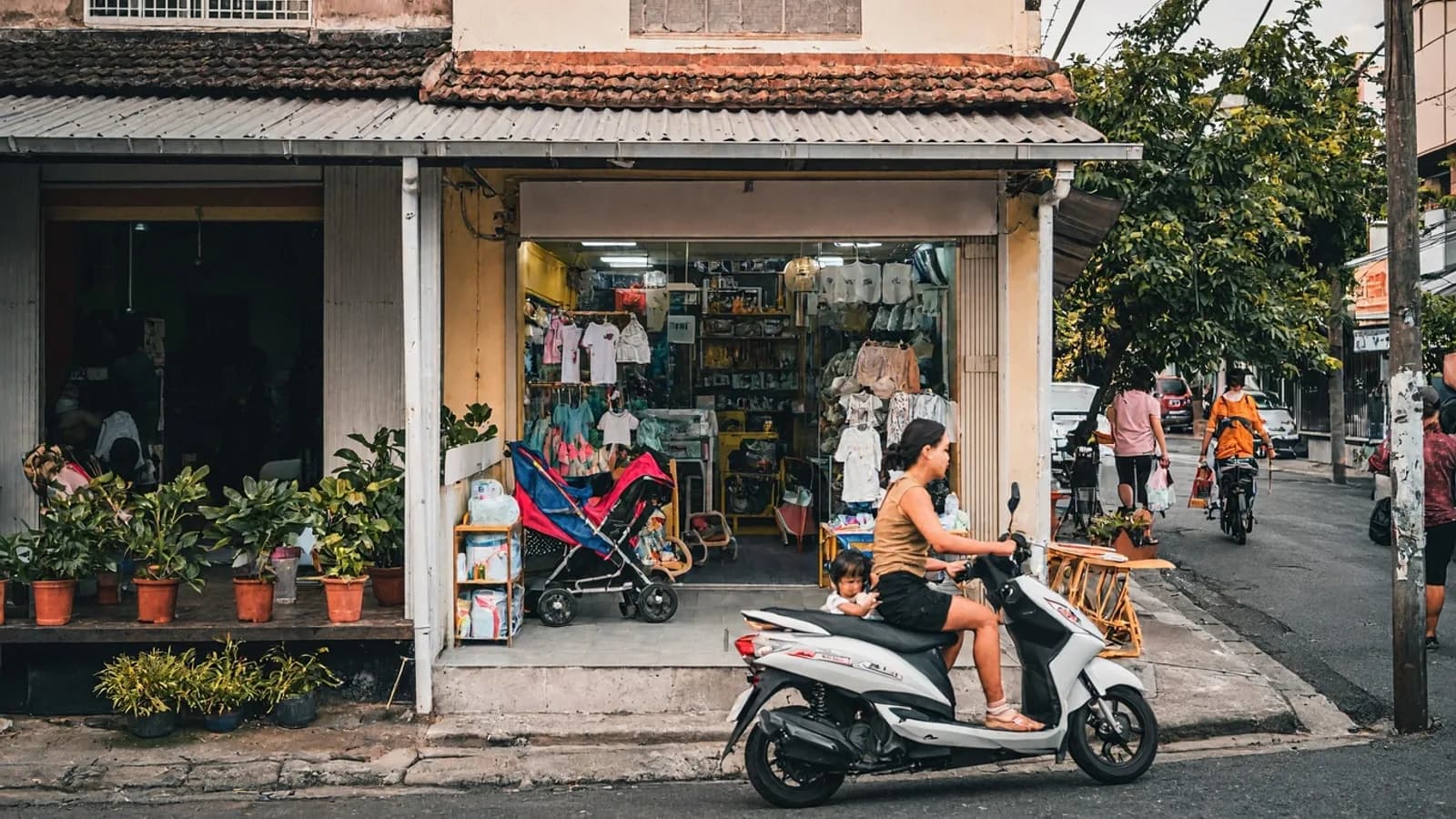
Many people open a baby supplies shop on a busy road and then wonder why so few customers stop. The problem is that baby-shop customers are not passers-by. They are expectant mothers, young families with toddlers and people looking for a birth gift. They shop in a distinctive way: nappies and formula are bought regularly and often urgently, while a stroller or cot is bought once after plenty of comparison. This guide helps you judge whether a potential site is genuinely close to these buyers, and whether a parent carrying a child can stop there comfortably.
Know the three groups of baby-shop customers
Before assessing a site, split your customers into three groups. Each needs something different from a location.
Routine buyers. Families buying nappies, wet wipes, formula and baby soap every week. They want something close and quick, usually from the surrounding housing.
Big-item buyers. Parents-to-be looking for strollers, cots, carriers or car seats. They will travel further, but want to see, touch and compare.
Gift buyers. Relatives and friends visiting a new baby or attending an aqiqah or a seven-month pregnancy celebration. They need neatly packed gifts, often at short notice, and prefer a shop on the way to where they are going.
The ideal site is usually strong on routine purchases for daily income, supported by gift and big-item buyers who bring thicker margins. If a site is strong for only one group, shape your product range around that from the start.
Reading how many young families live nearby
Start with BPS data
The Kecamatan Dalam Angka (District in Figures) publications on the BPS website and regency or city BPS sites usually list population by age group. Look at the 0 to 4 age group and compare several candidate districts. Also check the 25 to 34 group, where many new parents sit. This will not tell you which street is best, but it helps you shortlist districts with plenty of young families. District figures cover a wide area, so you still need to check on the ground.
Field signs you can see for yourself
Baby clothes and cloth nappies drying outside houses or family boarding houses.
Motorbikes carrying toddlers up front, or parents pushing strollers in the late afternoon.
Posyandu (community health posts), playgroups, kindergartens and daycare nearby.
Small-type housing estates occupied in roughly the last five to ten years, as residents tend to be young couples.
Independent midwives, mother-and-child clinics or paediatricians with patient queues.
Nearby warung and minimarkets displaying nappies and formula up front, a sign these items sell fast.
Maternity clinics, midwives and mother-and-child hospitals
Birth facilities bring two kinds of buyers: families who suddenly need newborn supplies, and visitors looking for a gift. A shop on the road leading to a maternity clinic or mother-and-child hospital often picks up gift buyers without much promotion.
Do not assume every clinic is busy, though. Count the vehicles parked at visiting hours, check whether there are inpatient rooms, and see whether visitors actually pass your candidate shop or arrive from another direction. Being on the side of the road visitors pass before reaching the clinic is usually better than the side after it, because gifts are bought before the visit, not after.
Competitors: minimarkets, online stores and other baby shops
A baby shop competes on three fronts. Minimarkets sell nappies and formula with long opening hours. Marketplaces offer low prices and home delivery. Other baby shops compete across every category. Your location therefore needs to support advantages competitors lack: products customers can touch and try, advice from staff, ready-made gift packs and fast delivery for urgent purchases.
Product group | How often bought | Main competitors | What it needs from the site |
|---|---|---|---|
Nappies, wipes, formula | Weekly or more often | Minimarkets and marketplaces | Close to housing, easy quick parking, open into the evening |
Clothing and everyday baby items | Monthly | Other baby shops, marketplaces | Visible display, room to browse calmly |
Strollers, cots, car seats | Once or twice | Large stores and marketplaces | Spacious display, room to try, access for unloading bulky goods |
Birth gift packs | Irregular, often last-minute | General gift shops | On the way to clinics or housing, long opening hours |
Count other baby shops within a realistic distance for your routine buyers, for example around one to two kilometres in a city, adjusting for local conditions. Visit them: note their range, prices and how busy they are in the late afternoon. If a very well-stocked shop is nearby, ask whether you can win on service, gift packs or opening hours.
Access for parents carrying children
This is the factor most often overlooked. Your customers often arrive carrying a baby or holding a toddler's hand. A site that makes this hard will lose out to a minimarket, even if your range is better.
Parking near the door. Parents with babies avoid long walks from their bike or car, especially in heat or rain.
Level floor without high steps. Strollers struggle with stairs. Avoid upper shophouse floors for a baby shop.
Shaded terrace. A place to wait out of the sun and sheltered from rain.
A road that is not too fast. Crossing a busy main road with a child pushes people to shop elsewhere.
Roomy interior. Aisles wide enough for a stroller and, if possible, a small corner to sit or breastfeed.
Shop space, stock and building condition
Boxed nappies and strollers take up a lot of room. Make sure there is storage or an upper floor for stock, keeping the ground floor for display. Formula and baby food have expiry dates and are best kept somewhere cool and dry, so check whether the space is stuffy, leaky or damp. Check the flood history too, because baby goods that get wet generally cannot be sold. And check whether a distributor's box truck can unload bulky items easily.
Example minimum revenue calculation
Margins on nappies and formula are usually thin, while clothing, accessories and gift packs carry more. So work out a blended margin from your planned product mix. The figures below are illustrations only. Replace them with the rent you are actually offered, and check margins with distributors or other shop owners.
Item | Illustration | Note |
|---|---|---|
Shophouse rent | Rp48 million a year | Equal to Rp4 million a month |
Wages, power, water, packaging, other | Rp6 million a month | Example with one employee |
Total fixed costs | Rp10 million a month | Rent plus operating costs |
Blended gross margin | 20% | Mix of routine and higher-margin items |
Minimum revenue | Rp50 million a month | Rp10 million divided by 20% |
Revenue per day | About Rp1.7 million | If open 30 days |
Transactions per day | About 11 | If the average basket is Rp150,000 |
Once you have a minimum number of transactions, compare it with what you observed. Are there enough young families and clinic visitors nearby to produce a dozen or so buyers a day? If you are unsure, look for a cheaper site or shift your mix toward higher-margin products.
Field survey checklist for a baby supplies shop
BPS data for the 0 to 4 age group compared across candidate districts.
A posyandu, playgroup or kindergarten within a short walk or ride.
A midwife, maternity clinic or mother-and-child hospital nearby, with visitors passing the shop.
Visible signs of young families: baby laundry, strollers, toddlers on motorbikes.
Competing baby shops in the area counted and visited.
Motorbike and car parking near the door, usable for a quick stop.
Ground floor, no high steps, stroller-friendly.
Shaded terrace sheltered from rain.
Enough storage for boxed nappies and bulky items.
No damp, no leaks and no flood history.
Loading access for distributor deliveries.
Minimum daily revenue and transactions calculated and checked against observations.
Conclusion: get close to families, make life easy for parents
The best location for a baby supplies shop is not the busiest one, but the one closest to young families, on the way to birth facilities and easiest to reach for parents carrying children. Your next step: shortlist two or three districts using BPS data, survey them in the late afternoon and during clinic visiting hours, calculate minimum revenue against the rent on offer, and compare the results before you sign a lease.