Choosing a Location for a Farm Supply Shop: Planting Seasons, Farmer Groups, Fertilizer Storage and Other Must-Checks
A farm supply shop does not live on passing trade but on farmers who buy according to the planting calendar. Learn how to read nearby farmland and crops, sit on farmers' routes, secure safe storage and model revenue season by season.
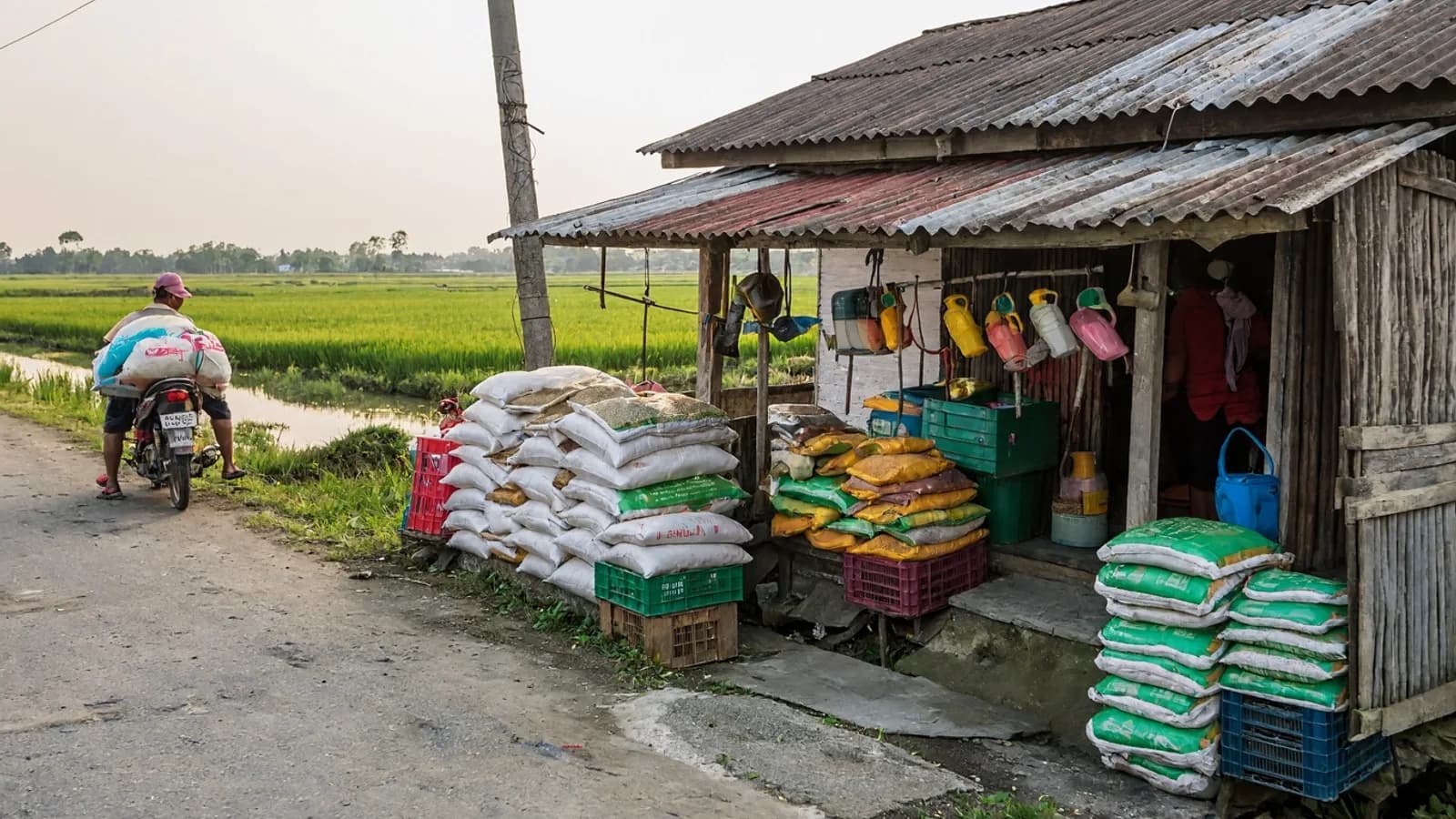
Many people open a farm supply shop because they see wide rice fields around a village, then are surprised when the shop is packed for a few weeks and quiet for months. A farm supply shop, known locally as a toko saprotan (agricultural inputs shop), runs on a different rhythm from a warung or minimarket. Your customers are farmers buying seed, fertilizer, crop protection products and tools according to the planting calendar, not mealtimes or paydays. This guide helps you judge a site through a farmer's eyes.
Who Actually Buys From a Farm Supply Shop?
Before assessing a site, map out who will buy. Each group has different habits and travel distances.
Small owner-farmers and tenant farmers: buy small to medium amounts, often early before heading to the fields or in the afternoon on the way back, usually by motorbike.
Farmer groups (kelompok tani): buy collectively in bulk, often through the group leader, and can become core customers once they trust you.
Horticulture growers (chilli, shallots, vegetables): buy crop protection more often because their cycles are short and pest pressure is higher.
Plantation smallholders (oil palm, rubber, coffee, cocoa): buy large sacks of fertilizer a few times a year and often arrive by pickup.
Home gardeners and plant hobbyists: small but regular purchases, especially if your shop is near housing.
A site that suits farmer groups and plantation growers may not suit hobbyists. Decide on your main customer group first, then assess the location.
Reading Local Farmland and Planting Seasons
Start with BPS data
The Kecamatan Dalam Angka and Kabupaten Dalam Angka publications from BPS usually include agricultural data such as rice field area, harvested area for some crops and the number of farming households. Table availability varies by region and year, so compare your candidate district with its neighbours using the same publication year. This data shows scale, not sales figures.
Match it to the local planting calendar
Ask the local agricultural extension officer (PPL), a farmer group leader or experienced farmers: how many rice crops are planted each year, when the main and second planting seasons fall, and whether secondary crops or vegetables are grown in between. Technically irrigated fields can be planted more often than rain-fed fields, so demand for fertilizer and crop protection is spread more evenly through the year.
Position: On the Farmers' Route, Not Just a Busy Road
Farmers rarely drive around looking for a shop. They buy from the one they pass on their daily routine. The best sites are usually at one of these points:
The road linking homes to the fields, used by farmers every morning and afternoon.
Near the village or district market, because farmers often combine household shopping with field supplies in one trip.
Near harvest collection points, such as rice mills, traders or weighing stations, because farmers who have just sold their crop have cash in hand.
Village road junctions connecting several villages, so your reach is not limited to one village.
Avoid sites that look busy because of a provincial or intercity road but sit far from the fields. Fast-moving traffic is not your customer, and farmers will not take a long detour for two sacks of fertilizer.
Truck Access and Storage Conditions
A farm supply shop handles heavy goods. Fertilizer comes in sacks, often delivered by a distributor's truck, then carried home by motorbike or pickup. Check the following before you rent:
Access and unloading space: can the distributor's truck stop in front without blocking the road, and is the road passable in the rainy season?
Storage floor: dry, slightly higher than the yard and strong enough for stacked sacks. Damp fertilizer can cake and become hard to sell.
Roof and walls: no leaks, because one rainy night can ruin a lot of stock.
A separate room for crop protection products: pesticides should be stored apart from seed, fertilizer and especially food, with good ventilation and out of children's reach.
Neighbours: if the building adjoins homes or a food stall, pesticide smells can cause complaints. Raise it early.
Competitors, Official Retailers and Rules to Check
In many areas, subsidised fertilizer may only be sold by official kiosks or retailers appointed by a distributor, under specific distribution rules. If your shop is not an official retailer, you compete on non-subsidised products, seed, crop protection and tools. Rules and requirements can change, so ask the district agriculture office and local distributors directly. Ask too about any permits or requirements for selling pesticides in your area.
When mapping competitors, note who is an official retailer, who offers credit repayable after harvest and who farmer groups trust. Shops that have long offered payment terms often have very loyal customers, so you need another edge: a fuller range, technical advice or a site closer to a particular block of fields.
Farmers buy from people they trust. Location brings them in the first time; trust brings them back next season.
Example: Modelling Seasonal Revenue
Because sales rise and fall with the seasons, do not judge rent against your average peak-month revenue. The table below is an illustration for a site with two rice planting seasons. The numbers are not price benchmarks; replace them with your own survey and interview results.
Period (illustration) | Length | Estimated monthly revenue | Period total |
|---|---|---|---|
Main planting season | 3 months | Rp60 million | Rp180 million |
Second planting season | 3 months | Rp40 million | Rp120 million |
Harvest and fallow | 4 months | Rp12 million | Rp48 million |
Secondary crops or vegetables | 2 months | Rp20 million | Rp40 million |
Annual total | 12 months | Average about Rp32 million | Rp388 million |
This illustration shows that four quiet months can bring in far less, while rent, wages and electricity keep running. Make sure peak-month margins cover the quiet months, and set aside working capital to stock up before planting. If you plan to offer post-harvest credit, also count the money tied up with farmers for three to four months.
Comparing Two Candidate Sites
Criterion | Site A: provincial roadside | Site B: village road near a rice mill |
|---|---|---|
Passed by farmers daily | A small share | Yes, on the route to the fields |
Distributor truck access | Easy | Possible, but check narrow sections in rain |
Distance to fields | Far | Close |
Rent (check with the owner) | Tends to be higher | Tends to be lower |
Competitors close by | Few | One official retailer |
Best suited to | Plantation growers with pickups, hobbyists | Rice farmers and farmer groups |
No site wins on every criterion. Pick the one that best fits your main customer group, then work around its weaknesses, for example with delivery for farmer groups.
Field Survey Checklist
Checked field or plantation area and number of farming households in the district through BPS publications.
Asked the PPL or a farmer group leader about the number of planting seasons, their timing and the main crops.
Watched farmers' routes in the morning and afternoon, and the site sits on that route.
Measured the distance to the nearest village market, rice mill or crop trader.
Confirmed trucks can unload without blocking the road, including in the rain.
Storage floor is dry, the roof does not leak and there is a separate ventilated room for pesticides.
Talked to neighbours about smells and loading activity.
Mapped competitors: official retailers, cooperatives and shops offering payment terms.
Asked the agriculture office and distributors about subsidised fertilizer retailer requirements and pesticide permits.
Built a season-by-season revenue model and confirmed the quiet months are covered.
Calculated working capital for pre-season stock and farmer credit.
Conclusion
A good farm supply shop location is not the one with the most traffic, but the one closest to farmers' routines: the route to the fields, the village market and the place they sell their harvest. Next steps: pull the district's agricultural data from BPS, meet the PPL and farmer group leaders, then survey candidate sites right at the start of planting season. After that, build a season-by-season revenue model before you sign any lease.