Choosing a Location for a Bicycle Shop and Workshop: Cycling Groups, Family Buyers, Repair Space and Other Must-Checks
A bicycle shop lives on families buying kids' bikes, cycling groups and owners who come back for servicing, not just on a busy road. Learn how to read cycling routes, assess showroom and workshop space, and test whether a site adds up.
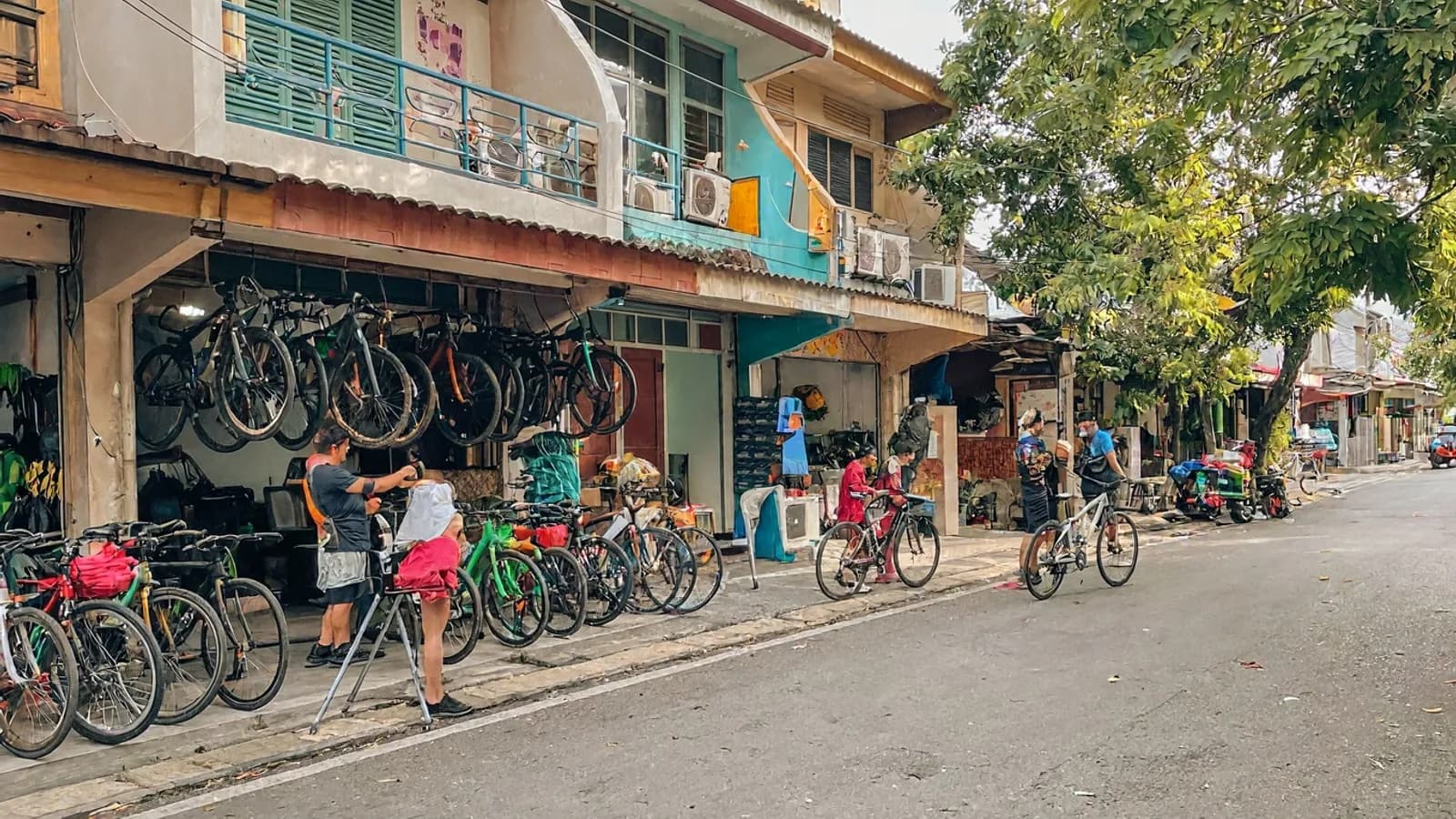
You want to open a bicycle shop, or move an existing one, but you are unsure whether to take a shophouse on a busy main road, a kiosk near a housing estate, or a spot close to the route local cyclists love. The catch is that bike shops do not live on people who happen to pass by. Customers come because they need something: a child moving up a grade wants a new bike, a chain snaps before the Sunday morning ride, or someone wants to upgrade to a lighter frame. This guide helps you read where your buyers come from, judge a building for showroom and workshop use, and check whether a site makes sense before you pay the rent.
Start by knowing who will come to your shop
Before you look at sites, map out the customer groups you want to serve. Each group arrives in a different way, and a location that suits one may not suit another.
Families with children. They buy kids' bikes, bikes with stabilisers, helmets and accessories. They usually arrive by car or motorbike, often at weekends, and are strongly driven by the new school year and Lebaran.
Cycling groups. Road, MTB and folding-bike riders who ride regularly in the morning. They need routine servicing and parts and stay loyal to a mechanic they trust.
Everyday riders. Students, workers and traders who use a bike for transport. Small but frequent purchases: inner tubes, brakes, chains, puncture repairs.
Second-hand buyers and trade-ins. This group speeds up stock turnover if you offer a used-bike service.
Many bike shop owners find that new-bike sales rise and fall with trends, while servicing and parts are steadier. So a good bike shop location is usually one that makes it easy for customers to come back for servicing, not just a spot seen by lots of people once.
Reading cycling routes and meeting points
Cycling groups tend to use fixed routes and gathering points. A shop on that route, or at its start or finish, has a strong chance of becoming the place riders stop to pump tyres, adjust brakes or simply rest.
Visit the site on Saturday and Sunday mornings, roughly 05:30 to 09:00, when most riders are out.
Note which direction riders arrive from and leave in. Groups heading home are more likely to stop than those just setting off.
Look for meeting points: car-free-day areas, city parks, coffee stalls popular with cyclists, a minimarket at the top of a climb, or the gate of a large housing estate.
Ask a few riders where they usually get their bikes serviced and what their regular workshop lacks.
Repeat the observation on a weekday morning to see everyday riders such as students and commuters.
Types of location and their risks
The table below compares the site types owners most often consider. Use it as a starting point, then check it against your own survey.
Location type | Main buyers | Strengths | Risks to check |
|---|---|---|---|
Near a cycling route or car-free-day area | Cycling groups | Regular servicing and parts, word-of-mouth promotion | Busy only on weekend mornings, weekdays can be quiet |
On the entrance road to a family housing estate | Families, everyday riders | Buyers nearby, easy to return for servicing | Spending power must match the bikes you sell |
City main road | Mixed | Highly visible, easy to find | High rent, hard parking, test rides unsafe on fast roads |
Near a campus or school | Students | Demand for light repairs and used bikes | Quiet in long holidays, limited budgets |
The building: showroom, workshop and storage
Bikes are bulky items that look either neat or chaotic very quickly. The wrong building makes the shop feel cramped and slows your mechanics down.
Showroom
Frontage width. A wide front lets you line bikes up outside so people know it is a bike shop from a distance.
Ceiling height. A high ceiling lets you hang bikes and keep the floor clear for browsing.
Level, non-slip flooring, because bikes will be wheeled in and out all day.
Workshop and storage
A well-lit corner for a repair stand and tools.
A water supply for cleaning chains and parts, with drainage that will not bother neighbours.
Space for boxed bikes and customers' bikes left overnight for repair.
Loading access for deliveries from distributors, since bike boxes are large.
Test-ride area and parking
Buyers want to try a bike before paying. A site on a fast, busy road makes test rides risky. A quieter side street or a small forecourt is a real plus. Check car parking too, because families and riders carrying bikes on car racks need somewhere to pull in briefly.
Competitors and online sellers
Bikes and parts are widely sold on marketplaces. A physical shop wins on what is hard to do online: assembling and tuning bikes, matching frame size to the rider, quick servicing and warranties that can be claimed on the spot. When assessing nearby competitors, note:
How many bike shops and bike workshops sit within a reasonable distance for your customers.
Which segment they serve: cheap kids' bikes, mid-range bikes or high-end hobby bikes.
Whether they have a trusted mechanic, and how long weekend service queues are.
Their Google Maps reviews, looking for repeated complaints.
If competitors are strong on bike sales but weak on servicing, you can enter through a fast, tidy workshop. On the other hand, an area with no bike workshop at all may mean there is no demand yet, so confirm it with a survey first.
Demographics and peak seasons
For family buyers, the number of school-age children nearby matters a lot. You can compare population and age structure across districts using the Kecamatan Dalam Angka publications from BPS. This is not a sales forecast, but it helps you shortlist areas with many young families.
Watch the yearly calendar too. The new school year, school holidays and the run-up to Lebaran are often when parents buy new bikes. The rainy season usually means less riding. Ask bike shop owners in other towns or your distributor about these patterns, then plan stock and cash flow around them.
Worked illustration: what actually covers the rent?
The figures below are an illustration only to show the reasoning, not a price benchmark. Replace them with the rent you are quoted, local service rates and your distributor's margins.
Component (illustrative, per month) | Example assumption | Gross profit |
|---|---|---|
Servicing labour | 8 services a day × Rp50,000 × 26 days | Rp10,400,000 |
Parts and accessories | Rp20,000,000 sales × 25% margin | Rp5,000,000 |
Bike sales | 10 units × Rp3,000,000 × 15% margin | Rp4,500,000 |
Total gross profit | Rp19,900,000 | |
Fixed costs (rent, mechanics' wages, power, other) | Example Rp15,000,000 | Rp4,900,000 left |
In this illustration, servicing and parts form the base that covers fixed costs, while bike sales are a variable extra. That means a site where customers can easily return for servicing often matters more than the most eye-catching one. Test your numbers by asking an experienced mechanic how many services a day are realistic in that area.
Field survey checklist for a bike shop
Observed the site on a Saturday or Sunday morning and on one weekday morning.
Noted cycling routes, meeting points and the direction groups head home.
Family housing or schools within easy reach.
Frontage wide enough to display bikes outside.
Ceiling high enough to hang bikes.
A workshop corner with lighting, water and drainage.
Space for boxed bikes and bikes left for repair.
A quiet street or forecourt for test rides.
Somewhere for cars to stop and secure bike parking.
Mapped competing bike shops and workshops and read their reviews.
Compared district population and age data from BPS.
Ran the gross-profit illustration with local rent and service rates.
Conclusion: start with the customers who will come back
Bike shops that last are usually built on servicing customers who return again and again, topped up by bike sales in peak seasons. Your next step: pick two or three candidate sites, survey each on a weekend morning and a weekday, fill in the checklist above, and rerun the gross-profit illustration with real numbers from the field. A site that passes on all three fronts, buyers, building and numbers, is worth negotiating further.