Choosing a Location for a Motorcycle Parts and Oil Shop: Nearby Workshops, Ride-Hailing Riders, Stock Space and Other Must-Checks
A motorcycle parts shop lives on small workshops that buy every day, ride-hailing riders and owners who service their own bikes. Learn how to map nearby workshops, read local bike types, assess stock space and work out minimum revenue.
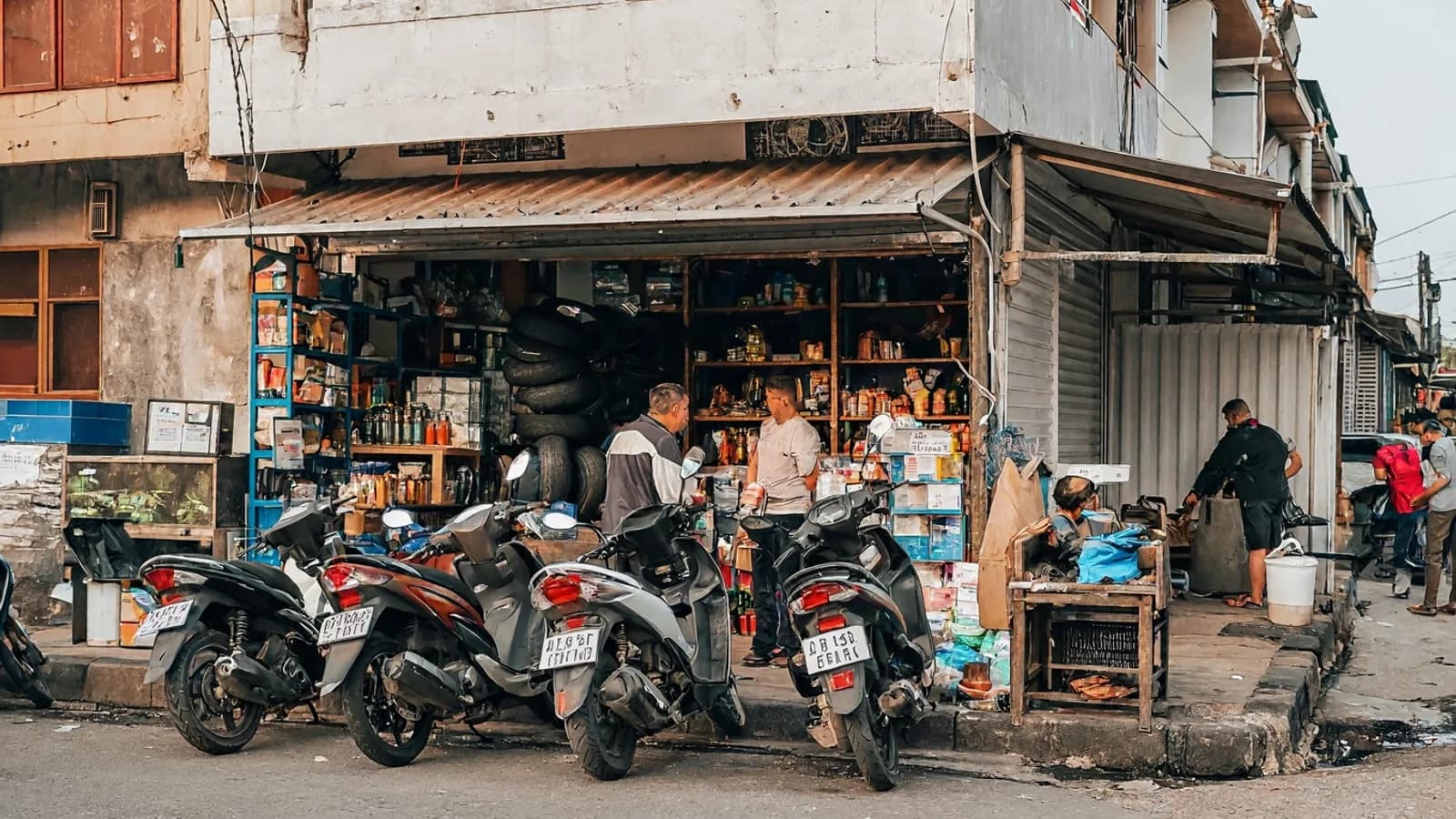
You want to open a motorcycle spare parts and oil shop, and the first idea is usually the road with the most bikes. The trouble is that thousands of passing motorbikes do not automatically mean buyers. Most riders only buy parts when something breaks, and they often go straight to a workshop rather than a shop. That is why many parts shops on busy roads stay quiet, while a small shop near a cluster of workshops keeps ticking over.
This guide helps you understand who your real buyers are, how to map the workshops around a potential site, how to judge position and building, and how to calculate minimum revenue before you sign a lease.
Who Actually Buys From a Motorcycle Parts Shop?
Before judging a location, be clear about where your money will come from. A parts shop usually serves four groups with very different habits.
Small workshops and home mechanics. They keep little stock, so they buy brake pads, spark plugs, oil or cables when a customer's bike is already in pieces. Each purchase is small but can happen several times a day. This is the backbone of your revenue.
Ride-hailing riders and couriers. Their bikes run all day, so oil changes, tyres and brake pads come round far more often. They want speed and a shop on their working route.
Owners who service their own bikes. They tend to buy oil, batteries, bulbs or accessories. They are price-sensitive and often compare with online marketplaces.
Emergency buyers. A badly damaged tyre, a dead battery or a snapped throttle cable. They look for the nearest shop right now, often via the tyre-repair stall next door.
If your site is strong for the first two groups, daily revenue tends to be steady. If you rely mainly on the third group, you are competing head-on with online shops that are often cheaper.
Steps to Map the Workshops Around a Site
Because workshops are your most valuable customers, a map of nearby workshops matters more than a count of passing vehicles. Work through these steps.
Set a working radius. Mechanics will usually only travel a short distance to pick up a part, say a few minutes' ride. Use roughly 1–2 km as a starting point, then adjust after talking to mechanics.
List every workshop on online maps. Search for motorcycle workshops, tyre repair and bike servicing on Google Maps. Note names, distances and review counts as a rough sign of how busy they are.
Walk or ride the streets yourself. Many small workshops and tyre stalls are not on the map. Ride slowly along main roads and wider alleys and note every one you find.
Ask mechanics where they buy parts. A simple question like "where do you usually get brake pads?" tells you who your main competitors are, how far away they are and what annoys mechanics, such as frequent stock-outs or early closing.
Group workshops by size. A workshop with two or more mechanics and bikes waiting every day is worth far more than a one-person outfit that is often shut.
Reading the Bike Types in the Area
Your stock depends heavily on which bikes dominate locally. A shop near dense housing will sell mostly parts for everyday automatic scooters, while outlying or farming areas may still have many step-through and trail bikes. Campus areas may have more sport or modified bikes.
An easy check: count the bikes parked at minimarkets, mosques, markets or campuses near the site for 15–30 minutes and group them by type. You do not need perfect numbers, just a sense of whether scooters, step-throughs or sport bikes dominate. For a wider view, the regency or city "in figures" publications from BPS often include motor vehicle counts you can compare between areas.
Watch ride-hailing and courier routes
Places where ride-hailing riders gather, such as near stations, malls or food hubs, signal lots of heavily used bikes. A shop on their route home, or one that stays open into the evening, has a good chance of becoming their regular stop for oil and tyres.
Position: Easy to Stop Matters More Than Busy
Parts buyers arrive by motorbike and usually stop for only a few minutes. When judging position, look for:
Quick motorbike parking out front. Enough for several bikes without blocking the road. If buyers have to park far away or argue with a parking attendant, they will go elsewhere.
Not right on a fast lane. Fast traffic and continuous medians make it hard for bikes to pull over or turn back.
Close to a tyre-repair stall or small workshop. Neighbours like these bring daily emergency buyers and can become regular customers themselves.
Clear visibility from both directions. Tyre racks or stacked oil out front act as a natural sign that you sell parts.
The Building: Stock Space, Shelving and Security
A parts shop holds hundreds or thousands of small items plus bulky stock such as tyres and batteries. A building that looks cheap can become expensive if it does not suit that stock.
Depth and wall space for shelving. A deep shophouse makes tiered shelving for small parts and a tyre store at the back much easier.
Strong, dry floors. Cartons of oil and batteries are heavy, and damp can ruin packaging and rust parts.
Night-time security. High-value items that resell easily attract thieves. Check the roller shutter, window grilles and street lighting after dark.
Loading access. Distributors usually deliver by van. Make sure a vehicle can stop briefly in front without blocking the road.
A small space for quick fitting. Many shops also do oil changes or tyre fitting. Check that the owner and neighbours allow it, and how used oil will be disposed of properly.
Example Minimum Revenue Calculation
The figures below are an illustration only, to show the method. Replace them with the rent, wages and margins you gather from your survey, distributors and owners of similar shops in your area.
Item | Example figure | Note |
|---|---|---|
Monthly shophouse rent | Rp5,000,000 | Example: Rp60 million a year divided by 12 |
Wages for 1 employee | Rp3,000,000 | Adjust to local wage levels |
Electricity, water, internet | Rp1,000,000 | Ask to see the previous tenant's bills |
Other costs (bags, transport, fees) | Rp2,000,000 | Includes neighbourhood and parking fees |
Total fixed costs per month | Rp11,000,000 | Sum of the four rows above |
Average gross margin | 20% | Example; margins on oil and parts vary widely |
Minimum monthly revenue | Rp55,000,000 | Fixed costs divided by margin |
Minimum daily revenue (26 trading days) | ±Rp2,115,000 | Daily break-even target |
Then split the daily target by buyer type. For example, if you are confident of winning 10 regular workshops that each spend around Rp150,000 a day, that covers Rp1,500,000. The remaining Rp615,000 or so must come from riders, retail buyers and emergencies. If that looks hard to reach given the workshop map you drew, the site may be too expensive or too thin on workshops.
Assessing Nearby Competition
Your competitors are not just similar shops. Brand-authorised service centres, large shops that also sell wholesale and online marketplaces all chase the same buyers. Ask yourself:
Does the nearest shop often run out of fast-moving parts? That is your opening.
When do competitors close? Opening earlier or staying open later can win mechanics and riders.
Do competitors offer payment terms to workshops? If not, that could set you apart, provided you can carry the risk.
Are local retail buyers already used to shopping online? If so, focus on items people need immediately, such as tyres, batteries and brake pads.
The parts shops that last are rarely the cheapest; they are the ones with the right stock when a mechanic needs it, close enough to fetch in a few minutes.
Field Survey Checklist
Take this list when you visit a potential site, ideally in the morning, at midday and in the late afternoon on a weekday.
Number of workshops and tyre stalls within about 1–2 km, including those missing from online maps
At least three mechanics asked where they buy parts and what they need
Dominant bike types nearby: scooters, step-throughs, sport bikes or a mix
A ride-hailing or courier gathering point near the site
Quick parking in front for several motorbikes
Bikes can easily pull over and turn from both directions
The shop is clearly visible from a good distance both ways
The shophouse is deep enough for shelving and tyre storage
Dry floors with no signs of seepage or flooding
Adequate roller shutter, grilles and night lighting
Distributor vans can load and unload without blocking the road
Owner's permission for oil changes or tyre fitting, and a plan for used oil disposal
Opening hours and stock levels of the nearest competitors
The daily minimum revenue looks realistic against the number of workshops you mapped
Conclusion
A good location for a motorcycle parts shop is decided by who buys again and again, not by how many bikes go past. Start by mapping workshops and rider routes around two or three candidate sites, ask mechanics directly what they need, then plug your own rent and cost figures into the calculation above. Choose the site where the daily target is most realistically met by regular customers, and only sign the lease once your field checklist is complete.