Choosing a Location for a Shoe and Bag Cleaning Business: Young Customers, Drop-Off and Pick-Up, Drying Space and Other Must-Checks
A shoe and bag cleaning business lives on customers who come twice, to drop off and to collect, not on passing trade. Learn how to read your customer sources, assess drying space and water, and work out how many pairs a day you need to cover the rent.
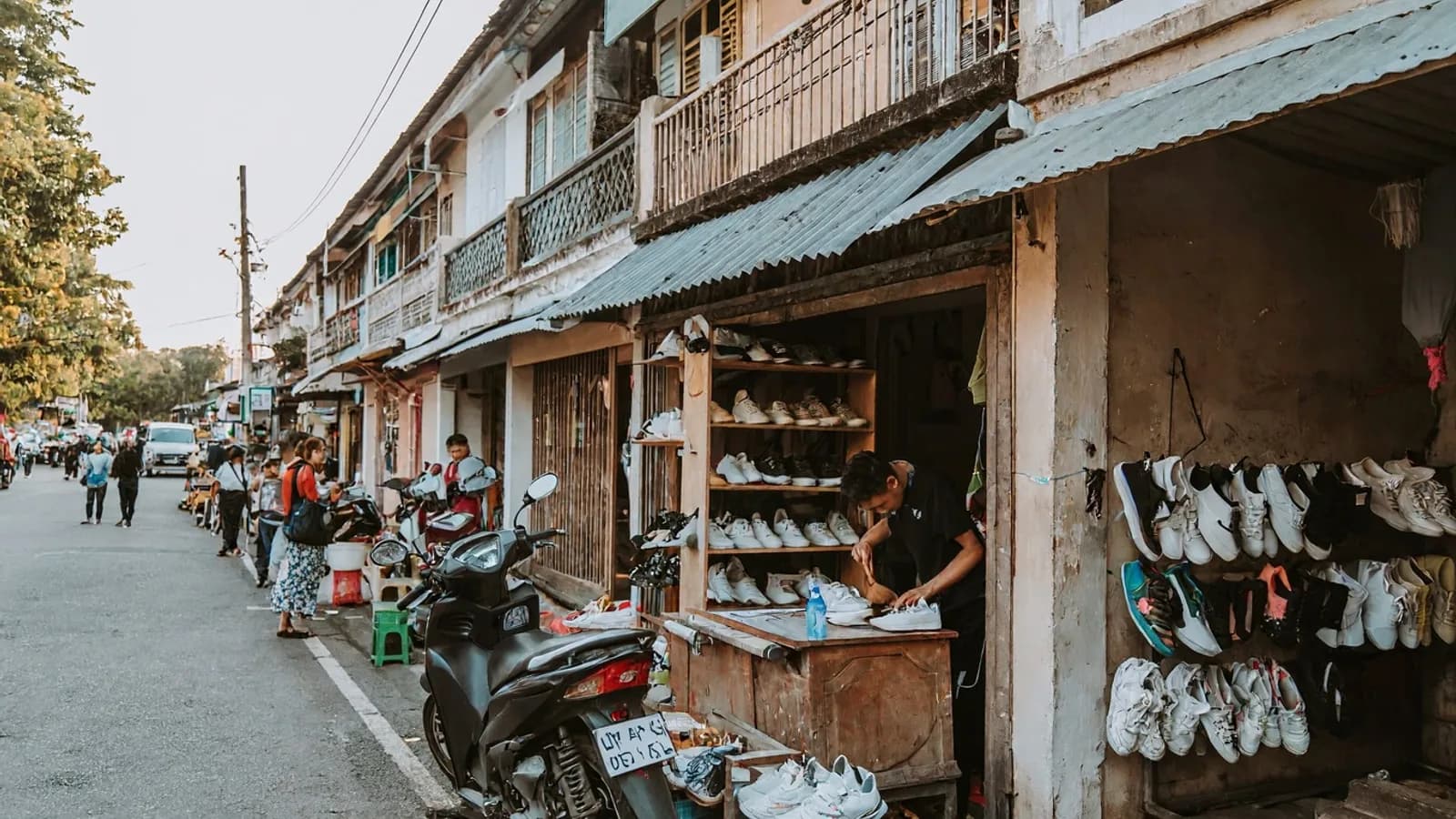
A shoe cleaning business looks simple: brushes, special cleaner, a drying rack and some storage shelves. Startup costs are fairly low, so plenty of young founders and laundry owners are drawn to it. The trouble is that many pick a space just because the rent is cheap or the road is busy, then are surprised when orders fall short, shoes take ages to dry in the rainy season, or customers cannot be bothered to come back for their items.
This guide helps you assess a potential site for a shoe and bag cleaning business from the angles that matter most: who your customers are, how they visit twice, what the space needs technically, and how many pairs a day you must handle to cover the rent.
Who Actually Uses a Professional Shoe Cleaning Service
Before viewing any shophouse, map your likely customers. Shoe cleaning rarely lives on impulse buyers. People usually decide at home, bring their shoes in a plastic bag and look for a place along their daily routine.
University and high school students who wear sneakers every day and care how they look, but are price-sensitive.
Young office workers who own several fairly expensive pairs and have no time to care for them.
Running, futsal and sneaker communities who clean their shoes regularly and often come in groups.
Parents who want school shoes looking clean again, especially before the new school year.
Online customers who order by chat or app and ask for pick-up and delivery, so your site works more as a workshop than a shopfront.
Owners of bags, caps and helmets who start bringing other items once they are happy with your shoe cleaning.
This list shows that the strongest customer sources usually cluster around campuses, boarding-house areas, schools, offices and middle-income housing. Spending power matters too: if most residents wear cheap shoes, they tend to clean them themselves or simply buy new ones.
Drop-Off and Pick-Up: Customers Have to Come Twice
This is what sets shoe cleaning apart from a food stall or drinks kiosk. Customers come to drop off, then return two to four days later to collect. A good location is therefore not just visible but easy to pass twice in a week without a long detour.
Ask yourself whether the site sits on your customers' daily route, for example between boarding houses and campus, or between a station and a housing estate.
Check whether a motorbike can stop briefly in front without blocking the road. Dropping off shoes takes two or three minutes, but customers still need a safe place to pull over.
Look at which side of the road the site is on. Customers often drop off on the way out and collect on the way home, so the homebound side is often more convenient for pick-ups.
Think about opening hours. If your customers are office workers, they can only collect after work. A site that is safe and well lit in the evening is a plus.
Comparing Location Types for a Shoe Cleaning Business
Each type of location brings different strengths and risks. The table below is a general overview to match against conditions in your own city.
Location type | Strengths | Risks to check |
|---|---|---|
Near a campus or boarding-house area | Lots of sneaker wearers, easy to go viral among students | Quiet during semester breaks, prices must be student-friendly |
Shophouse on the road into a housing estate | Family customers, steadier spending power | Higher rent, needs enough motorbike parking |
Kiosk in a mall or shopping centre | High visibility, customers drop off while shopping | High rent and service charge, limited drying space, management rules |
Near offices | Customers with good spending power, work shoes and sneakers | Quiet at weekends, pick-ups bunch up at home time |
House plus pick-up and delivery | Low rent, more room to work and dry | Less visible, depends heavily on online marketing |
Technical Needs That Often Get Overlooked
Water and Drainage
Shoe cleaning uses far less water than a laundry-by-the-kilo shop, but it uses it every day. Make sure the supply is steady and not murky or frequently cut off. Check the drainage too: soapy water and mud must flow into a proper drain without pooling outside the neighbour's shop.
Drying Space and Airflow
This is the critical point. Shoes that dry slowly can smell musty and disappoint customers. Look for a shaded, breezy area such as a back terrace, a second-floor balcony or the side of the building. Harsh direct sun can damage some materials, so what you want is airflow, not heat. If drying space is tight, budget for fans, blowers or a dryer from the start.
Electricity
Fans, blowers, UV lamps and dryers all need power. Ask about the installed capacity and whether it can be increased. The cost of upgrading should go into your startup budget rather than arrive as a surprise.
Storage Shelves and Security for Customers' Items
On a busy day you may be holding dozens of pairs that belong to other people, some worth millions of rupiah. Make sure the building locks properly, the shelves are out of sight from the street and the area is not prone to theft. Ask nearby business owners about any history of break-ins.
Working Out How Many Pairs a Day Cover Your Costs
The figures below are an illustration of how to do the sum. Service prices, rent and material costs in your city may be very different, so replace them with your own survey numbers, for instance by checking prices at three to five nearby shoe cleaners and getting rent quotes from several owners.
Item (example) | Illustrative value |
|---|---|
Kiosk rent per year | Rp30,000,000 (about Rp2,500,000 a month) |
One worker's wage, water, power and internet per month | Rp6,000,000 |
Total fixed costs per month | Rp8,500,000 |
Average price per pair | Rp45,000 |
Materials and packaging per pair | Rp7,000 |
Left per pair to cover fixed costs | Rp38,000 |
Pairs per month to break even | about 224 pairs |
Pairs per day (26 working days) | about 9 pairs |
Once you have the break-even figure, compare it with two things. First, capacity: how many pairs one person can realistically clean well in a day. Second, likely demand: based on your customer-source survey, do nine pairs a day feel achievable in an ordinary month, not just a busy one? If break-even is already close to your capacity limit, the site is too expensive for a first outlet.
Reading the Competition Nearby
Search for shoe cleaners around the site on Google Maps, social media and delivery apps. Do not forget laundry shops that offer shoe cleaning as an extra. Note their prices, turnaround times, number of reviews and recurring complaints. Complaints about slow service, musty smells or faded colours point to gaps you can fill.
One or two competitors are not necessarily bad news. They show that local people are already used to paying for shoe cleaning. What to watch for is an area crowded with competitors undercutting each other, leaving too little margin per pair.
Plan for Busy and Quiet Seasons
The rainy season usually brings more dirty, muddy shoes but also slows drying. Prepare extra drying equipment.
Semester breaks can leave a campus-area shop quiet for weeks. Plan your cash flow for those months.
The run-up to Lebaran and the new school year often brings a spike in demand, especially for school shoes and shoes for family gatherings.
Running or sports events in your city can be a good moment to promote to communities.
To estimate the number of students or young residents around a site, check district publications from BPS, then confirm what you find with an on-site survey at peak times.
Field Survey Checklist for a Shoe Cleaning Business
The site is on the daily route to campuses, boarding houses, schools, offices or middle-income housing.
Motorbikes can stop briefly and safely in front.
The shop is easy to spot from the direction customers arrive.
Water flows steadily and is reasonably clean all day.
Drainage works and does not bother neighbours.
There is a shaded, breezy drying area, or room for a dryer.
Electrical capacity is enough for fans, blowers, UV lamps or a dryer.
The building locks securely and shoe shelves are not visible from the street.
The area is well lit and safe for evening pick-ups.
Prices and quality of the nearest competitors have been noted.
Daily break-even has been calculated and compared with work capacity.
Quiet months, such as campus holidays, are built into your cash-flow plan.
Conclusion: Choose a Site People Can Easily Visit Twice
A good location for a shoe cleaning business does not have to be on the busiest road. What matters is that it sits on the daily route of people who care about their shoes, is easy to stop at briefly, has adequate drying space and water, and is safe for storing customers' items. Your next step: shortlist two or three sites, survey them with the checklist above, calculate daily break-even with real prices and rent, then choose the site whose break-even sits most comfortably below your work capacity.