Choosing a Location for a T-Shirt Printing and Small Garment Business: Group Orders, Production Space, Ink Fumes and Other Must-Checks
A screen printing and small garment business lives on orders from schools, communities, offices and events, not passing trade. Learn how to read order sources, size your production space, check power, ventilation and wastewater, and keep the neighbours on side.
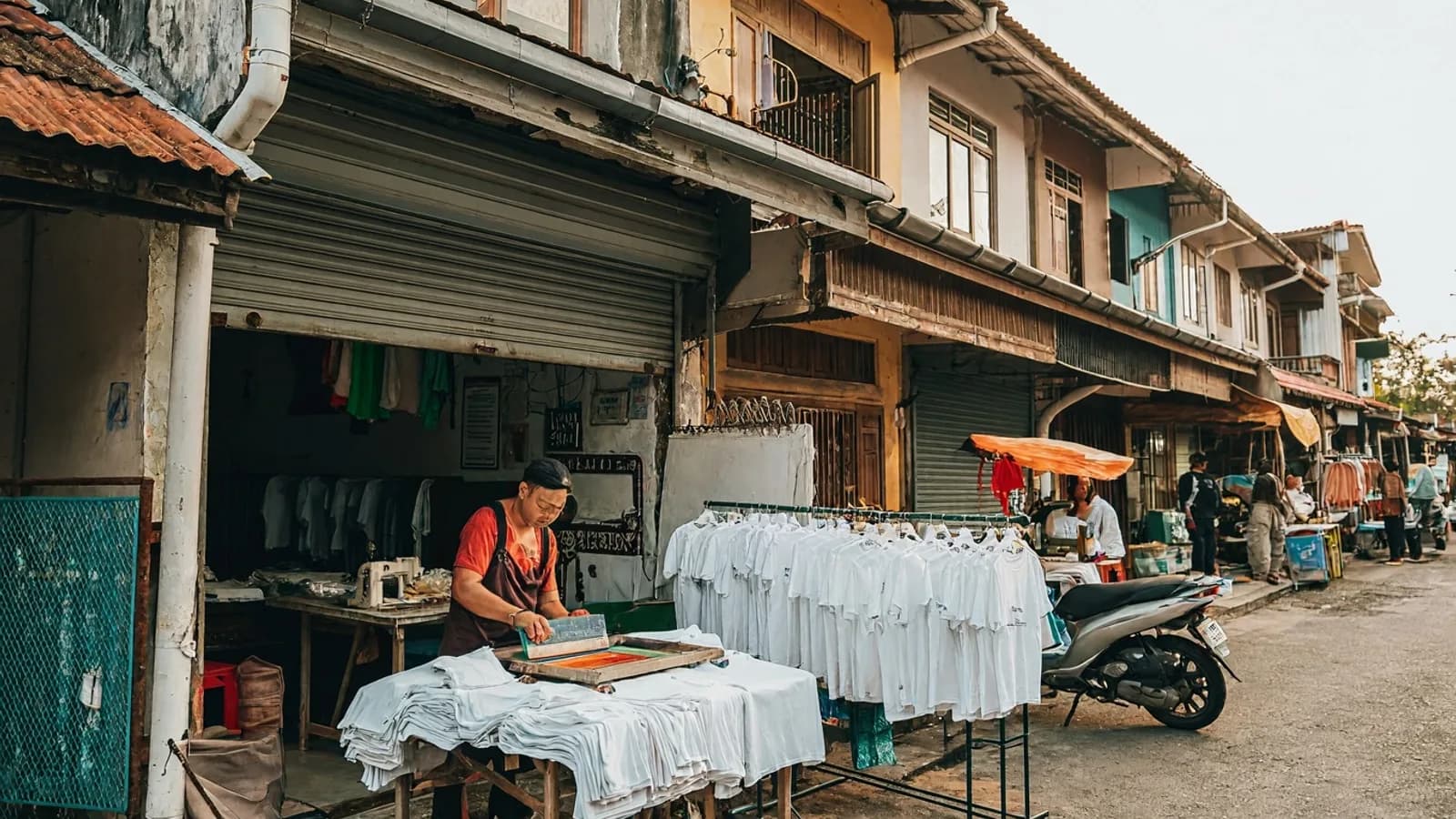
Many screen printers start in a home garage, then get stuck when orders grow: should they move to a shophouse on a main road, or simply rent a bigger house inside a housing estate? The catch is that a printing and small garment business does not live on passing trade. Your customers are event committees, schools, motorbike clubs, offices and small clothing brands that order dozens or hundreds of pieces at once. The right location supports production, is easy for clients to reach when they want to see samples, and does not trigger complaints from the neighbours.
This guide helps you assess potential sites from a production point of view: where orders come from, how much space you really need, what to check on power, ventilation and water, and how to work out a sensible rent.
Start With Where Your Orders Come From
Before viewing any shophouse, list your order sources for the last three to six months. If you are just starting, estimate from the network you already have. Orders usually fall into a few groups, and each one calls for a different kind of location.
Schools and campuses: class t-shirts, sports kits, year-group jackets. Orders peak before the new school year, graduations and campus events, and clients often come in groups to see fabric samples.
Communities and organisations: motorbike clubs, running groups, youth associations, religious groups. They often order on WhatsApp but like to collect in person.
Offices and institutions: work uniforms, company anniversary shirts, embroidered polos. They want reliable schedules and proper invoices.
Event committees: fun runs, Independence Day contests, small concerts, weddings. Tight deadlines and sudden large volumes.
Small brands and online resellers: regular mid-sized orders, more concerned with quality and on-time delivery than distance.
If most of your orders come in online and leave with a courier, you do not need a busy road. If many clients visit to choose fabrics and colours, you need a place that is easy to find, has motorbike parking and a small reception area to display samples.
Types of Space and How Well They Fit
A printing business can run from several kinds of building. The table below compares common options. Conditions vary by city, so treat it as a starting point and check on the ground.
Type of space | Pros | Cons | Best for |
|---|---|---|---|
Roadside shophouse | Easy to find, can double as a showroom, suits walk-in clients | Higher rent, ground floor often too narrow for production | Businesses with many walk-in orders that want to look professional |
House in an estate or kampung | Usually cheaper rent, more space, a yard | Risk of complaints about smell and noise, limited truck access, estate rules | Businesses whose orders come mostly online or through networks |
Warehouse or workshop building | Generous production space, high ceilings, easier ventilation | Less presentable for clients, often far from customers | Garment makers with regular clients and high volume |
Near a garment cluster or textile market | Close to blank shirt and ink suppliers and piecework tailors, buyers come on purpose | Tough price competition, rent can be high in prime spots | Businesses competing on volume and speed |
Work Out the Production Space You Actually Need
A common mistake is renting a place because it is cheap, then discovering the print table, drying racks and stacks of shirts do not fit. List the work areas you need before you go out viewing.
Print table area: the length of your table plus room for the operator to move on both sides.
Drying area: racks or a dryer often need more space than the print table itself, especially with water-based inks.
Screen exposure and washing area: a dark or semi-dark room, a water supply and drainage.
Materials store: blank shirts, fabric, ink and emulsion must stay dry and out of direct sunlight.
Sewing and finishing area: if you also sew, allow room for sewing and overlock machines, folding and packing.
Reception or display: a small table and sample rack for clients who visit.
Sketch a rough floor plan with sizes for each area and take it with you. Measure length, width and ceiling height with a tape. A low ceiling makes the room hot quickly and traps ink fumes.
Power, Ventilation and Water: Three Technical Checks People Miss
Power supply
Heat presses, flash or conveyor dryers, exposure lamps, sewing machines and fans or extractors can draw a lot of power when running together. Read the rating label on each machine, add up the load at your busiest moment and compare it with the meter's installed capacity. If you need an upgrade, ask PLN about the cost and process, and agree in the lease who pays for it.
Ventilation and smell
Plastisol ink, solvent-based ink and screen cleaners give off fumes. A closed room with no windows is bad for workers and invites complaints. Look for a building with windows on two sides, or at least one where you can fit an extractor fan that does not blow straight at a neighbour's house.
Water and wastewater
Washing and reclaiming screens uses a lot of water and produces waste mixed with ink and chemicals. Check the water source (mains or well), the pressure and where the drain leads. Do not pour printing waste straight into the neighbourhood gutter, as that can spark protests. Ask the owner whether you can build a simple settling tank, and look up the guidance your local environment office gives on handling this kind of waste.
Neighbours and Surroundings: What Lets You Stay Long Term
A production business is not a shop. Sewing machines running into the night, ink smells, couriers coming and going and workers smoking out front can upset residents. Many printers have had to move not because business was slow but because of neighbourhood complaints.
Meet the head of the RT or RW before signing and explain honestly what you do, including working hours during busy seasons.
Ask whether any production business has operated there before and how residents reacted.
Check estate or area management rules that might ban production work.
Check zoning and the business permits that apply to garment activity at that address before paying rent.
A good site for a printing business is not the busiest one, but the one where you can work late when orders pile up without the neighbours objecting.
Access for Suppliers, Couriers and Clients
Time the journey from each site to your blank shirt supplier, ink and emulsion shop, and any piecework tailors you use. When a rush order comes in, an extra 30 minutes on the road can decide whether you hit the deadline. Make sure a small box van can get in to deliver materials and that couriers can find you easily.
For clients who visit, check that the location is easy to share as a map pin, has safe motorbike parking and does not involve a confusing narrow alley.
An Example Rent Calculation
Here is a simple illustration to test whether a site's rent makes sense. The figures are examples only; replace them with your own numbers and local prices.
Item | Example figure (illustration) | Notes |
|---|---|---|
Average orders per month | 600 pieces | Use the last 6 months, separating busy and quiet months |
Gross margin per piece | Rp15,000 | Selling price minus blank shirt, ink and direct labour |
Gross profit per month | Rp9,000,000 | 600 x Rp15,000 |
Comfortable rent ceiling | Rp1,800,000 to Rp2,700,000 per month | Example range of 20 to 30 percent of gross profit |
Rent at the candidate site | Rp30,000,000 per year | About Rp2,500,000 per month, within the example range |
Remember that printing is seasonal. The months before the new school year, August and the end of the year can be far busier than others. Test your numbers against your quietest month, not the average, so the rent is still covered when orders dip. To estimate the number of schools, offices and residents around a site, use the district-in-figures publications from BPS, then verify them with your own field survey.
Field Checklist for a Printing and Garment Site
Take this list on your site visits and tick each item.
Floor area and ceiling height fit the print table, drying racks, store and sewing area in your plan.
Installed power covers machines running together, or it is clear who pays for an upgrade.
There are windows, or an extractor can be fitted without blowing directly at neighbours.
Water flows well and the drainage allows a settling tank for waste.
Floors are dry and the roof does not leak, so stock and ink stay safe.
You have asked residents about any flooding history.
A small box van can get in to deliver materials.
There is motorbike parking for clients and couriers.
You have driven the route to your blank shirt and ink suppliers yourself.
You have met the RT or RW head and they do not object to production work.
The lease allows production and small works such as an extractor or wash basin.
Zoning and permits for garment activity at the address have been checked.
There are schools, campuses, offices or communities within reach as order sources.
Conclusion: Start From Your Order Data, Not a Busy Road
A printing and small garment business needs a site that supports production and keeps relations with the neighbourhood healthy. Your next steps: map your clients' addresses, sketch the space you need, then visit two or three candidate sites with the checklist above. Test the rent against your quietest month, talk your plans through with the local neighbourhood heads, and sign only once every technical point has an answer.