Parking and Vehicle Access: How to Tell Whether Customers Can Easily Stop at Your Business Location
Customers who have already spotted your shop can still drive on because there is nowhere to park. Learn how to assess parking capacity, access, parking attendants, ride-hailing pickup points and deliveries before you lease.
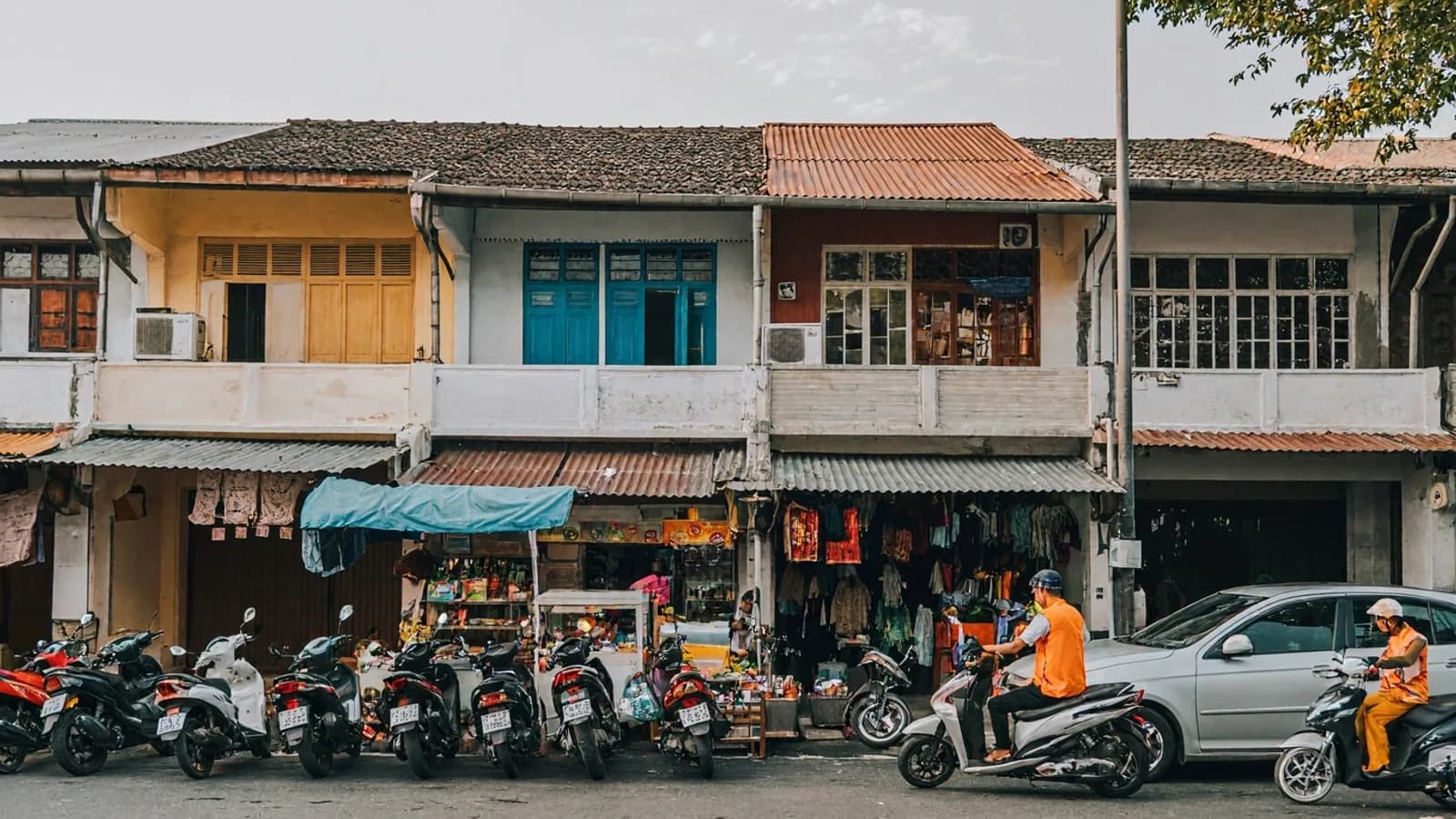
You have found a shophouse on a busy road, the shop is clearly visible and the rent fits your numbers. But on your site visit you notice motorbikes lined up on the road shoulder, cars unable to pull over, and drivers who slow down and then simply keep going. In Indonesia, most customers arrive by motorbike or car. If stopping is a hassle, they will not come in, however good your product is. This guide helps you assess parking and vehicle access before you sign a lease.
Why parking decides whether people stop
The decision to stop is often made in a few seconds. A driver sees the shop and immediately asks: where can I stop, is it safe, will getting out again be a pain? If the answer is uncertain, they postpone the purchase or go somewhere easier.
Parking problems are also easy to miss on a first visit. At 10 a.m. on a weekday the front of a shophouse may be empty. At 7 p.m. the same space can be full of the neighbouring business's customers. That is why you should judge parking at your own peak hours, not whenever you happen to drop by.
Start with how your customers arrive
Parking needs vary a lot between business types. Quick-stop shops need many fast-turnover spaces, while places where customers sit for a long time need fewer spaces that stay occupied longer. The table below is a general picture; adjust it with what you observe on the ground.
Business type | Typical visit pattern | Parking needs to check |
|---|---|---|
Warung, minimarket, pharmacy | Quick stop, a few minutes | Many motorbike spaces near the door, easy to stop and leave |
Coffee shop, restaurant | Long stays, busy at meal times and evenings | Enough motorbike and car spaces at peak hours, safe to leave vehicles |
Laundry | Drop-off and pick-up, often carrying bags | A place to stop right at the door and unload |
Salon, barbershop | Medium to long visits | Spaces occupied for longer, vehicle security |
Motorbike or car workshop | The vehicle is part of the service | Queuing area, room to manoeuvre, no blocking the road |
Delivery-focused food | Many couriers coming and going | A waiting spot for ride-hailing riders that does not block walk-in customers |
Five things to check about parking at a potential site
1. Real capacity at peak hours
Count the motorbike and car spaces your customers can actually use, not the yard size in the listing. Subtract space usually taken by other tenants' vehicles, carts, plant pots or a neighbour's goods. Visit during your peak hours and note how many spaces are still free.
2. Getting in and out
Check whether vehicles can stop without cutting across traffic, whether a high kerb or open drain makes it hard for motorbikes to get up, and whether cars must reverse into a main road to leave. A wide forecourt with a dangerous exit still puts people off coming back.
3. Parking attendants and fees
Many rows of shophouses have parking attendants, official or not. Ask who manages the parking, what is usually charged and whether customers complain. Even a small fee can make a shopper think twice about a cheap purchase at a warung or minimarket. Parking levy rules differ between regions, so check with the landlord, the estate manager or the local transport office.
4. Pickup points for ride-hailing riders and couriers
If part of your orders come through apps, riders will often wait in front of your shop. Make sure they have somewhere to stop without blocking walk-in customers or annoying the neighbours. Also check whether the pin for the site is easy to find in the apps.
5. Loading and unloading
Minimarkets, building supply shops, laundries and restaurants receive regular deliveries. Check whether a box truck can stop, at what times, and whether there are no-stopping rules or narrow lanes. Deliveries that take up parking at peak hours effectively close your door to customers.
Customers do not compare your parking with a theory. They compare it with the other shop selling something similar that is easier to get to.
A simple way to estimate the parking spaces you need
You do not need a complex formula. A rough estimate is enough to separate a safe site from a risky one.
Set your target number of customers in your busiest hour, for example from an existing outlet's sales or your revenue plan.
Estimate the share who come by motorbike and car, based on watching similar businesses near the site.
Estimate the average parking time, for example by noting arrival and departure times of a few vehicles at a similar shop.
Work out how many customers one space can serve per hour: 60 minutes divided by the parking time.
Divide the number of customers arriving by vehicle per hour by that figure to get the spaces you need, then compare it with the free spaces you counted on your visit.
Here is an illustration for a drinks kiosk. Every number is only an example and should be replaced with your own observations.
Item | Example figure | Note |
|---|---|---|
Target customers in peak hour | 40 per hour | Example, adjust to your target |
Customers on motorbikes | 30 | For example 75% from observation |
Motorbike parking time | 15 minutes | Example, measure on site |
Customers per space per hour | 4 | 60 divided by 15 |
Motorbike spaces needed | about 8 | 30 divided by 4, couriers not included |
Free spaces seen at peak hour | for example 5 | From direct observation |
In this example you are about three spaces short. Some customers may skip your shop, or you will need extra solutions such as an arrangement with a neighbour or pushing more sales through delivery. A small gap can be managed; a large gap is a warning sign before you pay a year's rent in advance.
Field checklist for parking and vehicle access
Take this list on your site visits and fill it in at least twice: during your peak hours and during the neighbours' peak hours.
Number of motorbike and car spaces genuinely available to your customers.
Number of spaces still free during your peak hours.
Any no-parking or no-stopping signs in front of the site.
Condition of the pavement, drains and floor height: easy for motorbikes or not.
Safe exit: do cars have to reverse into busy traffic?
Who the parking attendant is, what they charge and how they treat customers.
A waiting spot for ride-hailing riders that does not block the door.
Routes and times that allow deliveries to be unloaded.
Lighting in the parking area at night.
Parking conditions in the rain: flooding, slippery surfaces or shelter.
Neighbouring businesses likely to take up spaces at the same time as you.
Any road works or area plans that could remove roadside parking; ask the neighbourhood head or long-standing tenants.
If parking is limited, should you rule the site out?
Not always. A site with limited parking can still work if most of your customers walk, live nearby or order through apps. A few things to try:
Negotiate with neighbours whose busy hours differ from yours, such as an office that closes in the afternoon or a bank that shuts before evening.
Put it in the lease: the right to use the front area for customer parking so others cannot take it.
Speed up service with order-ahead and quick pickup so each space serves more customers.
Shift some customers to delivery with app-only offers during your busiest hours.
Offer lower rent if parking turns out to be a real weakness during your survey.
What to avoid is a site where your business relies heavily on customers arriving by motorbike or car but there is no safe place to stop at all. In that case, the traffic on the road simply cannot turn into buyers.
Conclusion: make parking part of the assessment, not a footnote
Parking and vehicle access are the bridge between people passing by and people buying. Start by noting how your customers arrive, visit the site during your own peak hours, estimate the spaces you need with the simple method above and fill in the field checklist. If the result falls short, take your findings to the rent negotiation or compare the site with alternatives before you decide.