Relocating Your Business Without Losing Customers: A 90-Day Plan From Announcement to Reopening
You have decided to move, but loyal customers can slip away along the way. Learn how to choose a new address your regulars can still reach, budget for the transition, and follow a 90-day plan so sales recover quickly.
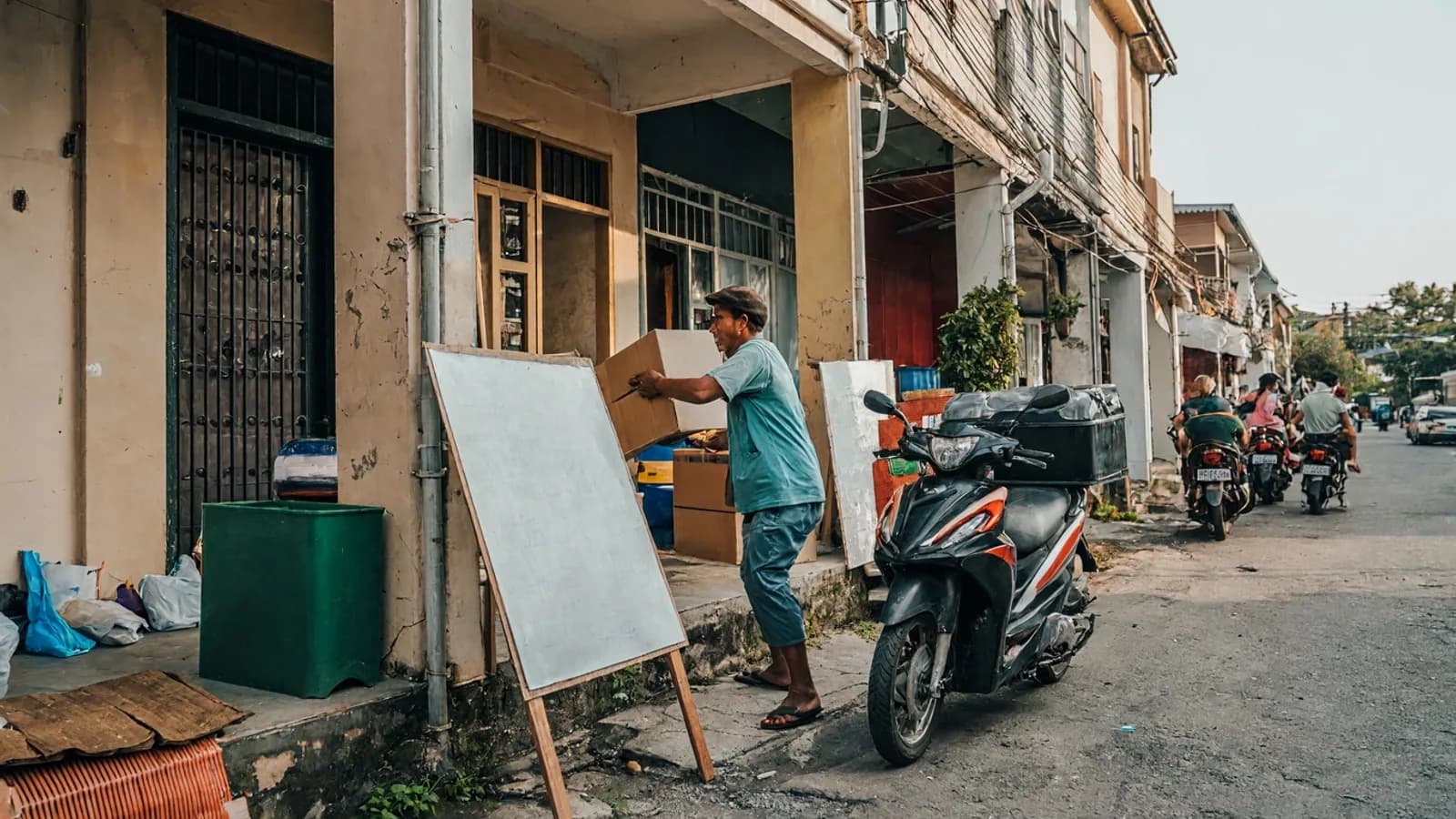
You have decided to move. Perhaps the rent rose too far, the landlord will not renew, or the old place simply no longer fits. The trouble is that deciding to move is only half the job. The other half is making sure the customers who have kept your business alive come with you, instead of switching to a competitor closer to home.
This guide does not cover whether you should move (we discussed that in Slow Sales: Wrong Location or Wrong Strategy?). Here we focus on carrying out the move: choosing the new address, budgeting for the transition, and checking whether your regulars actually come back.
Why Customers Disappear When a Business Moves
Customers rarely leave because they dislike your product. They leave because their habits get disrupted. Four causes come up again and again:
The distance grows. The new address falls outside their daily route, so stopping by is no longer convenient.
They do not know you moved. They turn up at the old site, find the shutters down, and assume you have closed for good.
The closure lasts too long. During two or three weeks closed, customers find a substitute and get used to it.
Online listings are out of date. Google Maps, ride-hailing delivery apps and social media still show the old address, so orders go astray or get cancelled.
The good news is that all four can be prevented with planning. The key is to start well before moving day.
Step 1: Map Where Your Current Customers Come From
Before choosing a new address, find out where your core customers live or spend their day. This tells you how far you can shift without losing them.
Collect delivery addresses. If you offer delivery, note the neighbourhood or landmark for orders from the last three months.
Ask directly. For two weeks, ask customers at the counter which direction they usually come from, and keep a simple tally.
Mark them on a map. Drop pins on Google Maps or a paper map. Clusters will appear, for example many from a housing estate to the north and offices to the east.
Separate regulars from passers-by. Regulars (who visit every week) are your priority. Passing trade depends on the site and will change anyway.
Once the map is ready, shortlist sites inside or close to your regulars' clusters. For rough travel distances by business type, see our guide to catchment areas. As a general picture, everyday businesses such as laundries or warung are more distance-sensitive than salons or specialist workshops, whose customers will travel further.
Step 2: Budget for the Transition, Not Just the New Rent
Many owners only budget for the new rent and are then surprised when cash runs low. Moving has its own costs, most of them landing close together. The table below is an illustration for a small café; get your real figures from contractor quotes, the landlord and your own sales records.
Cost item | Example (illustration) | How to check |
|---|---|---|
Overlapping rent (paying for two sites) | 1 month of old rent + new rent | Compare the old lease end date with the new lease start date |
Fit-out and installation at the new site | Rp15–40 million | Get at least two contractor quotes |
Moving and reinstalling equipment | Rp1–3 million | Ask local movers or pickup-truck hire |
Lost sales while closed | Daily revenue x days closed | Use average daily revenue from your till records |
Signage, banners, opening promotion | Rp2–6 million | Ask a print shop and set a promo budget |
Repairs to the old site before handover | Depends on condition and lease terms | Read the reinstatement clause in your old lease |
Add a buffer for the period before sales recover. In many cases, sales at a new site take several weeks to a few months to return to normal. Keep operating cash to cover that gap, for example two to three months of fixed costs, adjusted to your own situation.
Step 3: Build a 90-Day Timeline
A smooth move usually starts around three months before opening day at the new site. Here is an example timeline to adapt:
Timing | What to do |
|---|---|
Day -90 to -60 | Map customers, survey candidate sites, check zoning and permits, give the old landlord notice as the lease requires |
Day -60 to -30 | Sign the new lease, start fit-out, order signage, tell suppliers the new address |
Day -30 to -14 | Put up an announcement at the old site, start telling customers via WhatsApp and social media, prepare a moving promotion |
Day -14 to -1 | Test power, water and equipment at the new site, train staff on the new layout and route |
Day 0 | Open at the new site, ideally with the old site closing only a day or a few days earlier |
Day +1 to +60 | Leave directions at the old site, update every online address, track which regulars return |
Keep the closure as short as possible
The closure gap is the riskiest moment. If your budget allows, have the new lease start before the old one ends, so you can fit out the new site while still trading at the old one. A few weeks of double rent is often cheaper than losing customers who get used to a competitor.
Step 4: Tell Customers Through Every Channel
Assume customers only take notice after seeing the message several times. Use many channels at once:
At the old site: a "We are moving to..." banner with an easy landmark and a simple map. Leave it up after the move for as long as the landlord allows.
At the counter and on packaging: a sticker or small card with the new address in every order during the final month.
WhatsApp and social media: send the announcement, photos of the new site and a short route video from the nearest landmark.
Google Maps: update the address and pin in your business profile, then check the pin is accurate.
Delivery apps: request the merchant address change early, as it can take time to process.
Stamp cards or points: keep them valid at the new site, and consider a bonus stamp for the first visit.
A moving announcement is not just an address update. It is a chance to invite regulars back and make them feel valued.
Step 5: Sort Out the Paperwork at Both Sites
Paperwork is easily forgotten during a busy fit-out, yet some of it affects your money and your licence to trade:
Old lease: check the notice period, deposit refund conditions and handover terms. Photograph the premises when you hand back the keys.
Business licence: update your business address, for example through the OSS system at oss.go.id, and confirm the new address is zoned for your type of business.
Utilities: apply early for electricity (or a capacity upgrade), water and internet at the new site.
Suppliers and partners: give them the new delivery address and the date it takes effect.
Digital payments: check whether your QRIS or card-terminal merchant details need the new address.
Step 6: Measure Whether Your Regulars Come Back
Once you reopen, do not look only at total revenue. Compare a few simple numbers against your old-site averages, week by week.
Indicator | Example at old site (illustration) | Week 4 at new site (illustration) |
|---|---|---|
Transactions per day | 80 | 60 |
Regulars who have returned | 40 names on the list | 25 names |
Online orders per day | 20 | 18 |
New customers per day | not recorded | 15 |
In this example, transactions are down, but online orders have nearly recovered and new customers are arriving from the area. That is a reasonable first month. If very few regulars have returned after two months, contact them and ask why. The answer may be distance, parking, or simply not knowing the new address.
A Relocation Checklist You Can Use
Map of where regulars come from is complete
New address is within reach of most regulars
Zoning and permits for the new address are checked
Notice given to the old landlord within the lease period
Transition budget and cash buffer are calculated
Fit-out schedule and opening date agreed with the contractor
Announcement banner up at least two weeks before the move
Cards or stickers with the new address handed to customers
Google Maps, delivery apps and social media updated
Suppliers, utilities and digital payment details updated
Old premises documented with photos at handover
Regulars list ready for tracking after opening
Conclusion
Relocating can be a fresh start, as long as your regulars are not left behind. Begin by mapping where they come from, choose an address that stays close to them, budget for the full transition, and tell them through every channel well before moving day. Your next step: this week, start noting where customers come from at the counter and build your list of regulars. Those two pieces of data will guide almost every relocation decision that follows.