Corner Shophouse or Mid-Row Unit: When Is a Corner Site Worth Paying More For?
Corner shophouses are almost always offered at a higher rent. Learn the real pros and cons of a corner unit, how to read its position relative to the intersection, and how to work out how many extra sales you need to cover the premium.
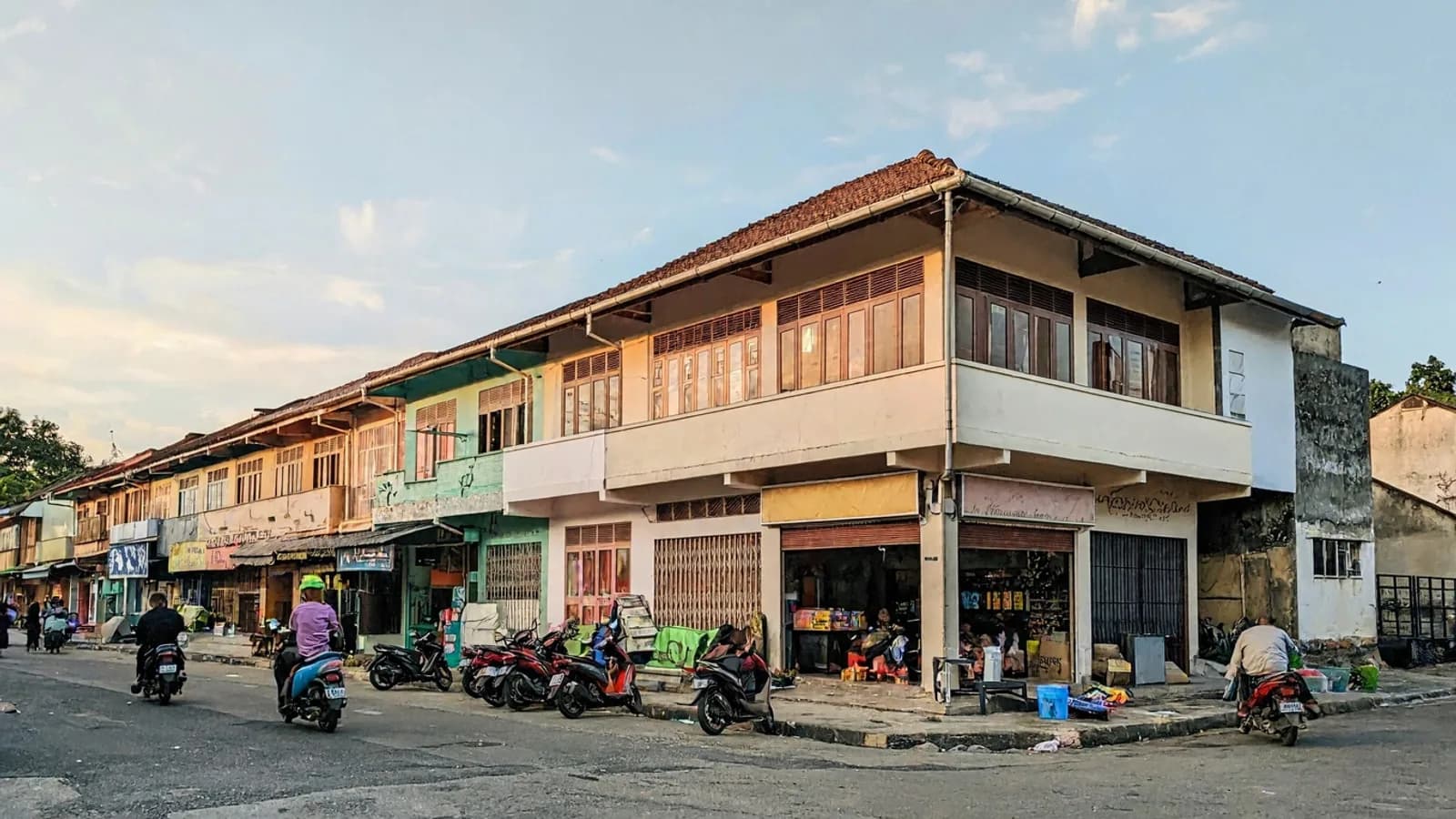
When you go looking for a shop, the agent will almost always point proudly at one unit: "This is the corner one, the most strategic spot." The rent is usually higher than for units in the middle of the row. The question few people ask is whether that extra rent actually comes back as extra customers. This guide helps you assess a corner shophouse calmly, with numbers rather than impressions.
What a Corner Unit Is and Why It Costs More
In Indonesia a corner shophouse is often called a ruko hook: the unit at the end of a row, usually where two roads meet. It has two sides facing the street and often comes with a strip of spare land at the side. Owners charge more because corner units are seen as more visible and easier to reach.
The size of the premium varies a lot between cities, streets and even rows. Do not simply accept the agent's idea of a "normal" premium. Ask for the price of a mid-row unit in the same row, and ask nearby tenants what they pay. That tells you the real corner premium you are being asked for.
Corner Advantages That Can Earn Money
Two shopfronts. The shop can be seen from the main road and the side road, including by people approaching from different directions.
Signage on two sides. The side wall is often wider than the front and can carry your name.
Access from two roads. Customers on the side street do not have to go round to the front.
Side space. Spare land can be used for motorbike parking, a terrace or extra seating, if the lease and local rules allow it.
An easy landmark. "The shop on the corner of the junction" is easier to remember and find than "shophouse number seven".
Better light and airflow thanks to windows on two sides.
Drawbacks People Often Forget
The rent premium, which has to be covered by extra sales every month.
No parking or stopping near the junction. Vehicles near an intersection often move fast or are not allowed to pull over, so being seen does not always turn into a visit.
Sun. If the side wall faces west, the space can get hot in the afternoon, cooling costs rise and some products spoil faster.
Dust, noise and accident risk on a busy corner.
Security. Two glass or shutter frontages mean two sides to protect with grilles or CCTV.
Extra costs: a second sign, local advertising tax (pajak reklame), and blinds or window film for the larger glazed area.
A side street that adds little. If the side road is a quiet alley or a one-way street leading away, the "two frontages" advantage barely exists.
Building restrictions. You may not be allowed to open up the side wall or add a door without the owner's or manager's permission.
Not All Corners Are Equal: Read the Position at the Junction
Indonesia drives on the left, so where a corner sits relative to the approach direction and turning traffic matters a great deal. Look at each corner separately.
Corner Before the Traffic Light
Queuing vehicles stop right in front of the shop, so drivers have plenty of time to look. But while queuing they cannot easily pull over, and stopping there is often prohibited. A unit like this is good for building brand awareness but does not necessarily bring direct visits.
Corner After the Junction
Vehicles that have just turned left are still moving slowly, so it is easier for them to pull over if there is safe space a few metres from the junction mouth. Corners on the exit side are often friendlier to customers on motorbikes, as long as the shop is not right at a no-stopping point.
Corners on Neighbourhood Roads
A corner unit at the mouth of an alley or the entrance to a housing estate is passed by residents every day at low speed. For a warung, laundry or everyday convenience store, a corner like this is often more productive than one on a major crossroads, and the premium is usually smaller.
The Maths: How Many Extra Sales Cover the Premium?
The formula is simple: extra monthly revenue needed = extra monthly cost ÷ gross margin. Divide that by your trading days and average transaction value to get the number of extra transactions per day. The table below is an illustration, not market pricing.
Item | Mid-row unit | Corner unit (example) |
|---|---|---|
Rent per year | Rp60 million | Rp75 million |
Rent difference per month | - | Rp1.25 million |
Extra signage, grilles, blinds (e.g. Rp8 million spread over 24 months) | - | approx. Rp335,000 |
Total extra cost per month | - | approx. Rp1.585 million |
Extra revenue needed (40% gross margin) | - | approx. Rp3.96 million |
Extra revenue per day (30 trading days) | - | approx. Rp132,000 |
Extra transactions per day (Rp25,000 average) | - | about 5–6 transactions |
Replace every figure with your own rent offer, margin and transaction value. Then ask the key question: will the side street and the extra visibility really bring in 5–6 additional customers every day? The answer has to come from surveying the side road, not from a feeling that corners are always busier.
Which Businesses Benefit Most?
Business type | Corner benefit | Notes |
|---|---|---|
Minimarket, convenience store | High: visible from two directions, customers from two roads | Needs motorbike parking at the side |
Pharmacy | High: easy to find and use as a landmark | Bright signage on both sides helps |
Workshop, tyre repair, motorbike wash | High if there is safe side access | Make sure queuing vehicles do not block the junction |
Coffee shop, food outlet | Medium–high: side terrace for seating | Watch afternoon heat and dust |
Laundry | Low–medium: regulars already know the address | Closeness to housing matters more |
Salon, barbershop | Low–medium: lots of glass often has to be covered for privacy | The premium often does not pay back |
Appointment-based or online-order businesses | Low | Visibility rarely drives customers |
The pattern is clear: the larger the share of customers who drop in because they see the shop, the more likely the corner premium pays back. The more customers arrive by appointment, subscription or online order, the smaller the benefit.
Steps to Assess a Corner Shophouse
Get the price of a mid-row unit in the same row as a benchmark, and ask nearby tenants what they pay.
Survey the main road and the side road separately during your business's peak hours; note people and vehicles that can actually stop.
Check no-parking and no-stopping signs and road markings, and the shop's distance from the junction mouth.
Note where the afternoon sun falls and feel how warm the space gets at that time.
Ask neighbours and long-standing tenants about accidents, flooding at the corner, security and parking attendants.
Read the lease: can you put a sign on the side wall, use the side land, and who pays the advertising tax?
Work out the extra monthly cost and the extra transactions needed, as in the example table.
Decide: take the corner only if that number of extra transactions is realistic based on your survey.
Corner Shophouse Field Checklist
The side street carries potential customers, not just fast through-traffic.
There is a safe place to pull over in front of or beside the shop, outside no-stopping zones.
The shop is clearly visible from both approach directions, not blocked by trees, poles or billboards.
The side wall does not take excessive afternoon heat, or there is a cheap way to deal with it.
The corner does not flood when it rains.
There is little history of accidents or vehicles hitting buildings at that corner.
The lease allows signage on the side wall and use of the side land.
The extra cost of securing two frontages has been budgeted.
The rent premium has been compared with a mid-row unit in the same row.
The extra daily transactions needed look reasonable against your field counts.
Conclusion
A corner shophouse is neither automatically the best choice nor a waste of money. Its value depends on your type of business, the corner's position at the junction, and whether the side street genuinely brings customers. Your next step: ask for a mid-row price as a benchmark, calculate the extra transactions you need using your own figures, and then test that number by surveying both sides of the corner before you sign the lease.