Shophouse, Kiosk, Booth or Mall: Which Business Space Fits You Best?
Shophouses, kiosks, booths and mall units come with very different costs, rules and risks. Compare upfront cost, rent, opening hours, footfall, design control and contract length before you choose.
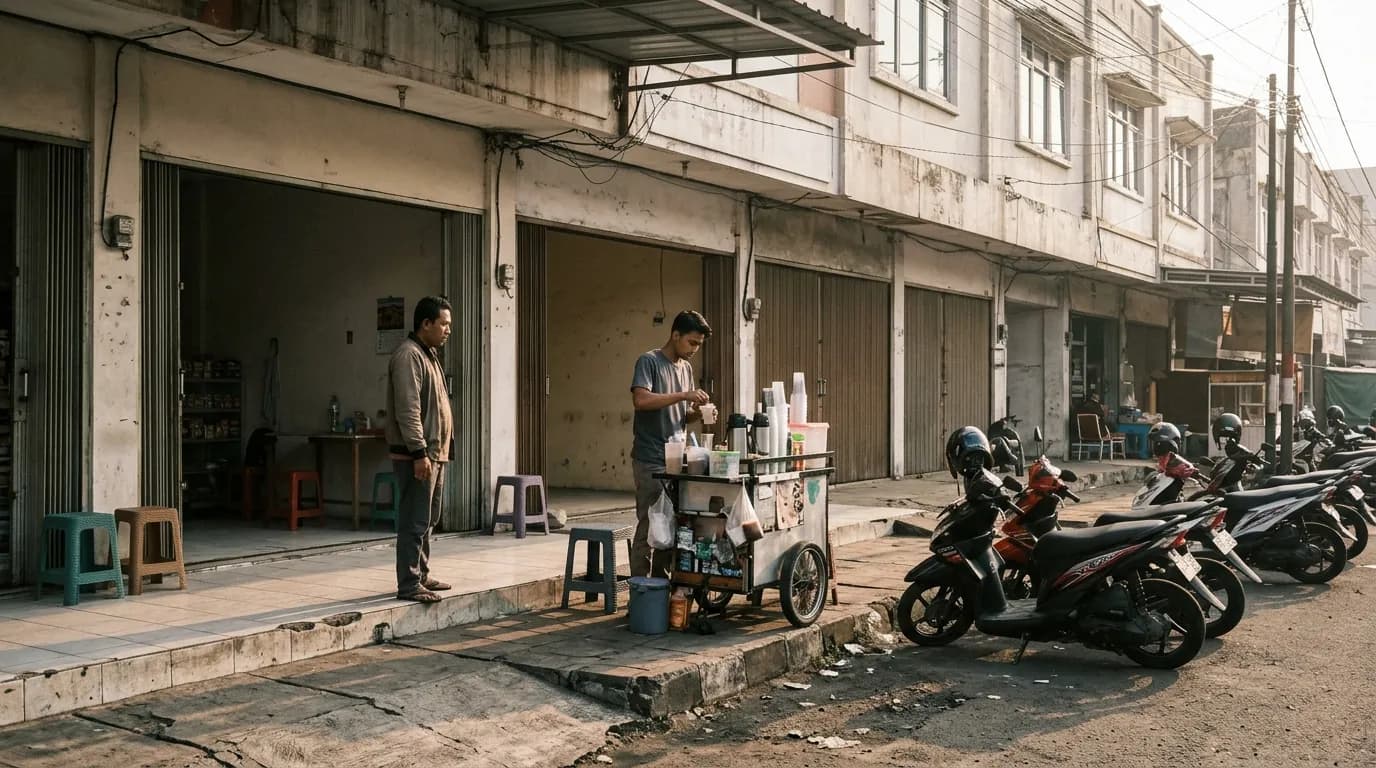
Choosing a business space is about the type of space as well as the address. A shophouse (ruko) on a main road, a kiosk in a market, a booth on a minimarket terrace and a unit in a mall come with very different cost structures, rules and customers.
Picking the wrong format can cost as much as picking the wrong location. A business still testing its product can run out of cash in a shophouse that is too big, while an established brand can stall in a booth that is too small.
The quick comparison
This is a general picture; costs and rules vary between cities and landlords, so always read the contract.
Criterion | Shophouse | Kiosk | Booth | Mall unit |
|---|---|---|---|---|
Upfront cost | Medium to high | Low to medium | Low | High |
Rent and extra charges | Medium to high, usually paid in advance | Low, plus management fees | Low, sometimes a revenue share | High, plus a service charge |
Opening-hour rules | Fairly free | Follow the market or building | Follow the host | Follow the mall |
Footfall | You must draw it yourself | Depends on the complex | Borrowed from the host's visitors | Built-in mall visitors |
Control over fit-out and signage | High | Limited | Very limited | Strict, needs management approval |
Typical contract length | A year or more | Monthly to yearly | Short or uncertain | Often several years |
Main risk | Large capital locked in | Quiet or poorly managed complex | Being asked to leave, weather | High fixed costs, strict rules |
Shophouse: space and freedom, at a price
A shophouse gives you the most space: the ground floor for trading, the upper floor for storage, a kitchen or staff living quarters. You also have the most freedom over design, signage and opening hours, as long as you hold the right permits and do not disturb the neighbours.
The trade-off is a large upfront outlay. Rent is usually paid a year or more in advance, often with a deposit on top. Fit-out can be expensive too, from upgrading the PLN electricity connection and plumbing to a kitchen and a rolling door. And footfall will not come on its own; you have to draw it with location, signage and promotion.
How to check:
Ask for every cost besides rent: deposit, security and cleaning fees, and who pays for major repairs.
Check the installed electricity capacity, the roof, the drainage and the upper floor.
Kiosk: cheap and small, but dependent on management
A kiosk can sit in a traditional market, a food court (pujasera) or a row of small units in a shopping complex. Rent is low and the space is small, which suits a business with a limited menu or product range.
The biggest risk is outside your control: how well the complex is managed and marketed. A cheap kiosk in a quiet complex is still expensive if nobody buys.
How to check:
Count how many kiosks are closed or marked "for rent" (disewakan).
Ask long-standing tenants about trade on weekdays, at weekends and in slow months.
Find out who manages the complex and whether it runs regular promotions or events.
Make sure you rent from the owner or the official manager.
Booth: the cheapest way to test demand
A booth can sit on a minimarket terrace, in a food court, or at bazaars and events. It needs the least capital and can be moved, so it is a good way to test your product, prices and trading hours before committing further.
The limits are just as clear:
Limited menu and space, usually without a full kitchen or storage.
Open-air booths are exposed to rain and heat.
The host's rules set your hours, your look and sometimes what you may sell.
Terms are often short or uncertain, so you can be asked to move.
Treat a booth as an experiment: record sales by the hour and your best sellers, and use them to decide when to move to a bigger space.
Mall unit: built-in footfall, strict costs and rules
A mall offers what is hard to find elsewhere: visitors who are already there, security, parking, and air-conditioned space that stays comfortable when it rains.
But the costs stack up. On top of rent there is a service charge, electricity and other fees. Some malls also use revenue-sharing arrangements. Design and fit-out must follow the management's standards, and contracts often run for several years. Opening hours follow the mall, so a business that relies on breakfast or late-night customers can lose its busiest hours.
Not every mall is busy. Check the unit's distance from escalators, entrances and anchor tenants, and visit on a weekday as well as at the weekend.
Which one fits your business?
Your situation | Usually a good fit |
|---|---|
Testing your first product | Booth or kiosk |
Food and drink with seating | Shophouse |
An established brand that needs footfall | Mall unit |
Buying a franchise | Follow the franchisor's standards, but check the site yourself |
For franchises, also read our common franchise location mistakes. Whichever you choose, calculate break-even with the full costs of each option using our break-even guide before leasing a shophouse. Remember that a revenue share is a variable cost, so it shrinks the margin on every sale.
Compare the location, not just the format
The format sets your cost structure, but the location decides who walks in. Loka by PetaAI helps you compare candidate sites quickly: enter an address and a business type to get a feasibility score based on the proximity, density and quality of nearby amenities, drawn from a database of more than 39,000 points of interest across 38 provinces.
You also get a competitor analysis within a 1 km radius, including franchise outlets, a pricing tier recommendation (Economy, Premium or Super Premium), a transport score from 0 to 100 and a PDF report to take into negotiations with a landlord or mall management. Loka does not review contracts or count visitors inside a building, so visit the space before you decide.
Frequently asked questions
What is a service charge in a mall?
A monthly fee on top of rent for maintaining shared areas, such as security, cleaning and air conditioning. It is usually calculated per square metre. Ask how much it is and whether it can rise during the contract.
Is a booth a good choice for a new business?
It is a good way to test demand on a small budget. First understand the host's rules, the contract length and the terms if you are asked to move.
How long is a typical shophouse lease?
Usually at least a year, paid in advance; some owners ask for two years or more. Terms can be negotiated, so read the contract carefully.
Analyze franchise locations with Loka
Check any spot's potential — POI density, competitors and a viability score in minutes.
Try Loka