Renting the Terrace in Front of Someone's Shop for a Cart or Stall: How to Judge the Spot, Shared Hours and the Deal With the Owner
Renting the terrace of someone else's shop can be a cheap way to start a cart or stall business, as long as the spot, hours and agreement are clear. Learn how to assess a terrace, work out the cost and write a simple agreement with the owner.
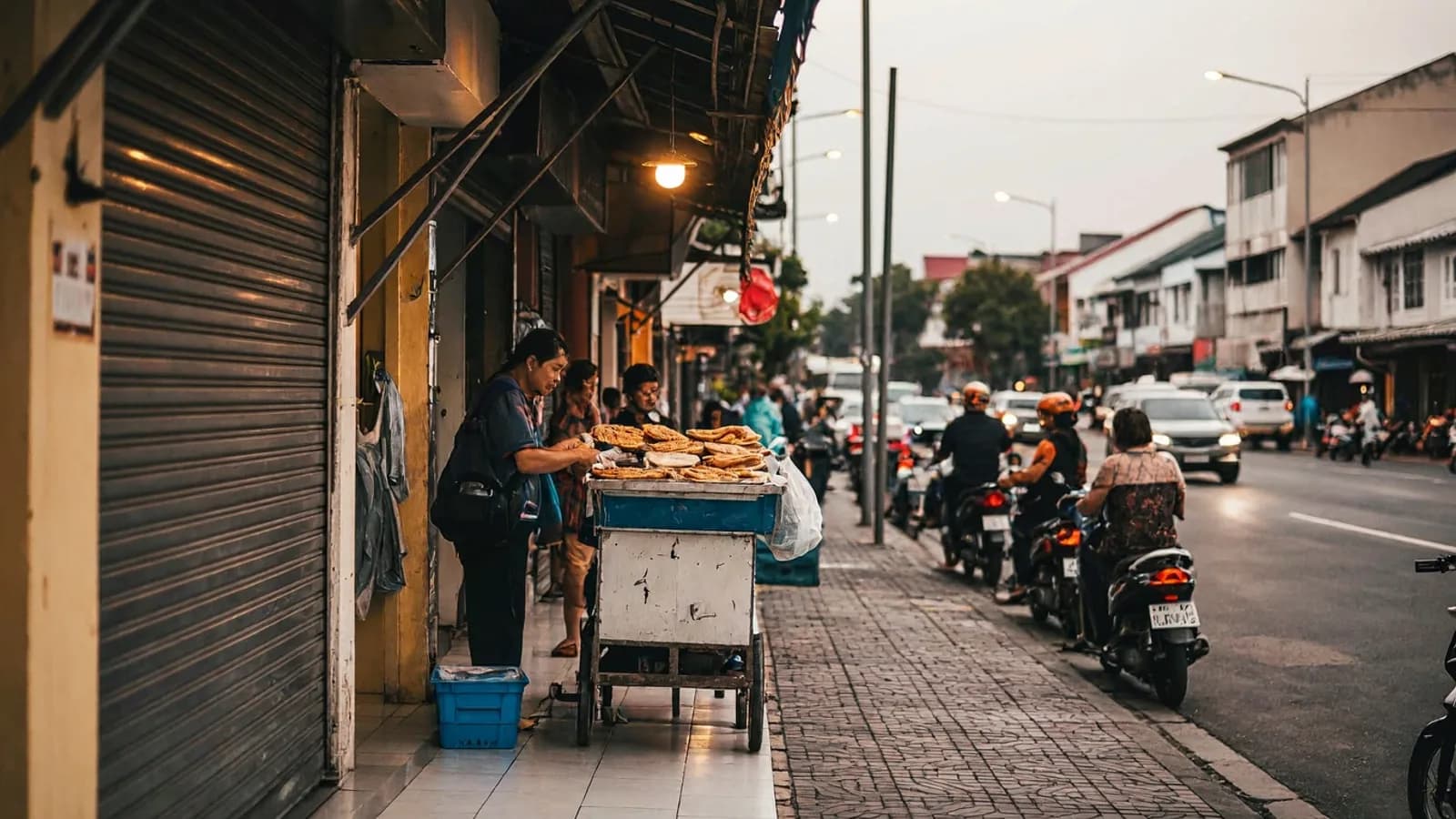
You want to start selling martabak, cart coffee, fried catfish or phone accessories, but you cannot yet afford a year's shophouse rent upfront. Then you notice the terrace of a hardware store that closes at five, or the wide, well-lit forecourt of a pharmacy. Renting a space like this is often far cheaper, but it comes with traps: clashing hours, borrowed electricity that becomes a sore point, or discovering that your stall actually stands on a public pavement the shop owner does not own.
This guide helps you judge whether a terrace is worth renting, how to work out the cost, and what to agree in writing so you are not suddenly told to leave.
Which Businesses Suit Someone Else's Terrace?
A shop terrace suits businesses with compact equipment that can be set up and packed away daily and that do not need an enclosed room. For example:
Evening food: martabak, fried rice, pecel lele, satay, angkringan, hot ginger drinks.
Breakfast food: nasi uduk, chicken porridge, lontong sayur, traditional cakes.
Drinks: cart coffee, jumbo iced tea, juice, trendy drinks.
Light non-food: phone accessories, top-up credit, sandals, toys, shoe repair or key cutting.
Businesses that need lots of running water, store large stock, or produce noise and heavy smoke are usually a poor fit, because they quickly trigger complaints from the owner and neighbours.
Step 1: Make Sure the Terrace Really Belongs to the Shop
This is the most important check and the one most often skipped. Many shophouse terraces look like part of the shop when part of them is actually pavement, road shoulder or a public drain. The owner has no right to rent out public space, and stalls there risk being cleared by officials.
Ask the owner where the property boundary is. Ask them to show you markers, a floor line or the boundary on the title if available.
Look for a change in materials: shop tiles usually differ from pavement blocks or concrete.
Check for a drain or culvert in front. Blocking a drain with a cart is a common reason for warnings.
Ask other traders on the same street whether stalls nearby have ever been cleared.
Drop in on the head of the neighbourhood association (RT) to tell them your plans. It is polite, and you will learn the local rules.
Step 2: Match Your Hours to the Shop's Hours
The longest-lasting terrace arrangements usually happen when your trading hours do not overlap with the owner's opening hours. Shops that close in the late afternoon suit evening food; shops that open around midday suit breakfast.
Type of host shop | Typical hours (check in person) | Businesses that fit its terrace |
|---|---|---|
Hardware or building supplies | Morning to late afternoon | Evening food, angkringan |
Bank, office, showroom | Office hours | Evening food, night coffee |
Fabric or gold shop at a market | Morning to afternoon | Evening food |
Workshop, salon, boutique | Midday to evening | Breakfast |
24-hour minimarket or pharmacy | Almost all day | Shared hours; needs strict terms |
The table is only a rough guide. Every shop keeps different hours, so watch for several days yourself, including Sundays and public holidays. Ask about exceptions too, such as longer hours before Eid or on delivery days.
If you have to share hours
At a shop that is open most of the day, you share the space with its customers. Make sure your cart does not block the entrance, the shop sign or customer parking. Otherwise the owner will soon feel short-changed and may end the deal.
Step 3: Judge the Spot From the Customer's Point of View
A cheap terrace is not automatically a profitable one. Assess it as you would a shophouse, but focus on customers who stop briefly.
Traffic during your hours: a road busy at midday can be quiet at night. Count vehicles and pedestrians exactly during your trading hours.
Side of the road: for evening food, the homebound side usually does better. Watch which direction traffic comes from at that time.
Stopping space: can motorbikes pull over without blocking traffic? Is there a parking attendant you need to talk to?
Lighting: a terrace that goes dark when the shop closes makes your stall less visible and less safe.
Competitors and complements: a similar cart next door splits customers, while a drinks seller beside a food seller can help both.
The host shop's image: a clean, well-known shop lends your stall credibility.
Step 4: Check Power, Water and Cleanliness
Many terrace disputes start small: borrowed electricity that pushes up the bill, water used without asking, or oil stains on tiled floors.
Power: agree whether you use the shop's electricity for a fixed monthly fee, install a sub-meter, or bring your own supply. A simple sub-meter keeps things fair for both sides.
Water: agree where you get water for washing up and where wastewater goes. Never pour oil into the drain.
Cleanliness: agree that the terrace is clean again before the shop opens. Put a rubber mat under your stove.
Storage: ask whether the cart can stay on the forecourt when you are not trading, or must go home every day.
Step 5: Choose a Type of Deal and Work Out the Cost
There are several common arrangements. Pick one that fits how predictable your sales are and what the owner needs.
Type of deal | How it works | Advantages | Risks |
|---|---|---|---|
Fixed monthly rent | Pay a set amount each month | Easy to plan, stronger position | You still pay in quiet months |
Revenue share | A percentage of sales | Light at the start | Needs honest records, breeds suspicion |
Daily rent | Pay per trading day | Flexible for a trial | Easy for the owner to end any time |
No cash, services instead | E.g. keeping watch or cleaning | Almost free | Most fragile, rarely secure |
A simple calculation example
Here is an illustration for a martabak cart. The figures are examples only; terrace rents vary widely by area, so ask several shop owners and nearby traders directly to get a fair range.
Item | Example per month |
|---|---|
Terrace rent | Rp1,000,000 |
Electricity paid to the owner | Rp200,000 |
Neighbourhood cleaning/security fee | Rp100,000 |
Total cost of the spot | Rp1,300,000 |
Example gross profit per portion | Rp6,500 |
Minimum portions to cover the spot | 200 portions a month, about 7 a day (26 trading days) |
With figures like these, you can judge whether the daily target is realistic given the customer flow you counted on site. If covering the spot alone needs far more portions than looks achievable, look for another terrace or propose a different kind of deal.
Step 6: Put the Deal in Writing, However Simple
A verbal agreement feels friendlier, but it can change easily when the owner changes their mind, sells the shop, or hands it to a family member. A simple one-page agreement signed by both parties, witnessed by someone like the RT head, is far safer. Include at least:
The area you may use, ideally with measurements or a rough sketch.
Days and hours of use, including holidays.
The rent, how it is paid and the due date.
Who pays for electricity, water and neighbourhood fees.
Rules on cleanliness and cart storage.
How long the deal lasts and the minimum notice either side must give to end it, for example 30 days.
What happens if the shop is sold or let to someone else.
Any ban on selling products that compete directly with the owner's shop.
A minimum notice period is the most valuable clause for a terrace trader: it is your time to find a new spot without losing your customers.
Field Checklist Before You Agree
The shop's boundary is clear and the stall does not use the pavement or drain.
The RT head or neighbourhood committee has been informed.
The shop's hours have been observed for several days, including weekends.
Customer flow has been counted during your own trading hours.
Customers' motorbikes can pull over safely; parking attendant arrangements are clear.
Lighting is adequate after the shop closes.
The power source and how it is charged have been agreed.
Water supply and wastewater disposal are settled.
The cart does not block the shop's door, sign or parking.
The minimum portions needed to cover the spot look realistic.
The written agreement includes a notice period before ending the deal.
Conclusion: Cheap Is Good, Secure Is Better
Someone else's shop terrace can be a low-cost stepping stone for building a customer base before you can afford your own shophouse. The keys are land that genuinely belongs to the shop, hours that do not get in each other's way, and a written agreement that gives you time if you have to move.
Next step: pick two or three candidate terraces, watch each shop's hours and count customers during your trading time, then take the checklist above when you talk to the owners. Compare the results before deciding, and record daily sales from day one so you have solid data when you later look for a permanent location.