Your Neighbours Decide Your Customers: How to Assess Anchors, Complementary Shops and Harmful Neighbours
The shop next door can bring you customers every day, or make people reluctant to stop. Learn how to read anchors, complementary businesses and problem neighbours before you sign a lease.
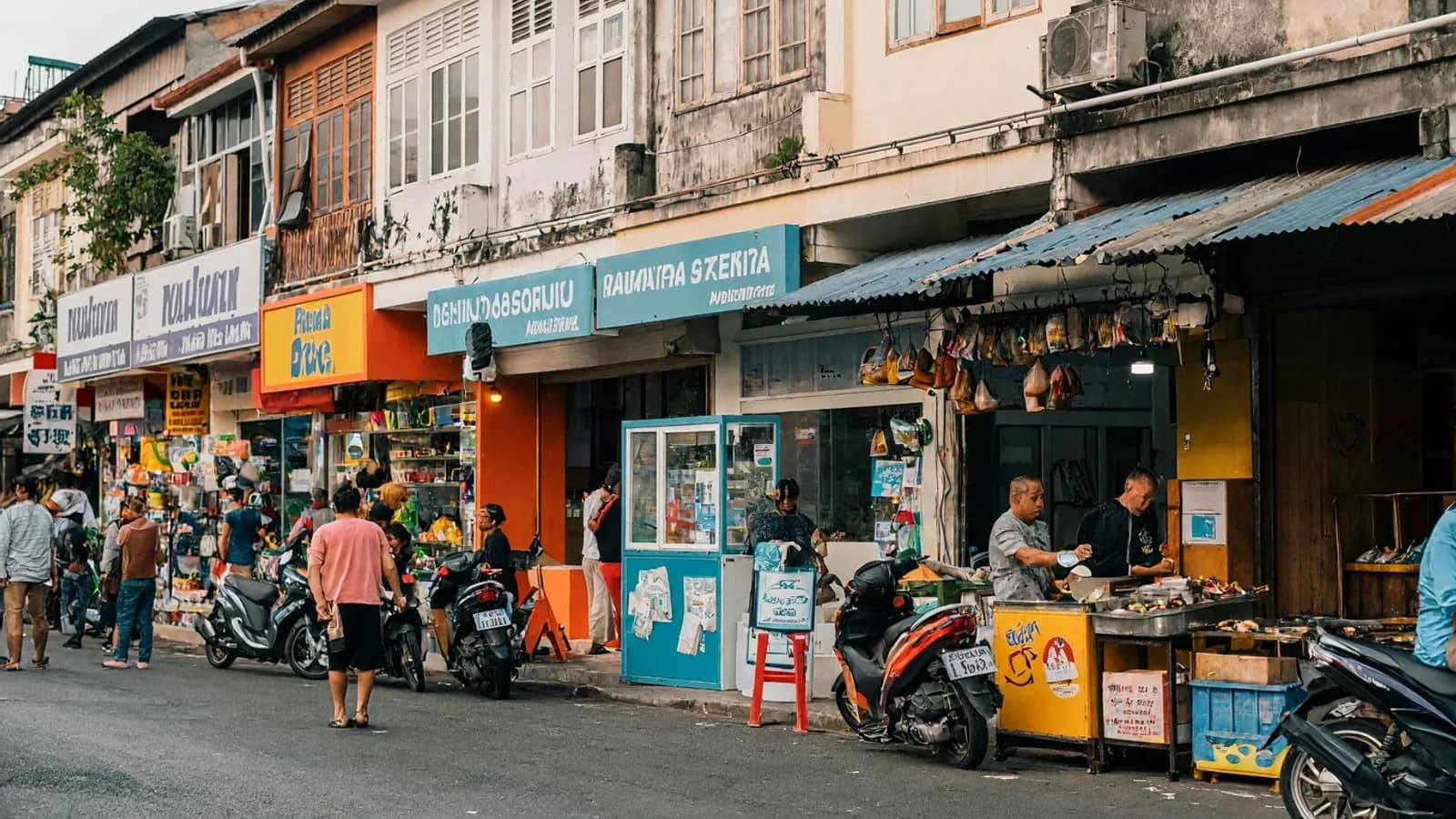
Many owners judge a potential site by its road, its rent and its building, and forget to look at who the neighbours are. Yet the shops on either side of you shape who walks past, when they come and whether they stop. A laundry next to a busy food stall full of boarding-house residents can be swamped with orders, while the same laundry next to a welding workshop may struggle because nobody wants to linger there.
This guide helps you read your neighbours systematically: which ones pull in crowds, which ones complement your business, which ones hold you back, and how to avoid depending too heavily on one big neighbour.
Why neighbours matter so much
Customers rarely leave home for a single small errand. They usually bundle several tasks into one trip: withdraw cash at the ATM, buy medicine, then grab a meal. A shop sitting on that route picks up customers passed on by its neighbours without much promotion.
The wrong neighbours can break that route. Smells, noise, lorries blocking access or a row of empty units make people uncomfortable stopping, even on a busy road.
Three kinds of neighbour to recognise
1. Crowd pullers (anchors)
An anchor is a place people visit regularly of their own accord. Around shophouses, examples include chain minimarkets, banks or ATM clusters, large pharmacies, clinics, traditional markets, mosques, schools and petrol stations. An anchor does not have to be big; it just needs a strong reason for people to come back again and again.
2. Complementary businesses
Complementary businesses serve a need that arises before or after someone visits the shop next door. Think of a coffee stall beside a motorbike workshop (customers wait while their bike is serviced), a cosmetics shop beside a salon, a photocopy and stationery shop near the local government office, or a laundry near a food stall popular with boarding-house tenants.
3. Problem neighbours
These are neighbours that make your potential customers uncomfortable or unable to stop. Examples include noisy or smelly businesses, warehouses with lorries loading out front, nightlife venues if you target families, businesses that take over the pavement and shared parking, or a row of closed units that makes the area look dead.
Example neighbour pairings by business type
The table below is a general illustration, not a fixed rule. Every neighbourhood is different, so treat it as a starting point for your own observations.
Your business | Neighbours that tend to help | Neighbours to watch out for | Short reason |
|---|---|---|---|
Coffee shop | Workshops, small offices, coworking spaces, campuses | Strong-smelling businesses, welding shops | People waiting or working need a seat and a drink |
Laundry by the kilo | Food stalls, boarding houses, minimarkets | Dusty warehouses with lorries | Customers drop off washing while shopping or eating |
Pharmacy | Clinics, doctors' practices, health centres | An undifferentiated pharmacy right next door | Patients fill prescriptions straight after their appointment |
Salon | Cosmetics shops, boutiques, photo studios | Workshops, wet vehicle washes | Salon customers look for a clean, pleasant setting |
Food stall | Banks/ATMs, markets, schools, offices | Rubbish dumps, smelly businesses | Regular foot traffic at mealtimes; cleanliness affects appetite |
Motorbike workshop | Coffee stalls, petrol stations, spare-parts shops | Family restaurants, salons | Workshops pair with places to wait, not with businesses that need a calm atmosphere |
How to assess neighbours on site
Follow these steps during your survey. A phone for notes and photos is all you need.
Map the immediate radius. Walk roughly 100 to 200 metres in every direction from the site. Note every business, public facility and empty unit, and mark each as an anchor, complementary, problem or neutral.
Note the peak hours of key neighbours. A pharmacy near a clinic may peak in the morning and late afternoon, a food stall at lunch, a minimarket in the evening. Match these against your planned opening hours.
Watch whether people move between shops. Sit for 30 to 60 minutes at a busy time. See whether anchor visitors walk on to other shops in the row or head straight back to their vehicles.
Mind the side and the distance. Customers move more easily to a shop on the same side of the road and a few steps away. A neighbour across a wide road with a median often sends you no spillover at all.
Ask nearby owners or staff. Ask how long they have been open, when they are busiest and whether there are plans to move or close. Their answers are anecdotal, so compare several sources.
Check empty units and their history. Ask the landlord or residents why a unit is empty and for how long. Units that change tenants often can signal a weak area.
Give a simple score. For example, rate anchor strength, fit of complementary businesses and disruption from problem neighbours from 1 to 5, then compare several candidate sites the same way.
The risk of relying on a single anchor
An anchor can be a blessing and a weak point at the same time. If most of your customers come because of one minimarket or one clinic, your sales will wobble when that anchor moves, closes for months of renovation or shuts down.
As an illustration: suppose you estimate that half your customers come because of the clinic next door. If the clinic closes, is the other half enough to cover rent and wages? Run this scenario before you sign, using your own estimates from the survey.
Ask the landlord, or the anchor itself, how long its lease has left, if they are willing to share.
It is safer to have two or three anchors with different peak hours nearby rather than just one.
Consider a shorter initial lease or a renewal option so you are not locked in for years if the anchor leaves.
Build your own regular customers from day one, for example through delivery or a subscription scheme, so you do not rely entirely on spillover from neighbours.
A good location is not just a busy road; it is a neighbourhood that gives people a reason to stop near your door.
Look at future neighbours too
Today's neighbours may not be next year's. Watch for "for rent" signs, units being renovated or fenced-off empty plots. Ask the landlord what kinds of businesses are negotiating for nearby units. For some business types, you can try to request a lease clause stopping the landlord from letting the adjoining unit to an identical or disruptive business, though not every landlord will agree.
Neighbour checklist to take on site
At least one anchor within a reasonable walking distance, on the same side of the road.
The anchor's peak hours match your opening hours and products.
There are complementary businesses whose customers are also your potential customers.
Visitors visibly move between shops rather than just parking and leaving.
No sources of smell, noise, dust or standing water near the entrance.
The frontage and parking are not used by neighbours for loading or displaying goods.
Few empty units in the same row, and you have asked why they are empty.
You have asked about any plans for the main anchor to move or close.
You have calculated your sales scenario without the main anchor.
You have checked nearby units or plots that new businesses will move into.
Conclusion: choose the neighbourhood, not just the unit
When comparing potential sites, do not stop at rent and floor space. Map the neighbours, match their peak hours to your business and test how much you would depend on a single anchor. Your next step: shortlist two or three sites, map a 100 to 200 metre radius around each using the checklist above, and score them the same way so the comparison is fair. A site with the right neighbours is often worth more than the one on the busiest road.