Storefront Visibility: Will Customers See Your Shop Before They Have Already Passed It?
A busy road is worthless if people only notice your shop once they have driven past it. Learn how to work out sight distance, spot obstructions and test a site's visibility yourself in the field.
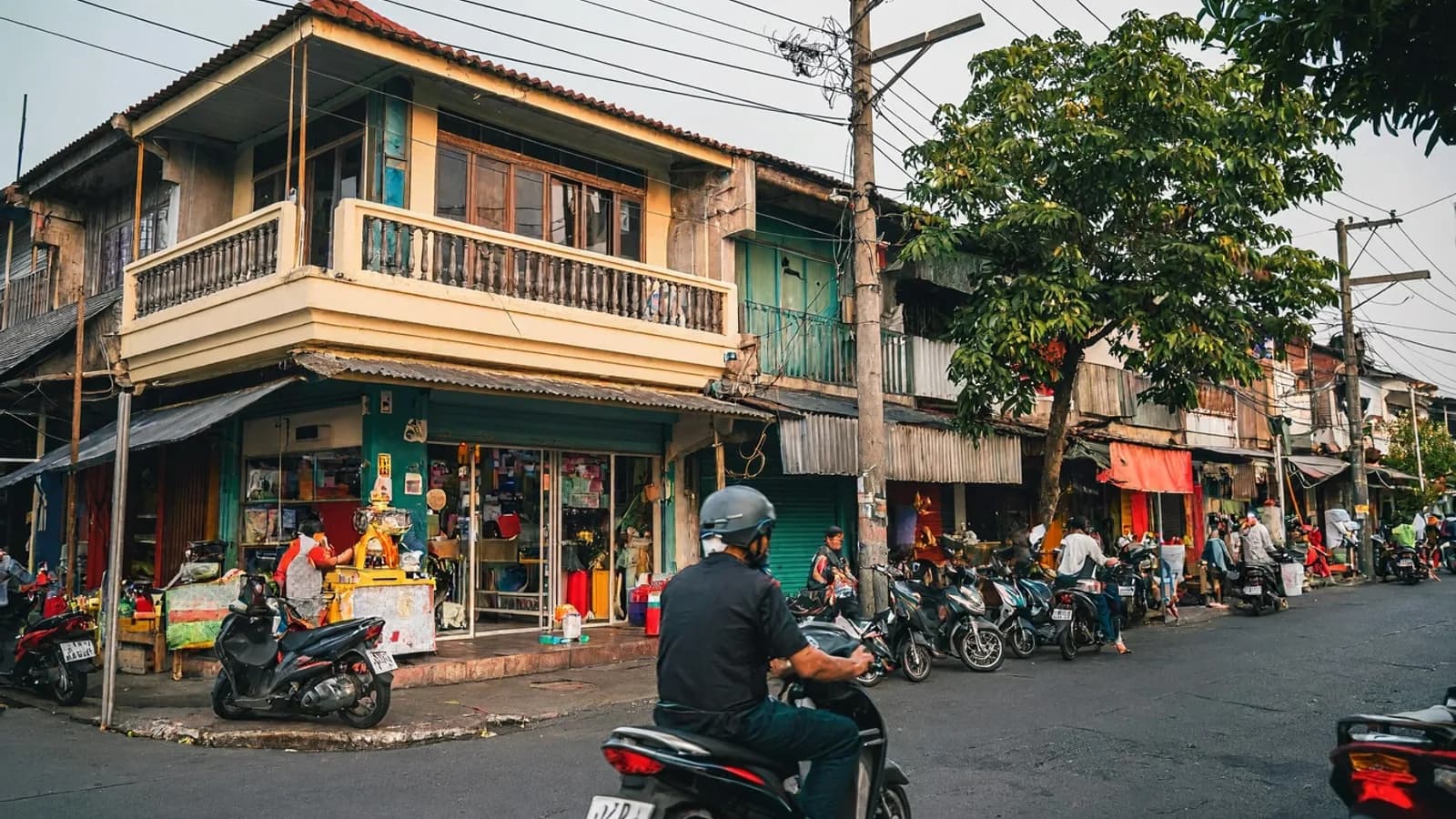
Plenty of owners pick a shophouse on a busy road and then wonder why so few people stop. One cause that often goes unnoticed is visibility: the shop only comes into view when a potential customer is right in front of it, or already past it. By then, a motorcyclist or driver has no time to slow down, and a pedestrian is already heading somewhere else.
This guide helps you judge how easily a potential site can be seen from the road, which obstructions to look for, what a good sign can fix and what it cannot, and how to test it yourself before you sign a lease.
Why visibility decides whether people stop
The decision to stop at a warung, coffee stall or minimarket often happens in a few seconds. A customer needs to see your shop, recognise what you sell, and then decide and pull over safely. If any of those steps is cut short because a tree hides the shopfront or the sign is unreadable, you lose the sale even on a crowded road.
The effect is biggest for businesses that rely on impulse purchases, such as drinks stalls, fried snacks, minimarkets or tyre repair. For destination businesses such as a regular salon or a specialist workshop, visibility still helps, but it is not the deciding factor.
Work out the sight distance you need
The faster traffic moves, the further away your shop must be visible. A simple way to estimate it: convert speed into metres per second, then multiply by the time people need to notice, decide and pull over. The table below uses an illustrative 5 seconds. This is a rough rule of thumb, not a research finding; on busy, complicated roads people may need longer.
How customers arrive | Speed (example) | Distance per second | Minimum sight distance (5-second illustration) |
|---|---|---|---|
On foot | 5 km/h | about 1.4 m | about 7 m |
Motorbike on a local street | 20 km/h | about 5.6 m | about 28 m |
Motorbike/car on a city road | 40 km/h | about 11 m | about 55 m |
Vehicle on a major road | 60 km/h | about 17 m | about 83 m |
The table shows that a shophouse on a fast major road needs to be visible from almost a block away. If your shop only appears 15 metres out, practically the only people who stop are those who already planned to. Measure typical speeds at your own site, because the same road can be jammed in the morning and empty at midday.
Obstructions that commonly hide a shop
During your survey, look at everything between the road and the shopfront. Some of the most common obstructions in Indonesia:
Shade trees, especially after the rainy season when they are at their fullest.
Power poles, telephone poles and cables that block a sign on the upper floor.
Billboards, banners and advertising boards belonging to others on the pavement or in front of neighbouring units.
Neighbours' canopies or signs that stick out further than yours.
Rows of parked cars and motorbikes in front of the shophouses, hiding the ground floor.
Street vendors' carts and stalls that set up at certain hours.
A building set back further from the road than its neighbours.
Bends, slopes, flyovers or high medians that break the line of sight from a distance.
Obstructions can change by the hour. Street vendors may only appear in the late afternoon, and parking may only fill up at lunchtime. Test visibility during the peak hours that matter most to your business, not just whenever you happen to be free.
Unit position: corner, mid-row or down an alley
Corner units
A corner shophouse is usually visible from two roads and has two sides for signage. Rent is often higher, so make sure your business actually needs that extra visibility. Also check whether the junction has traffic lights, since vehicles waiting at a red light give people extra time to notice your shop.
Mid-row units
A mid-row unit is often only clearly visible from directly in front. From a distance, the shopfront is hidden by neighbouring facades and canopies. Here a sign projecting at a right angle to the road, rather than fixed flat against the wall, is usually far more effective.
Alley or upper-floor units
Units down an alley or on the second floor are almost invisible from the main road. They suit destination businesses or those whose customers order online. If you still choose one, budget for a directional sign at the alley entrance and make sure the landowner allows it.
How to test visibility in the field
You do not need special equipment. A phone, a motorbike or car and a bit of patience are enough. Follow these steps:
Identify the main direction of approach. Which way will most of your customers come from? Test both directions, but give more weight to the main one.
Start about 150 metres away. Ride or drive at the normal speed of traffic, not slowly as if you were looking for an address.
Record video from the rider's eye level. Hold the phone or ask a passenger to film forwards.
Note three points: where the shop first comes into view, where you can tell what kind of shop it is, and the last point at which you could still pull over safely.
Repeat at night. Check whether the shop is still visible when street lighting is dim or the neighbours are brighter.
Do a walking test from the nearest bus stop, housing lane or busy spot.
Show the video to two or three people who do not know the site and ask when they first noticed the shop.
What you can fix and what you cannot
Not every visibility problem means you should reject a site. Separate problems you can solve at a reasonable cost from problems built into the location.
Fixable: a small or dark sign, poor facade lighting, shop colours that blend into the neighbours, windows covered in stickers, or goods piled in front of the door.
Fixable with permission: a projecting sign, a lightbox or a directional sign at the alley entrance. Make sure the lease gives you signage rights, and ask your local government office about billboard and signage permit rules.
Hard or impossible to fix: a building set far back from the road, hidden under a flyover, just after a sharp bend, or blocked by government trees and poles that cannot be moved.
If the problem falls into the last group, work out whether the lower rent really makes up for the impulse buyers you will lose. Often the rent difference is not enough to cover the extra marketing needed just to let people know the shop exists.
A busy road only turns into a busy till if people can see your shop, recognise what you sell and have room to stop.
How much does visibility matter for your business?
Use this rough grouping to decide how strict your visibility standard should be:
Critical: minimarkets, coffee and drinks stalls, snacks, tyre repair, phone credit counters, pharmacies on main roads.
Fairly important: eateries, laundries, general salons, small hardware stores.
Less decisive: specialist workshops, appointment-based clinics, regular tailors, delivery-only kitchens.
Visibility checklist to take into the field
Score each point from 1 (poor) to 3 (good), then compare total scores across your candidate sites:
The shop is visible from far enough away for the speed of traffic on that road.
The shop is visible from both directions, especially the main direction of approach.
The type of business can be recognised from a distance, not just the brand name.
No trees, poles, cables or billboards block the shopfront.
The ground floor is not hidden by parked cars or street stalls at peak hours.
The building is level with or in front of its neighbours.
The shop remains clearly visible and well lit at night.
There is a safe place to pull over and park in front of or near the shop.
The lease allows the signage you need.
Existing obstructions can be fixed at a reasonable cost.
Conclusion
Visibility is the bridge between people passing on the road and customers actually walking in. Before you sign a lease, work out the sight distance you need, record visibility tests from both directions by day and night, and fill in the checklist above for every candidate site. Combine the results with your rent calculations, footfall counts and field survey, then decide based on evidence rather than a quick impression as you drive by.