Catchment Area: How Far Will Customers Travel to Your Business?
Your catchment area decides where customers come from and how big the market around a site really is. Learn rough travel distances by business type, how to map the area by travel time, and how to test it once you open.
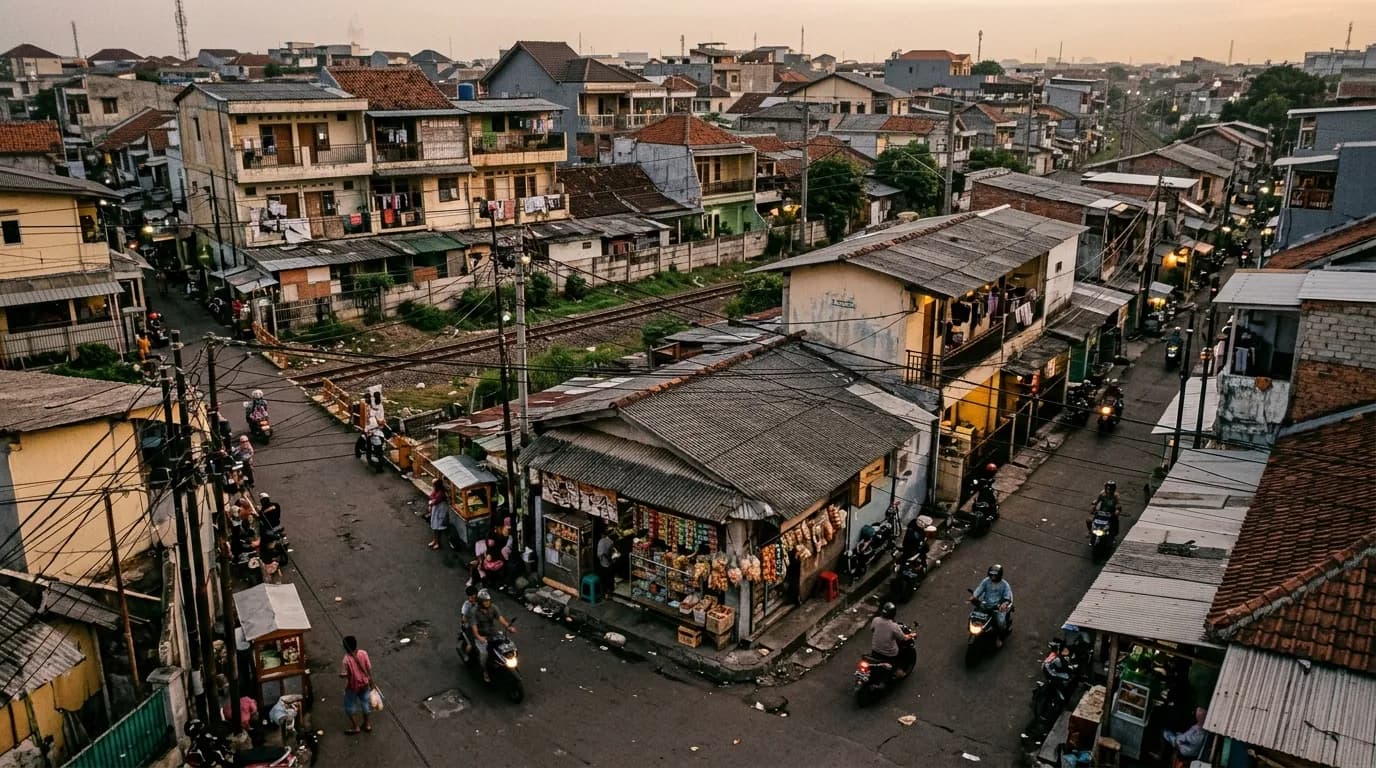
When people assess a potential site, the first question is usually "is it busy here?" A more useful question is: where will my customers come from, and how many potential customers are in that area?
That area is your catchment area. Estimate it too wide and you count customers who will never come, then set targets you cannot hit. Estimate it too narrow and you may pass up a site that was actually viable.
What is a catchment area?
A catchment area is the zone that most of a business's customers come from. It is usually split in two:
Primary area: the closest, easiest-to-reach zone, where most of your regular customers come from.
Secondary area: farther out, where occasional customers come from, for example at weekends.
Its size is set by the type of business, not by your hopes. A corner shop and a specialist dental clinic can sit side by side and still draw from very different areas.
How far will customers travel?
The figures below are commonly used rules of thumb, not survey results. Your city and your concept can change them.
Trip type | Example businesses | Rough travel tolerance |
|---|---|---|
Daily needs | Corner shops (warung, toko kelontong), gallon water refills, bakeries and snacks | 5–10 minutes on foot, about 400–800 m |
Planned visits | Laundry by the kilo, coffee shops, salons, motorbike repair, general clinics | About 5–15 minutes by motorbike |
Destination businesses | Specialist clinics, building supplies, wedding services | Much wider, possibly the whole city or beyond |
The pattern is simple: the bigger the spend and the less often people buy, the farther they will travel. People will ride half an hour to choose tiles for a whole house, but not for a glass of iced tea.
Think in travel time, not straight lines
A 1 km circle on a map looks neat, but customers do not move in straight lines. Common barriers include:
Rush-hour traffic. A 10-minute ride at midday can take far longer when offices empty out.
Rivers and railway lines. Without a bridge or level crossing nearby, a neighbourhood on the other side can be several kilometres away by road.
Toll roads and flyovers. Both split areas that look close together on a map.
One-way streets and medians without U-turns. Customers coming from one direction face a long detour, and some go elsewhere.
The result is rarely a circle. A real catchment area often stretches along a main road and stops sharply at a river or railway.
How to map the catchment area of a potential site
Set a travel-time limit for your type of business using the table above.
Check travel times from the site to several points around it, in a maps app or by riding there yourself, at the hours you will be open. Results at 10 a.m. and 6 p.m. can differ a lot.
Mark the farthest points still within the limit and join them into one area.
Mark the barriers, such as rivers, railways, toll roads, one-way streets and distant U-turns (putar balik). Cross out the parts they cut off.
List what lies inside: housing estates, boarding houses (kos), offices, campuses, schools and markets. Note any competitors too.
You can estimate the population of the urban villages (kelurahan) or districts (kecamatan) inside the area with BPS data for business location analysis.
After opening: test your catchment area
Your map is still a guess. Once you open, test it against your own customers:
Ask where customers come from for two weeks. At the till, politely ask which kelurahan or housing estate they come from, without asking for a full address. Note it in a book or spreadsheet.
Tally online order addresses. If your orders include a delivery address, for example via WhatsApp, group them by kelurahan. Remember that delivery customers often come from a different area than walk-in customers.
Compare with your map. If many customers come from a side you did not expect, focus your promotion there. If an area you counted on stays quiet, look for the reason, such as a distant U-turn.
Overlap with competitors and your own branches
If a direct competitor's catchment area covers most of yours, you are competing for the same households. That is not always bad, but you need a strong reason to be chosen. We cover this in our article on competitors near your location.
The same applies to your own outlets: a second branch whose catchment area overlaps the first can simply move customers around instead of adding new ones. Read how to open a second branch without cannibalisation before choosing the spot.
Delivery radius is a separate topic for delivery-led businesses, which we cover in our guide to locations for cloud kitchens and delivery businesses.
Speeding up the shortlist with Loka
Mapping catchment areas for several sites at once takes time. Loka by PetaAI helps at the shortlisting stage. Enter an address and a business type to get a feasibility score based on the proximity, density and quality of nearby amenities. Loka's database holds more than 39,000 points of interest, such as campuses, offices, malls and hospitals, across 38 provinces. You also get a competitor analysis within a 1 km radius and a transport score from 0 to 100 for public-transport access.
Use the results to pick your best two or three sites, then test the travel times and barriers on the ground. Data speeds up the shortlist, but it does not replace a site visit.
Frequently asked questions
What is a catchment area in business?
The area that most of a business's customers come from. It is usually split into a primary area for regular customers and a secondary area for occasional ones.
What is the ideal catchment radius for a small business?
There is no single number. As a rough rule, daily-needs businesses draw from about 400–800 m, or a 5–10 minute walk, while planned-visit businesses draw from about 5–15 minutes by motorbike. Measure in travel time, not straight-line distance.
How can I find out where my customers come from?
Ask customers which urban village (kelurahan) or housing estate they come from for two weeks, or tally the delivery addresses on your online orders. Mark the results on a map to see which areas you are not yet reaching.
Analyze franchise locations with Loka
Check any spot's potential — POI density, competitors and a viability score in minutes.
Try Loka