Morning Side or Evening Side? Traffic Direction Decides Who Stops at Your Store
Two shophouses facing each other on the same road can perform very differently. Learn how to read morning and evening traffic, how medians and U-turns cut off customers, and which businesses suit each side of the road.
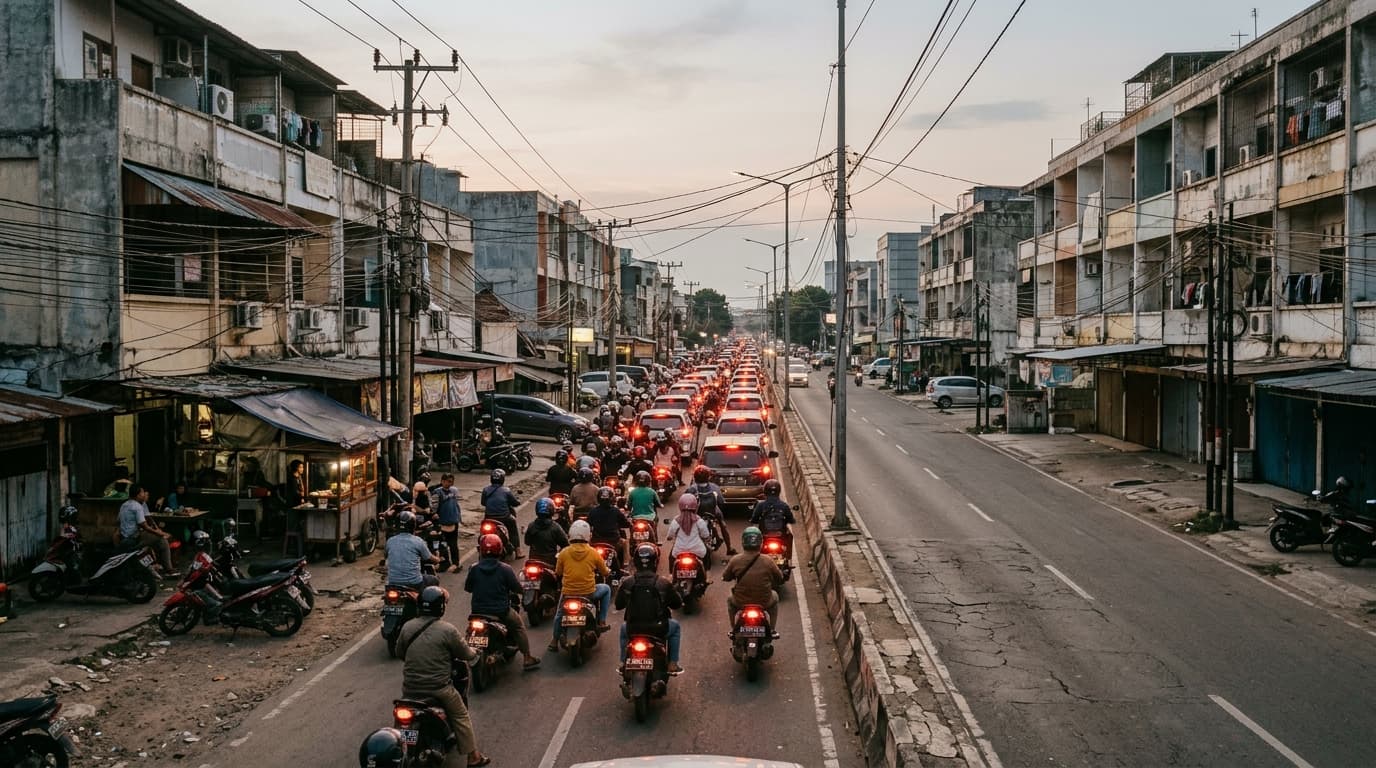
Two shophouses face each other on the same road. The rent is almost the same and the traffic looks the same. A year later, one is busy and the other is quiet. The cause is often not the product or the price, but the side of the road.
People passing your store cannot always stop, or want to. Their direction of travel, the time they pass, and whether there is a U-turn nearby decide whether that traffic turns into customers.
Morning and evening commuters need different things
In many cities, roads linking housing areas to work centres have a clear daily pattern: busy towards the city in the morning, busy towards the suburbs in the evening. People in those two flows need different things.
Morning-commute side | Evening-commute side | |
|---|---|---|
Driver mood | In a hurry, worried about being late | More relaxed, with time to stop |
Purchases that fit | Quick and small: coffee, breakfast, fuel, ATMs | Larger and planned: groceries, dinner, laundry, pharmacy |
Time spent stopping | A few minutes | Can be longer |
This means the same site can be good for a coffee kiosk but weak for a greengrocer, or the other way round. Work out when your customers usually buy, then choose the side of the road they travel on at that time.
Medians and U-turns can cut your market in half
A road with an unbroken median means your store can effectively be reached from one direction only. Drivers coming the other way have to turn around, and many will not bother for a small purchase.
Check the nearest U-turn in both directions. A distant or congested U-turn means customers from the other side are practically lost.
Watch for planned road changes. A new median, bus lane, or one-way scheme can change access overnight. Ask the neighbourhood association or nearby shop owners.
Look carefully at one-way streets. A shop on a one-way street only sees drivers from one direction. Make sure that direction matches your customers' flow.
How to check traffic flow at a candidate site
Visit at two times: the morning commute (around 6:30–8:30) and the evening commute (around 16:30–19:00). Exact times vary by city.
Count vehicles in each direction for 15 minutes. You only need to see which side is busier, not an exact figure.
Watch who stops. Are similar shops on the same side of the road busy? At what time?
Test the access yourself. Ride from the opposite direction and note how long it takes to stop outside the store.
Check for a place to stop. Is there a shoulder or parking? Drivers who cannot stop safely will pass you by.
A more detailed counting method is in our guide to measuring foot traffic. Add these checks to your site survey checklist.
Visibility from the approach
Drivers usually decide to stop a few dozen metres before the store. If your sign is hidden by trees, billboards, or power poles from the direction of the main flow, that decision never happens. Walk or ride in from the main direction of traffic and note the point where your store first becomes visible.
Faster screening with Loka
Before spending mornings and evenings at several sites, screen your candidates with Loka by PetaAI. Enter an address and business type to get a suitability score based on proximity, density, and the quality of nearby amenities, including a 0–100 transport score for public transport access. Its database covers more than 39,000 points of interest across 38 provinces.
Once you are down to two or three candidates, use the traffic checks above to choose the right side of the road.
Frequently asked questions
Which is better, a shop on the morning-commute side or the evening-commute side?
It depends on when your customers buy. Quick purchases such as coffee and breakfast suit the morning side, while larger purchases such as groceries, dinner, and laundry tend to suit the evening side.
Does a road median affect store revenue?
It can matter a lot. An unbroken median forces drivers from the opposite direction to turn around, and many will skip a small purchase. Check the distance and congestion of the nearest U-turn before signing a lease.
When is the best time to check traffic at a candidate site?
Check during the morning and evening commutes, then compare with your own busy hours. Add a weekend visit if your business depends on weekend customers.